• FluTrackers.com Inc. does not provide medical advice. Information on this web site is collected from various internet resources, and the FluTrackers board of directors makes no warranty to the safety, efficacy, correctness or completeness of the information posted on this site by any author or poster. The information collated here is for instructional and/or discussion purposes only and is NOT intended to diagnose or treat any disease, illness, or other medical condition. Every individual reader or poster should seek advice from their personal physician/healthcare practitioner before considering or using any interventions that are discussed on this website. By continuing to access this website you agree to consult your personal physican before using any interventions posted on this website, and you agree to hold harmless FluTrackers.com Inc., the board of directors, the members, and all authors and posters for any effects from use of any medication, supplement, vitamin or other substance, device, intervention, etc. mentioned in posts on this website, or other internet venues referenced in posts on this website.
  • We are not asking for any donations. Do not donate to any entity who says they are raising funds for us.

A Grisly but Essential Issue

pamwv41

Well-known member
A Grisly but Essential Issue

Pandemic Plan Skims Over How to Deal With Many Corpses

By Ceci Connolly
Washington Post Staff Writer
Friday, June 9, 2006; 12:32 AM

They brought in steam shovels to dig graves. Caskets were rented -- just long enough to hold a brief memorial service -- then passed on to the next grieving family. The death toll of the 1918 flu pandemic was so overwhelming that the military commandeered entire trains to transport dead soldiers; priests patrolled the streets of Philadelphia in horse-drawn carriages, collecting bodies from doorsteps.

"One of the most demoralizing things was the inability to move bodies out of the home," said John M. Barry, author of "The Great Influenza," the definitive work on the 1918 pandemic. "They just literally stacked up, sometimes for three, four or five days."

<TABLE style="WIDTH: 93px; HEIGHT: 35px" cellSpacing=0 cellPadding=0 align=right><TBODY><TR><TD width=10>


</TD><TD width=228>http://del.icio.us/


<SCRIPT>setTimeout('update_delicious_form(delicious_cookie)',1)</SCRIPT>

</TD></TR></TBODY></TABLE>Now, with medical experts and government leaders racing to prepare for a potential pandemic, a cadre of mortuary specialists has begun quietly grappling with the grisly but essential question of what to do with the dead if it happens again.

Opinion is varied on when and how virulent the next global flu outbreak would be, but even a modest epidemic -- similar to the pandemic that hit in 1968 -- could kill between 89,000 and 207,000 Americans. If the next virus mimics the far more potent 1918 strain, the U.S. death toll could reach 1.9 million.

"It's almost too big to wrap your arms around," said John Nesler, a specialist in mass fatalities advising the military. If the worst were to occur, Nesler predicted the impact would be akin to "20 nuclear detonations" simultaneously knocking out multiple cities and towns.
In either case, experts foresee an 18-month period of funeral homes being short-staffed, crematories operating round-the-clock, dwindling supplies of caskets and restrictions on group gatherings such as memorial services.

Morgues and hospitals would quickly reach capacity. And most of the federal Disaster Mortuary Operational Response Teams (DMORT) would be too busy in their own communities to deploy elsewhere.

"I can't see myself packing my bags to go to another state to help out," said Joyce deJong, a Michigan medical examiner who worked on DMORT teams after the Sept. 11, 2001, attacks and Hurricane Katrina. "I'll be here dealing with an increase in the number of bodies."

Some fear that the Bush administration, in all its detailed planning for pandemic flu, has paid scant attention to fatalities.

"It's the one thing nobody wants to address, because it's ugly. People don't want to think that anyone will die," said John Fitch, senior vice president for advocacy at the National Funeral Directors Association. "We can't put our head in the sand and say response stops at prevention and treatment."

In the 227-page response plan recently released by the White House, the term "medical examiner" appears just once -- and "autopsy" not at all. A single paragraph on page 112 recommends that hospitals, medical examiners and government officials "assess current capacity for refrigeration of deceased persons, discuss mass fatality plans and identify temporary morgue sites" to handle surges.

Officials say much more is happening behind the scenes. In March, the administration helped organize a two-day conference at Fort Monroe in Virginia with medical examiners, funeral directors, public health experts and casket makers. Among the more innovative, albeit jarring, ideas being considered are backyard burials, virtual funerals and storing bodies at ice hockey rinks.

Seattle's King County came up with the ice rink idea when officials realized their mass fatality plan would accommodate no more than 50 deaths, perhaps in a plane crash, said interim health director Dorothy Teeter.
"This is so much bigger," she said. "We project 11,000 potential deaths in six to eight weeks."

Several participants said they will have to consider temporary mass graves because they will not have the staff to keep up, especially if some of their workers or family members contract the flu.

"They would bury the person with all the identification material and carefully keep track of that information," said Ann Norwood, a senior analyst at the Office of Public Health Emergency Preparedness at the Department of Health and Human Services. "After things calm down, we can locate the family, exhume the casket and put it wherever the family ultimately would like the body to rest."

"Virtual funerals" broadcast over closed-circuit television or the Internet would be advised, said Nesler, who ran the Fort Monroe conference. "The very worst thing you can do during an epidemic is have large gatherings of people" such as memorial services, he said. Some families may bury relatives on their own property, said deJong, who is also chairwoman of the mass fatality management committee of the National Association of Medical Examiners.

In a pandemic, one problem would likely trigger several more, Norwood said. Fuel shortages, for instance, would mean added complications transporting bodies and keeping refrigerated trucks cool.

If funeral directors and other mortuary workers are not given anti-viral medication or a vaccine when it becomes available, they will likely stay home, said Robert Fells, external chief operating officer for the International Cemetery and Funeral Association. "Ironically, funeral directors were at the bottom of the list," he said. White House officials said a priority list for medicine and vaccine has not been finalized.

"Noticeably absent from the discussion" at Fort Monroe were representatives of the Department of Homeland Security, even though they will have overall coordinating responsibility in a pandemic, said Fitch. "Right now, there is no single agency or individual responsible for mass fatalities."
However, much of the burden will fall to local communities and the states, Bush administration officials said.

Virginia's chief medical examiner, Marcella Fierro, said local hospitals, funeral homes and health departments must take the lead, but the state is trying to help now by developing software systems for clerical tasks such as keeping track of the dead and contacting next of kin. She is also compiling a list of retired employees who could step in.

One of the many lessons to emerge from Hurricane Katrina is that Americans are not accustomed to seeing unattended bodies on the streets of a major city, said Michael Osterholm, head of the Center for Infectious Disease Research & Policy at the University of Minnesota. He said less-developed countries may be better positioned to deal with huge numbers of flu fatalities.

If the next pandemic strikes with the same ferocity as the 1918 flu, even the most thorough planning will not prepare people for the emotional toll of such widespread death.

"We've forgotten that people do die from infectious diseases, and our process of dying has become very sanitized," said Norwood, who is also a psychiatrist. "For the whole Western world, it's going to be a shock."
 
Last edited by a moderator:
Re: A Grisly but Essential Issue

This paper is funny in the way we do not really need a paper like this to draw this conclusion but the data talk loud.


http://www.h5n1experts.org/forum/showthread.php?t=484

1: Intensive Care Med. 2006 Jun;32(6):823-9. Epub 2006 Mar 28. Related Articles, Links


Avian influenza (H5N1): implications for intensive care.


Gruber PC, Gomersall CD, Joynt GM.

Department of Anaesthesia and intensive care, Chinese University of Hong Kong, Prince of Wales Hospital, Shatin, Hong Kong, gomersall@cuhk.edu.hk.

BACKGROUND: As influenza A/H5N1 spreads around the globe the risk of an epidemic increases. DISCUSSION: Review of the cases of influenza A/H5N1 reported to date demonstrates that it causes a severe illness, with a high proportion of patients (63%) requiring advanced organ support. Of these approx. 68% develop multiorgan failure, at least 54% develop acute respiratory distress syndrome, and 90% die. Disease progression is rapid, with a median time from presentation to hospital to requirement for advanced organ support of only 2 days. CONCLUSION: The infectious nature, severity and clinical manifestations of the disease and its potential for pandemic spread have considerable implications for intensive care in terms of infection control, patient management, staff morale and intensive care expansion.

PMID: 16568274 [PubMed - in process]
 
Re: A Grisly but Essential Issue

Actually plans are well under way for this, the biggest problem is storage, if below options are not used.<o =""></o>
<o =""></o>
<!--[if !supportLists]--><!--[endif]-->1-Mass graves have a nasty run of tendency (Option No:2 ?) <o =""></o>
<!--[if !supportLists]--><!--[endif]-->2- incineration is a very precise and time consuming technique, today as it has bean before, with capacity only built to demand. (worst option as it wont work)<o =""></o>
<!--[if !supportLists]--><!--[endif]-->3-The rendering technique is a very viable option. (Option No:1 ?)<o =""></o>
<o =""></o>
As the options are the above do you need to ask further why they are not discussed in public?<o =""></o>
 
Re: A Grisly but Essential Issue

US funeral industry could be stymied by a flu pandemic

http://today.reuters.com/investing/financeArticle.aspx?type=bondsNews&storyID=2006-06-29T184900Z_01_N28244073_RTRIDST_0_BIRDFLU-SERVICES.XML

By Justin Grant
NEW YORK, June 29 (Reuters) - U.S. funeral companies would be hard pressed to meet demand for their services in a human bird flu pandemic because of the sheer volume of dead and stringent public health rules that would likely be put into effect, experts say.
Estimates are that if the H5N1 virus -- the current strain of avian influenza -- mutates into a strain that could be passed from human to human, more than 2 million Americans alone could die.
And although more companies provide funeral services today than in 1918 when a human avian flu swept the world, as demand for funeral services increased in another pandemic companies' profits would decrease, industry sources say.

Johnson & Rice Co. analyst William Burns, who owns shares of Service Corp. International (SCI.N: Quote, Profile, Research), the largest funeral and cemetery services company in the world, said funeral services companies often lose money when disasters strike.
"You're in such a hurry to get the deaths taken care of, this is really not a time where the company is focused on making a lot of money," Burns said.
And since care-giving is part of what funeral services companies do, Burns said many would be looking to donate their services, at the expense of profits, in the event of mass fatalities in a pandemic.
Since the current outbreak of avian flu began in 2003, 130 people have died from among the 228 known to have been infected. The 1918-19 pandemic killed an estimated 20 million to 100 million people worldwide. Studies show that it was caused by an avian flu virus -- the H1N1 strain -- that could be passed from human to human.
"There are going to be surges, and how are we going to recover them? How are we going to store them?" John Fitch, a senior vice president at the National Funeral Directors Association, said in a recent interview.

When they talk about the national pandemic and potentially 2 million people dying in a six to eight month period, this is on top of the normal 2.5 million that die every year. You're talking about 5 million people, almost double the death rate and all of it in a compressed period of time," Fitch said. The 1918-19 pandemic left people scrambling for places to put the dead as morgues ran out of space and the supply of caskets dwindled. Undertakers and grave diggers were among the sick and dying.
The average funeral home in the United States today has six employees and handles nearly 182 funerals a year, according to the National Funeral Directors Association (NFDA) Web site, http://www.nfda.org/.
"The morgues are going to be backed up. Everything is going to be slowed down, and compounding that is you might have a ban on public gatherings, or quarantines, or restrictions on travel," Fitch said.

Quarantines were common in the United States during the 1918-19 pandemic, and funeral services were restricted to minutes to minimize people's exposure to each other.
The funeral services industry in the United States generates about $11 billion in revenues annually, according to the NFDA. Fitch said on Thursday that he did not know how revenues might be affected by a pandemic because there were too many variables.
The NFDA notes that about 90 percent of funeral services companies in the United States are privately held.
Service Corp. International is working on a contingency plan that would enable it to keep its business running, while lending a hand to local and state governments in a worst-case scenario, company spokesman Greg Bolton said, but he declined to give details.
The U.S. government last month issued a new plan for dealing with a pandemic, which suggests travel restrictions and quarantines. The report estimates that up to 40 percent of the work force could be sidelined at the height of a pandemic.
Batesville Casket Company, a subsidiary of Hillenbrand Industries Inc. (HB.N: Quote, Profile, Research), said in a statement that quarantines could harm its ability to transport and deliver caskets.
"Ultimately it wouldn't mean a boon to the industry," said Daniel Isard, president of Foresight Analysts Inc., a funeral industry consulting firm in Phoenix, Arizona.
"I don't think there's a funeral director in the United States that's going to be smiling about that."
 
Re: A Grisly but Essential Issue

The average funeral home in the United States today has six employees and handles nearly 182 funerals a year, according to the National Funeral Directors Association (NFDA) Web site, http://www.nfda.org/.
"The morgues are going to be backed up. Everything is going to be slowed down, and compounding that is you might have a ban on public gatherings, or quarantines, or restrictions on travel," Fitch said.

That seems really low to me! I live very near a very small city. We have two funeral home companies, each with two homes...they do a great deal of business. An average of 3 viewings a day and about two-three that many funerals.

Although I don't disagree that the funeral homes are going to overwhelmed very quickly.
 
Re: A Grisly but Essential Issue

I would like to say that the production of incinerators has been put in a fast track since the summer of 2004, primarly from northern countries where frozen grounds presents a problem for the 'volonteers helpers of Funeral Professionnals'.
 
Re: A Grisly but Essential Issue

Snowy, that is the one more thing that has me worried. Northern cities will no doubt like the rest of us be without power. No power no cremation. They could stack bodies like cordwood but the loved ones would object......I know I would. It takes time to incinerate people. It takes time to try to dig through frozen ground. It takes fuel. It also takes fuel to keep truck refrigeration going. Remember the Chicago heat wave when they ran out of space at the funeral homes then they had to import all those refrigerated trucks? I suspect that there will be some innovative solutions we have yet to think about and, some ghastly stories when all is said and done. This would be another good place to think about possible solutions. Lurkers, perhaps you could contribute to what you think might work.
 
Re: A Grisly but Essential Issue

Strategic location over Natural Gas Pipeline in North America.
 
Re: A Grisly but Essential Issue

pamwv41 said:
A Grisly but Essential Issue

Pandemic Plan Skims Over How to Deal With Many Corpses

By Ceci Connolly
Washington Post Staff Writer
Friday, June 9, 2006; 12:32 AM

They brought in steam shovels to dig graves. Caskets were rented -- just long enough to hold a brief memorial service -- then passed on to the next grieving family. .....quote]

Hi Pam ...

Thanks (I think) for starting this important topic. Will you please give us the link for this article. I think it may shock some die-hard friends into finally getting themselves in gear (that was not the best choice of words, was it? :rolleyes: )

Dawn
 
Re: A Grisly but Essential Issue

I was talking to an old high school friend the other day. (Won't say how old :o ) She shared her father was 18 years old and living in Philadelphia at the time of the 1918 pandemic. Over the years he had shared with her. She remembered him talking about having to dig the huge trenches for, essentially, mass graves. And that it just kept going on and on. He did not catch that flu- nor did she know of his family members who did/ died from it. Per John Barry's book- The Great Pandemic- communication was often very limited and/ or incorrect. So, a blessing today is that we do have a way of getting reliable information- this site an example :) , and can begin to act on that information. Saying all that, this can still be difficult emotionally to begin to contemplate.
 
Re: A Grisly but Essential Issue

colormyquilt, hi and welcome.
<o =""></o>
The elders , they usually know more as we pups, talk les and let us go on, but what they say is much more important.

That is if they not totally nut cases.<o =""></o>
<o =""></o>
 
Re: A Grisly but Essential Issue

County coroner urges pandemic preparation
By JAMES AMOS
THE PUEBLO CHIEFTAIN

Speaking to a state convention of funeral directors, Pueblo County Coroner Jim Kramer said it's critically important that they help plan the community's response to a flu pandemic.

Morticians will probably be one of the first lines of response to flu deaths, he told members of the Colorado Association of Funeral Directors and the Colorado Association of Cemeteries. And they stand to be two of the industries most affected by a pandemic.

They will probably have much more work to do, processing and storing the bodies of victims, the coroner said. And, because of the flu, they may have far fewer staff members with which to do the work.

Though it's not yet certain that a flu pandemic will strike, Kramer said funeral directors and cemetery operators must be part of the planning process now. Storage of bodies from flu deaths will be a critical issue, he said, and there isn't currently enough storage space to accommodate the number of corpses the flu could bring.

"What we have today could fill up overnight," he said. "Then what do you do with those who die tomorrow?"

Regulations require caskets to be placed in a vault when they are buried. Kramer noted that there probably won't be enough caskets or vaults to deal with a serious flu pandemic.

Regulations on that and other death-related issues may have to be relaxed during a pandemic, the coroner said.

But he cautioned against setting aside too much. For example, many people believe that bodies from an epidemic or disaster must be disposed of as soon as possible - even in mass graves or mass cremation - to avoid the spread of disease.

Kramer said that's not true. Most disease-causing organisms can't survive for long in a dead body, and nor do the micro-organisms that cause decay have anything to do with human epidemics.

The disposal of unidentified bodies also hurts the families because they can't know for certain what happened to their loved ones.

Kramer called the identification of deceased people a basic human right, both for them and their loved ones.

There are no plans or provisions for mass burials or cremations of people killed in a pandemic, Kramer said. But the issue of how to cope with large numbers of deceased people has to be addressed now instead of later.

Additionally, Kramer said the community must start considering how it will implement strategies like quarantines.

During the flu epidemic of 1918, officials closed schools, churches, theaters and other public spots in order to stop the spread of the disease.

Funerals were banned in some areas for the same reason, and Kramer said that will be a challenge to explain to the public if it is required. Americans are not used to being told they can't do something, he said.

"These are not things that are normally thought of," he said.

http://www.chieftain.com/metro/1158367497/7
 
Re: A Grisly but Essential Issue

In our colder areas, they do not dig frozen ground. The deceased are kept in "cold storage" for burial when the ground thaws.

Perhaps bodies could be moved to colder locations and "maintained" for later when proper resources and respectful burials could be arranged.

.
 
COOLING CADAVERS WITH FERTILIZER

COOLING CADAVERS WITH FERTILIZER

Fertillizer used to preserve dead bodies

Nkosilathi Batshabi - The Southern African
Friday, 20 April 2007

One of Africa's taboos is for one to refuse a free gift. So, when someone gives you something you do not need, the only recommendation is: find ways to use it.

Considering that Africa receives the bulk of free aid from rich countries and donor organizations, a lot of the donations have not been usable in the way they are meant to be and people have had to be innovative.

Latest among these innovations comes from Zimbabwe's impoverished region of Matabeleland where villagers are using fertilizer to preserve bodies of their dead relatives.

Matabeleland is a low rainfall region where crop yields are perennially poor due to inadequate moisture. However, despite protestations by villagers, donor organisations, with the complicity of the government, keep providing them with free fertilizer hoping that would help locals in their efforts to grow enough food to stave off the hunger that keeps gnawing at them.

Fertilizer is made of ammonium nitrate, a refrigerant and a major ingredient in cleaning agents. It absorbs moisture fast. While it produces desired agricultural results in high rainfall areas like parts of the Mashonaland and Midlands regions, fertilizer is actually disastrous in low rainfall areas.

The rural district of Gwanda in the Matabeleland province is gripped by the AIDS pandemic and people die in large numbers every week. The only mortuary facility at Manama Mission Hospital is always overflowing with bodies when it is working, which is not often.

Most of the time people are forced to take away bodies of their dead relatives because the refrigerator at the hospital is always breaking down due to overuse and frequent power cuts that are caused by Zimbabwe's inability to produce more electricity.

The country's battered economy also prevents it from importing power from neighbouring countries like Mozambique and South Africa.

Burying the deceased soon after they die would probably be a solution but in this traditionally-steeped community, that would invoke more taboos, especially one that says it is a bad omen to bury the deceased before all their relatives have exercised their right to view the body before it is buried.

To make matters worse, this is one community where hunger and lack of commerce forces almost every economically active person into neighbouring Botswana and South Africa to seek employment.

Getting word out and for them to trek back home for their mandatory presence at the funeral of a relative takes days hence the need to preserve bodies otherwise the searing heat would expedite the rotting of the body causing a health hazard.

Villagers had to remember long forgotten chemistry lessons that ammonium nitrate has chemical agents that allow cooling.

"We dissolve fertilizer in a bucket of water and pour the solution over the body. The solution drains all the fluids out of the body and it just gets so cold you would think it’s been refrigerated," villager Mika Ndlovu explained as he attended a funeral in his village.

Elina Dube, the mother of the deceased man, whom she would have had to bury alone before her other children arrived from Botswana and South Africa, was grateful.

"We are given this fertilizer for free and we cannot refuse a gift. We are relieved that we have found some use for it," she said.

About 200 kilometres north of Gwanda, in Bubi district, Matabeleland North province, villagers have also come up with their own alternative use for fertilizer.

MAP Feature Service caught up with a woman who refused to be identified in case donor officials were angered.

The woman said people in her community mixed fertilizer with earth used for plastering crop granaries. The chemicals in the fertilizer fortify the plaster and prevent pests from burrowing their way into the granaries where they store harvested crops.

Furthermore, the smell of fertilizer is considered a pest repellent.

"White ants, particularly, are repelled by fertilizer," she said.

An official with a major donor agency that distributes fertilizer in the region said they were aware that their aid was being used for uses other than crop enhancement. She refused to have her name or that of her organization revealed in this feature.

A government agronomist, Bavison Masendeke, said alternative use of fertilizer could explain the sudden surge in demand in areas where it was traditionally shunned.


http://thesouthernafrican.com/News/Features/Fertillizer_used_to_preserve_dead_bodies/
 
Re: A Grisly but Essential Issue

In our colder areas, they do not dig frozen ground. The deceased are kept in "cold storage" for burial when the ground thaws.

Perhaps bodies could be moved to colder locations and "maintained" for later when proper resources and respectful burials could be arranged.

.

Throughout history there have been 'staging chapels' that were uses as storage facilities for housing dead bodies for families who were financially challenged who were on the payment plan for burials or who wealthy and were having to wait either for a crypt to be erected or were ordinary folk waiting for the weather to be adequate to proceed with a in-ground burial.<o:p></o:p>
<o:p> </o:p>
Some areas are currently considering mental storage units the size of airplane hangers and beyond to be uses as current day 'staging chapels'. This would be cost effective, easy to assemble; secure facilities that can be bio-hazmat decontaminated when necessary and could be placed at 'discrete locations' without obvious attention being drawn to them.
<o:p> </o:p>
Western society is not use to mass fatalities and even on our visual news broadcasts there are warnings of ?disturbing images' when there are dead bodies etc. In a medical disaster, people will once again have to adjust to such sights that our ancestors experienced as well as be traumatized by the situation just like they were. This could cause the same or even more intense reaction of thanostic avoidance as was the case after the 1918 pandemic that caused a compounded and complex grief reaction for generations to come in some areas.<o:p></o:p>
<o:p> </o:p>
Initial research indicates that a high percentage of funeral directors were victims of the pandemic in 1918 as well as clergy. The two thanostic concerns presently is that many funeral homes have been purchased by 'consolidated' or 'acquisitioned' funeral corporations ( the three biggest are Service Corporation International, Keystone and Stewart). The idea of 'just in time' deliveries of products for Wal-Mart etc is also the foundation of funeral services particularly in North America but elsewhere as well. Since many of these local ?mom and pop? small funeral homes have been bought up in the lat 20 years by major corporations and still 'appear as' local companies for the sake of comfort and care of the family and community locally according to the large corporations, the reality is that many have a one site location for much of or all of their embalming and burial treatment preparation activities and the funeral directors / morticians are consolidated do ensure maximum staffing at the lowest expenditure which means that the funeral directors at one facility in one town or even region can be relocated to another location at different site a distance away when additional staffing is necessary for a large or highly public funeral. So when a family experiences a funeral there may appear that there is a large staff but in reality it is a 'rent a funeral director or hearse? or a ?temporary assignment' as it is sometimes called. That reality breaks down to less funeral directors, supplies and services per area to service the public especially in a mass fatality situation.<o:p></o:p>
<o:p> </o:p>
Also remember that there is a DRASTIC reduction in the number of clergy currently serving in any community. Historically we are closing churches, and other faith centers faster than at any time in history due to the aging of the faith based community at large as well as fewer individuals opting for conventional institutional or denominational identification and participation of their faith expression. The average age in many communities for a priest or nun in the Roman Catholic faith expression is well into the mid to late 60s. This is only one example. The impact is everywhere.
<o:p> </o:p>
Without a medical disaster such as a pandemic, in the next 30 years in mainline Christian faith centers for example, there will be a death fatality rate that could easily equal that of or beyond that of the Black death due to the age of the current population of worshipers and the reduction in rate of new membership. This will also have a major affect on how the faith centers will be able to respond to a mass fatality experience.
<o:p> </o:p>
Remember faith centers are the largest emergency responders in a community currently due to the number of faith centers located in any given locale. With their aging population the their reduced ability and stamina due to age considerations as well as economic support for these mega support institutions, the service to the local community will be reduced and in some areas greatly reduced.<o:p></o:p>
<o:p> </o:p>
I am currently completing an entire section on this very issue in my upcoming book and I'm use to seeing significant data and considerations but frankly this developing situation is very disturbing even for me and down right frightening at times, no mater what the mass fatality situation happens to be. In a global pandemic situation the fallout and breakdown in availability in thanostic./ death related and aftercare and support is mind-blowing and shattering. At times the thought has occurred that the dead may be the lucky one!<o:p></o:p>
Terrie Modesto<o:p></o:p>
Chief Thanatologist<o:p></o:p>
<st1:place w:st="on"><st1:PlaceName w:st="on">TEAR</st1:PlaceName> <st1:PlaceType w:st="on">Center</st1:PlaceType></st1:place>
 
Re: A Grisly but Essential Issue

Preparing for pandemic: know how to bury your dead

Wed Feb 15, 2006 04:07 PM ET

By Andrew Stern

MINNEAPOLIS (Reuters) - When burying a body in the backyard, don't put it too close to the septic system. That was one piece of advice offered on Wednesday to a business conference on preparing for a potentially lethal bird flu andemic.

Preparations for a global flu pandemic, which many experts believe is overdue, have begun but the grisly details are horrific and the number of sick could quickly overwhelm the health care system.

Needed supplies of even common medical supplies such as surgical masks and gloves are in doubt, not to mention the syringes needed for an as-yet undeveloped vaccine and costly mechanical ventilators.

The H5N1 avian flu virus that has infected flocks on at least three continents and killed 91 people could be the virus that experts fear will mutate into a highly pathogenic form that kills hundreds of millions of people in a matter of weeks or months.

In Seattle, public health officials are weighing the ramifications of hospitals overwhelmed by hundreds of thousands of sick people and the need for thousands of body bags.

"We talk about how people should bury their dead in their backyards, how far from the septic systems," said Dorothy Teeter, director of the King County public health department in Seattle. "In case you're wondering, it's $20 apiece for high-quality body bags. In New Orleans (after Hurricane Katrina) they had to double-bag bodies."

Refrigerated trucks will be needed to ship and store food and medicines and will not be available for corpses, a mistake made by federal authorities who commandeered trucks after Katrina, said James Caverly of the U.S. Department of Homeland Security.

Communicating the truth will be important to deter civil unrest, several experts told the conference. Up until six months ago, the Department of Health and Human Services was planning privately for a pandemic but saying little publicly, said communications consultant Peter Sandman.

The shift may be due to President George W. Bush reading John Barry's "The Great Influenza," an account of the 1918 influenza pandemic during which government assured the public that it was just another seasonal flu outbreak, Sandman said. At the time, Barry said many communities were brought to a near standstill, with people afraid to talk to each other or care for the sick.

"When you mislead people, when you over-reassure people ... they feel less trusting, and they behave much worse," Sandman said.

Conference participants from corporations, interest groups, and government met to discuss revising just-in-time supply concepts in order to stockpile, shutting down and restarting facilities in pandemic-hit countries, and cross-training employees and bringing back retirees to replace a significant portion of their employees that might become sick, decide not to come to work, or die.

If companies stockpile masks and antiviral drugs such as Tamiflu, conference participants wondered if tax breaks would be enacted to defray the cost of preparing.

The dilemma for producers of syringes and the like is that increasing factory capacity for a one-time sale for a pandemic is bad business practice.

Meanwhile, government will have to address public skepticism about its ability to prepare for a pandemic, the official in charge of emergency preparedness at the Department of Health and Human Services said.

http://www.arkinstitute.com/hottopics.htm
 
Re: A Grisly but Essential Issue

Jonesie;86261 MINNEAPOLIS (Reuters) - [B said:
When burying a body in the backyard, don't put it too close to the septic system.[/B]


I would strongly suggest not burying close to wells or water mains. You may want to call your local municipality and find out who knows what is under your property and what is there BEFORE you start digging. Cutting a cable TV line is an inconvenience, knocking a hole in a gas pipe line would not be good. Polluting the local drinking water aquifer could also cause problems.
 
Re: A Grisly but Essential Issue

The UK have some preps on this eg:3m body bags could be ordered in flu alert
By KIRSTY WALKER - More by this author ?

Last updated at 09:24am on 6th November 2006


Email newsletter Ministers are considering stockpiling more than three million body bags because of fears of an impending flu pandemic, a senior Government source has revealed.

Experts have warned that a mass outbreak is 'overdue' - and when it arrives, 25 per cent of the population could be infected.

A senior member of the Government involved in planning for a flu pandemic told the Daily Mail a range of scenarios involving hundreds of thousands of deaths had been outlined to ministers by scientific advisers.:tiphat:
 
Re: A Grisly but Essential Issue

credits to Shiloh for link

from ----

Mass Fatality Incident Management:
Guidance for Hospitals and Other Healthcare
Entities August 2008
Developed in collaboration between the following Los Angeles County partners: Department of Coroner; Department of Health Services, Emergency Medical Services Agency; and Department of Public Health, Office of Health Assessment & Epidemiology, Data Collection & Analysis Unit

http://ems.dhs.lacounty.gov/ManualsProtocols/MFIM/MFIGuidanceForHospitals808.pdf

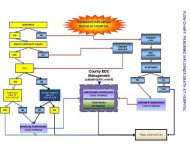
Attachment 1: Flowchart for Handling Pandemic Influenza Deaths in Hospitals
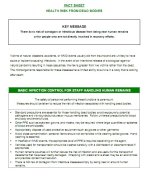
Attachment 2: Fact Sheet - Health Risk from Dead Bodies
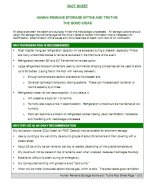
Attachment 3: Fact Sheet - Human Remains Storage -- Good Ideas
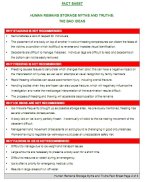
Attachment 4: Fact Sheet - Human Remains Storage -- Bad Ideas
 

Attachments

  • Flowchart for Pandemic Influenza Deaths in Hospitals 20081029.jpg
    Flowchart for Pandemic Influenza Deaths in Hospitals 20081029.jpg
    58.2 KB · Views: 0
  • Fact Sheet - Health Risk from Dead Bodies 20081029.jpg
    Fact Sheet - Health Risk from Dead Bodies 20081029.jpg
    82.5 KB · Views: 0
  • Fact Sheet - Human Remains Storage -- Bad Ideas 20081029.jpg
    Fact Sheet - Human Remains Storage -- Bad Ideas 20081029.jpg
    83.4 KB · Views: 1
  • Fact Sheet - Human Remains Storage -- Good Ideas 20081029.jpg
    Fact Sheet - Human Remains Storage -- Good Ideas 20081029.jpg
    88.9 KB · Views: 0
Back
Top