Giuseppe
Emeritus
Experts: New Bird flu vaccine looks promising
By LINDA A. JOHNSON, Associated Press Writer
The first experimental bird flu vaccine made from lab-grown cells instead of chicken eggs shows promise in blocking the highly lethal virus, scientists report.
The advance is good news not just for preparations in case of a pandemic, but also because it offers a way to make shots for seasonal flu much faster.
That gives health officials crucial extra time to better match annual shots to the flu strains circulating.
It also would reduce dependence on the antiquated system of using millions of eggs to make flu vaccines and could cut production time roughly in half, to as little as 12 weeks, according to maker Baxter International Inc.
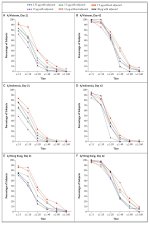
Results of mid-stage testing of the Baxter vaccine, Celvapan, showed two shots produced an immune response considered strong enough to protect 76 percent of healthy adults from both the H5N1 Vietnam strain it targets and the related Hong Kong strain; it appeared to protect 45 percent from a third, Indonesian strain.
"I think it is a big leap forward," said Dr. Wilbur Chen, a vaccine researcher at the University of Maryland School of Medicine not involved in the study.
Since the first outbreak in Hong Kong in 1997, more than 240 people in Asia, Europe and Africa have died from bird flu, which kills about two-thirds of people infected.
Nearly all had close contact with poultry, but scientists worry bird flu could mutate to a form easily spread among people, who have no natural immunity. Many experts believe a pandemic will eventually occur.
On Wednesday, Hong Kong health officials ordered the slaughter of all live poultry in street markets due to one of the largest outbreaks of the virus in birds in years.
The United States has stockpiled 23 million doses of egg-based human bird flu vaccine made by three companies; some European countries also have such stockpiles and are ordering Baxter's cell-based vaccine.
Other human vaccines ? a few using cells or genetic engineering but most made from eggs ? are being tested in dozens of government and commercial projects. Baxter officials say theirs is the first produced in cells that's been tested in people, and they expect to get a European Union license for Celvapan around year's end.
The results of the company-funded study were reported in Thursday's New England Journal of Medicine.
A total of 275 volunteers in Austria and Singapore got one of four doses.
The best results ? the 76 percent protection ? came from the second-lowest dose.
That dose also proved effective in a final-stage test last year of 550 volunteers in Austria and Germany, according to Dr. Harmut Ehrlich, head of research and development for Baxter's Vienna-based Bioscience unit.
It protected 73 percent of adults under 60 and 74 percent of those over 60 from the Vietnam strain. It was less effective against the Indonesian strain and wasn't tested against the older Hong Kong one.
To measure effectiveness, volunteers' blood is tested to see how well the new antibodies they developed kill the virus.
Dr. William Schaffner, a Vanderbilt University infectious disease specialist, said researchers need to keep working to make a better vaccine but Baxter's got "pretty darn good results" at low doses.
"I'm excited about this, but we have not yet reached the finish line," he said.
In the United States, the Department of Health and Human Services has invested $1.5 billion in research on cell-based seasonal and pandemic flu vaccines.
In the half-century-old egg method, virus samples are injected into hundreds of millions of specialized eggs and incubated. The egg fluids are later harvested, concentrated and purified into the vaccine.
With cell technology, small amounts of virus are put in large fermenting tanks with nutrients and cells derived from monkey kidneys, and the virus multiplies. Then the virus is inactivated, purified and put into vaccine vials.
Two cell culture vaccines for seasonal flu are licensed in Europe, said Marie-Paule Kieny, director of the World Health Organization's vaccine research program. But full development of the technology could still take a few years, she said.
Experts said Baxter's vaccine appears to work better than egg-based ones, but cautioned that lab results from different companies are hard to compare.
Linda Lambert, chief of the respiratory diseases branch at the National Institute of Allergy and Infectious Diseases, said the Baxter vaccine's protection against multiple strains could be important if a pandemic is caused by a strain other than H5N1.
"If another pops up, we'll know what to do," based on what Baxter and other researchers have been learning, she said.
___
AP Medical Writer Maria Cheng in London contributed to this story.
___
On the Net:
New England Journal: http://www.nejm.org
U.S. Health and Human Services : http://www.pandemicflu.gov
-
http://news.yahoo.com/s/ap/20080611/ap_on_he_me/med_bird_flu_vaccine
------
By LINDA A. JOHNSON, Associated Press Writer
The first experimental bird flu vaccine made from lab-grown cells instead of chicken eggs shows promise in blocking the highly lethal virus, scientists report.
The advance is good news not just for preparations in case of a pandemic, but also because it offers a way to make shots for seasonal flu much faster.
That gives health officials crucial extra time to better match annual shots to the flu strains circulating.
It also would reduce dependence on the antiquated system of using millions of eggs to make flu vaccines and could cut production time roughly in half, to as little as 12 weeks, according to maker Baxter International Inc.
Results of mid-stage testing of the Baxter vaccine, Celvapan, showed two shots produced an immune response considered strong enough to protect 76 percent of healthy adults from both the H5N1 Vietnam strain it targets and the related Hong Kong strain; it appeared to protect 45 percent from a third, Indonesian strain.
"I think it is a big leap forward," said Dr. Wilbur Chen, a vaccine researcher at the University of Maryland School of Medicine not involved in the study.
Since the first outbreak in Hong Kong in 1997, more than 240 people in Asia, Europe and Africa have died from bird flu, which kills about two-thirds of people infected.
Nearly all had close contact with poultry, but scientists worry bird flu could mutate to a form easily spread among people, who have no natural immunity. Many experts believe a pandemic will eventually occur.
On Wednesday, Hong Kong health officials ordered the slaughter of all live poultry in street markets due to one of the largest outbreaks of the virus in birds in years.
The United States has stockpiled 23 million doses of egg-based human bird flu vaccine made by three companies; some European countries also have such stockpiles and are ordering Baxter's cell-based vaccine.
Other human vaccines ? a few using cells or genetic engineering but most made from eggs ? are being tested in dozens of government and commercial projects. Baxter officials say theirs is the first produced in cells that's been tested in people, and they expect to get a European Union license for Celvapan around year's end.
The results of the company-funded study were reported in Thursday's New England Journal of Medicine.
A total of 275 volunteers in Austria and Singapore got one of four doses.
The best results ? the 76 percent protection ? came from the second-lowest dose.
That dose also proved effective in a final-stage test last year of 550 volunteers in Austria and Germany, according to Dr. Harmut Ehrlich, head of research and development for Baxter's Vienna-based Bioscience unit.
It protected 73 percent of adults under 60 and 74 percent of those over 60 from the Vietnam strain. It was less effective against the Indonesian strain and wasn't tested against the older Hong Kong one.
To measure effectiveness, volunteers' blood is tested to see how well the new antibodies they developed kill the virus.
Dr. William Schaffner, a Vanderbilt University infectious disease specialist, said researchers need to keep working to make a better vaccine but Baxter's got "pretty darn good results" at low doses.
"I'm excited about this, but we have not yet reached the finish line," he said.
In the United States, the Department of Health and Human Services has invested $1.5 billion in research on cell-based seasonal and pandemic flu vaccines.
In the half-century-old egg method, virus samples are injected into hundreds of millions of specialized eggs and incubated. The egg fluids are later harvested, concentrated and purified into the vaccine.
With cell technology, small amounts of virus are put in large fermenting tanks with nutrients and cells derived from monkey kidneys, and the virus multiplies. Then the virus is inactivated, purified and put into vaccine vials.
Two cell culture vaccines for seasonal flu are licensed in Europe, said Marie-Paule Kieny, director of the World Health Organization's vaccine research program. But full development of the technology could still take a few years, she said.
Experts said Baxter's vaccine appears to work better than egg-based ones, but cautioned that lab results from different companies are hard to compare.
Linda Lambert, chief of the respiratory diseases branch at the National Institute of Allergy and Infectious Diseases, said the Baxter vaccine's protection against multiple strains could be important if a pandemic is caused by a strain other than H5N1.
"If another pops up, we'll know what to do," based on what Baxter and other researchers have been learning, she said.
___
AP Medical Writer Maria Cheng in London contributed to this story.
___
On the Net:
New England Journal: http://www.nejm.org
U.S. Health and Human Services : http://www.pandemicflu.gov
-
http://news.yahoo.com/s/ap/20080611/ap_on_he_me/med_bird_flu_vaccine
------