Announcement

Collapse
No announcement yet.

France - Crimean-Congo Hemorrhagic Fever: detection of the virus on ticks collected from cattle in the Pyrénées-Orientales department and in Corsica

Collapse
X
 
  • Filter
  • Time
  • Show
Clear All
new posts

  • France - Crimean-Congo Hemorrhagic Fever: detection of the virus on ticks collected from cattle in the Pyrénées-Orientales department and in Corsica

    Crimean-Congo Hemorrhagic Fever: first detection of the virus on ticks collected from cattle farms in the south of France

    Following the detection, on October 6, 2023, of the Crimean-Congo hemorrhagic fever virus in ticks of the Hyalomma genus collected on cattle raised in the Eastern Pyrenees, Public Health France takes stock of the situation and recalls the recommendations to adopt.

    Published on October 24, 2023

    As part of a study aimed at detecting its presence in France, Cirad (Center for international cooperation in agricultural research for development) detected the Crimean-Congo Hemorrhagic Fever (CCHF) virus in ticks from the Hyalomma marginatum species collected from cattle in the Pyrénées-Orientales. These first analyzes were confirmed by the CNR (National Reference Center for Viral Hemorrhagic Fevers) of the Pasteur Institute, thus establishing for the first time the presence of the virus in France. Public Health France takes stock of the risks for the population and recalls the recommendations to prevent tick bites for breeders, farmers, hikers and all people likely to frequent places (pastures, scrubland in particular) where these ticks are found on the Mediterranean rim.

    What are the possible risks for the population?

    Public Health France analyzed the situation in collaboration with its partners from Anses, Cirad and the CNR of FHV in a One Health approach.
    In humans, CCHF virus infection most often remains asymptomatic or minimally symptomatic. However, the virus can be responsible for hemorrhagic fever, which can be severe with a fatality rate of 5 to 30%.

    The virus is generally transmitted by the bite of an infected adult Hyalomma tick . Transmission to humans is also possible through direct contact with the blood or bodily fluids of an infected animal or human (during the short period during which the virus circulates in the blood).

    No autochthonous case (infection acquired on French territory) has been detected in humans in France to date.

    A more in-depth multidisciplinary assessment of the risk of occurrence of human cases will be carried out for the next tick activity season in spring 2024 and in subsequent years.


    Where is the Hyalo mma marginatum tick found in France?

    Originally from Africa and Asia and introduced mainly by migratory birds from Africa, the Hyalomma marginatum tick has been present for several decades in Corsica and was detected from 2015 by CIRAD on the Mediterranean coast. Currently, there is no active surveillance of ticks on a national scale in France, whatever the species. This surveillance was recommended by ANSES in its opinion of May 2023. Several studies have been or are being carried out in order to assess the presence in France of these ticks and certain infectious agents that they can carry. CIRAD was thus able to show that the Hyalomma marginatum tick was present throughout the Mediterranean and was likely to expand further north in the future, under the effect of climate change.

    As part of the scientific studies carried out by this research institute, analyzes carried out in 2022 and 2023 on Hyalomma marginatum ticks collected from cattle in the Pyrénées-Orientales, revealed for the first time the presence of genetic material of the virus of the FHCC, when until now it was only detected indirectly by the presence of antibodies in domestic and wild ungulates. Future investigations will seek to find out whether the circulation of the virus is more widely distributed in the south of France.
    The CNR-FHV (National Reference Center for Viral Hemorrhagic Fevers) of the Pasteur Institute has confirmed these results and is currently conducting sequencing analyzes of the virus to understand the origin of the strains found.

    Crimean-Congo hemorrhagic fever virus around the world

    Although the Hyalomma marginatum tick is present on the Mediterranean coast and in Corsica, no human case of CCHF has yet been observed in France. On the other hand, a dozen indigenous human cases of CCHF have been reported in Spain since 2016, some of them in healthcare professionals.
    This disease is endemic in Africa, including North Africa, Asia, and particularly common in certain regions in Turkey. It is also present in some Eastern European countries.

    What is Crimean-Congo hemorrhagic fever and what are the symptoms?

    CCHF is a disease caused by a virus of the Nairovirus family whose main vectors are ticks of the Hyalomma genus . In humans, it is generally limited to a flu syndrome with digestive problems. In certain cases, it can nevertheless worsen and result in a hemorrhagic syndrome (potentially severe bleeding), with a risk of death of up to 30% in certain countries. The management of CCHF is mainly based on symptomatic treatment in a hospital setting.

    Symptoms of Crimean-Congo hemorrhagic fever

    Generally, the symptoms appear suddenly and mainly correspond to fever, myalgia (muscle pain), digestive disorders, dizziness, stiffness and pain in the neck, back pain, headache, eye sensitivity. and photophobia (feeling of discomfort caused by light). In severe cases, these symptoms may be followed by hemorrhage, shock and multiorgan failure.

    What to do in case of a tick bite?

    In the event of a sting, you must monitor your general condition and consult a doctor quickly if symptoms appear in the month following exposure.
    CCHF is one of the notifiable human diseases (DO) in the same way as other viral hemorrhagic fevers. Any case must be declared by form without delay as soon as suspicion is substantiated by an infectious disease specialist referred to the health authorities (Regional Health Agencies) by health professionals in order to organize diagnostic and therapeutic care in a dedicated and secure care sector.

    How is Crimean-Congo hemorrhagic fever transmitted?

    In human health, contamination by the CCHF virus occurs through the bite of adult ticks of the Hyalomma genus . The Hyalomma marginatum tick is a relatively large hard tick (5mm), recognizable by its long rostrum and its two-colored legs (whitish rings at the joints).

    The frequency of human bites is assumed to be low, as these ticks have no particular appetite for humans. In addition, they are generally better visible than other species of ticks because they are a little larger and it is easier to spot them before they bite.

    The CCHF virus can also be transmitted by contact with bodily fluids of infected viremic humans or animals, knowing that the latter only remain viremic for around ten days. There is no airborne transmission. CCHF virus is an RNA virus that is not resistant in the environment. The virus is not transmitted through consumption of raw milk dairy products and transmission through consumption of meat from infected animals has never been reported. In France, the Hyalomma marginatum tick , in its adult form, bites domestic and wild ungulates (cattle, horses, small ruminants, deer) and occasionally humans. It is likely to transmit the virus through its bite but is only active in spring between April and July. The risk of transmission by bite of these ticks present in the environment and by the fluids of these animals is therefore seasonal.

    Ticks attached to livestock do not constitute a bite risk for humans, since they are not capable of re-biting after the bite on the animal 1 , 2 . Furthermore, the immature forms of these ticks (nymphs) feed on small mammals, such as hares, until October and can infect these animals. Therefore, vigilance is recommended when hunting these animals when skinning them (risk linked to contact with bodily fluids).


    How to protect yourself from tick bites?

    In the absence of a vaccine against CCHF, the main way to reduce the risk of infection in humans is to protect against tick bites:
    • when walking in nature, wear closed shoes and light-colored covering clothing in order to better spot ticks on the surface of the fabric, put on the pants inside the socks;
    • avoid walking among grass, bushes and low branches and favor marked paths;
    • possibly use skin repellents with marketing authorization (AMM), while respecting the recommendations for use ( recommendations for 2023 travelers for repellents );
    • inspect yourself when returning from your walks in the forest, in the scrubland and scrubland or in the garden, particularly at the level of the folds of the skin without forgetting the scalp;
    • in the event of a bite, immediately remove the attached ticks using a tick remover, fine tweezers or, failing that, your nails and disinfect the area;
    • monitor your general condition and promptly consult a doctor if symptoms appear within the month following exposure.


    https://www.santepubliquefrance.fr/l...d-de-la-france
  • #2
    Translation Google
    First detection of the Crimean-Congo Hemorrhagic Fever virus in the South of France

    RESULTS & IMPACT October 25, 2023

    A CIRAD team has just revealed the presence of the Crimean-Congo Hemorrhagic Fever virus in ticks of the Hyalomma marginatum species collected in the Eastern Pyrenees (Occitanie). This is the first detection of this virus in France. However, no human cases have been diagnosed in the territory.
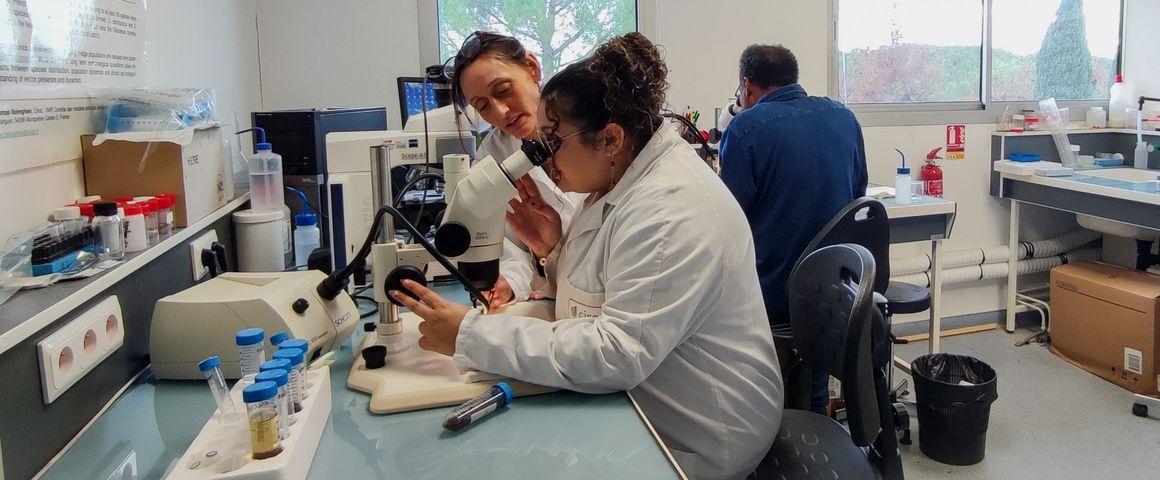
    A CIRAD team specializing in ticks detected the FHCC virus in ticks of the Hyalomma marginatum species for the first time in France. A CIRAD team, specializing in ticks (Laurence Vial and Célia Bernard), detected the FHCC virus in ticks of the Hyalomma marginatum species for the first time in France. © M. Gatius, Cirad


    Since 2015, Cirad, as part of an agreement with the DGAL, has been studying and monitoring the Hyalomma marginatum tick , one of the proven vectors of the Crimean-Congo Hemorrhagic Fever (CCHF) virus. The studies focus in particular on its distribution area, its history of invasion in France, its seasonal dynamics, its hosts, its carriage of infectious agents. The objective is to assess the risks associated with this vector and the diseases it is likely to transmit. Every year, in the spring, tick collections are carried out in equestrian structures and cattle farms. This year for the first time, around a hundred ticks out of more than 2000, collected in 2022 and especially 2023 in the spring, tested positive for the presence of the FHCC virus. These results were confirmed in October by the CNR of Viral Hemorrhagic Fevers (VHF) of the Pasteur Institute.

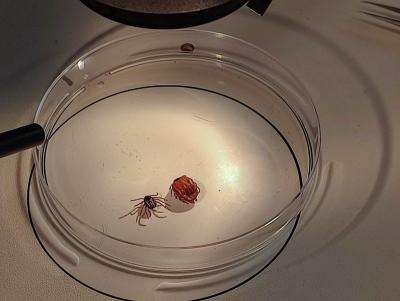
    Ticks Hyalomma marginatum. © M. Gatius, Cirad


    The Hyalomma marginatum tick is a relatively large hard tick (8 mm), recognizable by its long rostrum and its two-colored legs (whitish rings at the joints). It is found in the scrubland or certain pastures of the Mediterranean coast, from the Spanish border to the Var, to Ardèche and the Drôme. Its adult form bites domestic and wild ungulates (cattle, horses, wild boars, and to a lesser extent small ruminants or deer) without danger for them since, even infected with the CCHF virus, the latter do not develop symptoms. In addition, this adult form can occasionally bite humans. It is only active in spring, between April and July.

    “Our collections showed that the tick was distributed throughout the Mediterranean, in rather dry open natural habitats such as scrubland or maquis. According to future climate models, the Mediterranean climate is likely to expand, particularly in the Rhône valley, and on the Atlantic coast to the west, it is likely that the range of this species will expand » , estimates Laurence Vial, veterinary acarologist at CIRAD, and specialist in ticks.


    Be careful in scrubland, maquis and grazing areas between April and July

    The frequency of bites to humans is assumed to be low, as these ticks have no particular appetite for humans. In addition, they are generally more visible than other species of ticks because they are a little larger: it is therefore easier to spot them and remove them before they attach and engorge.

    The CCHF virus can also be transmitted to humans through contact with bodily fluids, such as blood, with infected animals, knowing that the latter only remain viremic for around ten days before developing an immune response ( with lifelong persistence of antibodies).

    “In Spain, the FHCC virus had been detected in ticks of the Hyalomma genus a few years before the appearance of human cases. Currently, one to three human cases of hemorrhagic fever are reported each year in this country. However, in this country, another species of tick is considered to be the majority vector: Hyalomma lusitanicum . In France, the distribution of this tick species is still unknown and needs to be studied. We are perhaps facing a different epidemiological cycle, hence our caution in making hasty comparisons between the case of Spain and that of France ,” explains Laurence Vial.


    References

    Bernard Célia, Holzmuller Philippe, Bah Madiou Thierno, Bastien Matthieu, Combes Benoit, Jori Ferran, Grosbois Vladimir, Vial Laurence. 2022. Systematic review on Crimean–Congo hemorrhagic fever enzootic cycle and factors favoring virus transmission: Special focus on France, an apparently free-disease area in Europe . Frontiers in Veterinary Science , 9 :932304, 17 p.

    Bah Thierno Madiou, Grosbois Vladimir, Stachurski Frédéric, Munoz Facundo, Duhayon Maxime, Rakotoarivony Ignace, Appelgren Anaïs, Calloix Clément, Noguera Liz, Mouillaud Théo, Andary Charlotte, Lancelot Renaud, Huber Karine, Garros Claire, Leblond Agnès, Vial Laurence. 2022. The Crimean-Congo haemorrhagic fever tick vector Hyalomma marginatum in south of France: Modeling its distribution and determination of factors influencing its establishment in a newly invaded area. Transboundary and Emerging Diseases , 69 (5): e2351-e2365.

    Vial L, Stachurski F, Leblond A, Huber K, Vourc'h G, René-Martellet M, Desjardins I, Balança G, Grosbois V, Pradier S, Gély M, Appelgren A, Estrada-Peña A. Strong evidence for the presence of the tick Hyalomma marginatum Koch, 1844 in southern continental France. Ticks Tick Terminal Dis. 2016 Oct;7(6):1162-1167. doi: 10.1016/j.ttbdis.2016.08.002


    Une équipe du Cirad vient de mettre en évidence la présence du virus de la Fièvre Hémorragique Crimée-Congo dans des tiques de l’espèce Hyalomma marginatum collectées dans les Pyrénées Orientales (Occitanie). C’est la première détection de ce virus en France. Aucun cas humain en revanche n’a été diagnostiqué sur le territoire.


    Comment


    • #3
      Translation Google

      Health: the Crimean-Congo hemorrhagic fever virus is circulating in Corsica, the ARS issues recommendations

      Written by Julia Sereni
      Published on 04/25/2024 at 3:18 p.m.

      The Crimean-Congo hemorrhagic fever virus is circulating in farms on the island, according to research carried out by the University of Corte. This disease is potentially transmissible to humans. The Corsica Regional Health Agency recalls a certain number of recommendations to protect yourself from ticks, parasites that vector the pathology.

      The Crimean-Congo hemorrhagic fever virus was discovered in Corsica.

      The information was revealed by Le Point on Wednesday April 24.

      After the Pyrénées-Orientales, this disease transmitted by ticks is now circulating in the island's farms, as demonstrated by research carried out by the team of Alessandra Falchi from the University of Corte.

      This discovery was published in the American journal Emerging Infectious Diseases , published by the Centers for Disease Control and Prevention (CFC), the United States federal agency responsible for protecting public health.

      "We identified the African genotype I of CCHFV [Editor's note: the Crimean-Congo hemorrhagic fever virus] in ticks collected from cattle in two different sites in the south-east and central west of Corsica, indicating circulation "established Crimean-Congo hemorrhagic fever" , report the researchers in the summary of this study.

      They are also concerned about a possible spread: "The threat of possible expansion and continued circulation of the virus in Western Europe must not be ignored. Health professionals and other groups at risk of infection, in particular hunters and farmers, must be informed of the circulation of CCHFV in Corsica."

      “Disease potentially transmissible to humans”

      Following the publication of the Point article, the Regional Health Agency (ARS) of Corsica indicates, via a press release dated April 24, that "the presence of the Crimean-Congo hemorrhagic fever virus is known in Corsica for several years in cattle . And added: “What is new is the detection of the disease in ticks, insect vectors and therefore making the disease potentially transmissible to humans.”

      What happens if there is transmission to humans? According to the Pasteur Institute, “while infection with the virus generally causes relatively mild symptoms, the disease can also progress to serious forms, where multiple hemorrhages and failure of vital organs lead to the death of the infected person. ".
      Faced with these risks, the ARS announces that it had, as of last March, “raised awareness through its “health and territories” newsletter among health professionals and elected officials about this risk of emerging pathologies. ".

      Referral to ANSES and the High Council for Public Health

      The presence of the virus in four regions, including Corsica, led to the referral to the National Health Security Agency (ANSES) and the High Council for Public Health (HCSP), which issued their opinions.

      Thus, for Anses, "the circulation of CCHFV on French territory (in some departments around the Mediterranean) having been proven, the occurrence of an autochthonous human case of CCHF is possible in France, following vector transmission, but also by contamination from blood or tissues of viremic animals.

      The agency recalls, however, that "the assessments carried out as part of this expertise and the responses provided in this opinion present a high level of uncertainty due to a limited number of available scientific knowledge and studies".

      Recommendations

      “Prevention messages are being finalized at the national level for the general public and groups at risk (occupational risk) ,” announces the ARS. In the meantime, the communication from the health authorities concerns "the reminder of general good practices to protect yourself from ticks, vectors of several diseases, including Lyme disease".

      During your walks in the forest, or in the scrub, or when you spend time in your garden:
      • wear closed shoes and light-colored covering clothing (to better spot ticks on the surface of the fabric)
      • avoid walking among tall grass, bushes and low branches and use marked paths
      • inspect yourself after returning from your walks and gardening activities
      • in the event of a bite, immediately remove the attached ticks using a tick remover or fine tweezers (under no circumstances use ether or any other product) and disinfect the wound
      • monitor the sting area for several days and consult your doctor if you experience symptoms (fever, fatigue, redness).
      • If necessary, use repellents, favoring those with marketing authorization and respecting their conditions of use.
      • In addition, information will be provided to health professionals during the launch of the arbovirus surveillance season (viruses transmitted by insect bites) at the beginning of May.


      -------------------------------------


      ISSN: 1080-6059
      1. EID Journal
      2. Volume 30
      3. Number 5—May 2024
      4. Main Article
      Volume 30, Number 5—May 2024

      Research Letter

      Crimean-Congo Hemorrhagic Fever Virus in Ticks Collected from Cattle, Corsica, France, 2023

      Paloma Kiwan, Shirley Masse, Geraldine Piorkowski, Nazli Ayhan, Morena Gasparine, Laurence Vial, Remi N. Charrel, Xavier de Lamballerie, and Alessandra FalchiComments to Author
      Author affiliations: Unité des Virus Emergents, Aix Marseille Université, Università di Corsica, IRD140, INSERM 207 IRBA, Marseille, France (P. Kiwan, S. Masse, G. Piorkowski, N. Ayhan, M. Gasparine, R.N. Charrel, X. de Lamballerie, A. Falchi); Université de Corse–Institut National de Santé et de la Recherche Médicale, Corte, France (P. Kiwan, S. Masse, G. Piorkowski, N. Ayhan, M. Gasparine, R.N. Charrel, X. de Lamballerie, A. Falchi); Centre National de Référence des Arbovirus, Marseille, France (N. Ayhan, X. de Lamballerie); Université de Montpellier, Montpellier, France (L. Vial)​

      ...

      Abstract

      We report the detection of Crimean-Congo hemorrhagic fever virus (CCHFV) in Corsica, France. We identified CCHFV African genotype I in ticks collected from cattle at 2 different sites in southeastern and central-western Corsica, indicating an established CCHFV circulation. Healthcare professionals and at-risk groups should be alerted to CCHFV circulation in Corsica.

      Crimean-Congo hemorrhagic fever (CCHF) is a tickborne disease caused by CCHF virus (CCHFV) (species Orthonairovirus haemorrhagiae, genus Orthonairovirus, family Nairoviridae, order Bunyavirales). Endemic in Africa, the Middle East, Asia, and Eastern Europe, CCHF has expanded to Western Europe (1). Repeated detection of CCHFV in Spain (2) raises questions about its circulation in neighboring countries, such as Portugal, Italy, and France.

      In Corsica, a French Mediterranean island, a seroprevalence study of CCHFV conducted in livestock (cattle, goats, and sheep) during 2014–2016 showed an overall seroprevalence of 9.1%, and cattle harbored the highest rates (3). A subsequent surveillance study of 8,051 ticks collected from wild (wild boar, deer, and mouflon sheep) and domestic (cattle, horses, sheep) animals during 2016–2020 failed to detect CCHFV or nairovirus RNA (4).

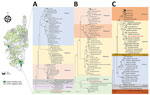
      Figure. Phylogenetic analysis of Crimean-Congo hemorrhagic fever virus in ticks collected from cattle, Corsica, France, 2023. Map at left shows locations of cattle from which ticks were collected at the slaughterhouses...

      Since 2022, we have continued CCHFV surveillance by collecting ticks from cattle at 2 slaughterhouses >2 times/month. Cattle originate from a broad geographic area, and the national ear-tag identification system enables tracing of each animal’s origin and farm owner (Figure). We identified ticks by using taxonomic keys, then pooled ticks by species, sex, development stage, study site, and animal host, as previously reported (4). We spiked each pool, consisting of 1–6 ticks, with a predefined amount of MS2 bacteriophage for monitoring nucleic acid extraction, reverse transcription PCR (RT-PCR), and nucleic acid amplification (5). We used MagMAX Viral/Pathogen Ultra Nucleic Acid Isolation Kit (Thermo Fisher Scientific, https://www.thermofisher.comExternal Link) to purify nucleic acids. We tested each sample by using 2 real-time RT-PCRs, 1 targeting the large (L) RNA segment (2) and 1 targeting the small (S) RNA segment (6). We used the SuperScript IV One-Step RT-PCR System Kit (ThermoFisher) to design 28 CCHFV-specific pairs of primers to amplify the S, medium (M), and L segments (Appendix). We sequenced PCR products by using S5 Ion Torrent technology (ThermoFisher). We determined the best model by using the maximum-likelihood method and performed phylogenetic analyses by using MEGA6 software (7) (Figure).

      During June 2022–July 2023, we collected 5,165 ticks from 465 cattle and grouped ticks into 1,491 pools. Tick species consisted of 2,390 (46.27%) Rhipicephalus bursa, 1,103 (21.35%) Hyalomma marginatum, 750 (14.52%) Boophilus annulatus, 507 (9.81%) Hyalomma scupense, 238 (4.60%) Haemaphysalis punctata, 127 (2.45%) Ixodes ricinus, 48 (0.92%) Rhipicephalus sanguineus, and 2 (0.03%) Dermacentor marginatus. A total of 24 (1.70%) pools collected from 5 cattle from southern Corsica tested positive by the L-RNA assay (Table). Nineteen of the 24 tick pools were collected from 1 animal (no. 4039) (Table). Partial sequences for S (1,340 bp), M (4,894 bp), and L (11,275 bp) segments were obtained from animal nos. 2478 (pool 417) and 4039 (pool 1207) (Table). The effective detection of CCHFV genome is strongly supported by the formal exclusion of contamination because no CCHFV strain or genome had been previously processed in the laboratory, the PCR systems used can distinguish genomic RNA from the positive control (6), and the CCHFV sequences obtained were original and unambiguous.

      The obtained S and M segment sequences constituted a monophyletic group belonging to genotype I (Africa 1), whereas the L segment sequence grouped with genotype III strains (Africa 3) (Figure). The sequences of all 3 segments of the CCHFV from Corsica are closely related to 2 sequences from Senegal corresponding to strains identified in the 1970s and likely represent strains reassorted in Senegal. Whether those strains are typical of strains from Senegal or have been circulating in other parts of Africa requires additional investigations.

      Our results suggest that CCHFV strains circulating in Corsica and Spain have distinct origins. In Spain, genotype III is the most widespread and is most often detected in H. lusitanicum ticks (2), a species not yet identified in Corsica. Trans-Saharan migratory birds carrying H. marginatum ticks are the most likely source of CCHFV strains entering Corsica (6). Examination of the main bird migration routes suggests that 2 different migratory corridors link Spain and Corsica to Africa; mainly, but not exclusively, West Africa for Spain and Central Africa for Corsica (6). Those migration routes also could explain the different origin of CCHFV strains circulating in Corsica and in Spain.

      Our results provide evidence for established CCHFV circulation in Corsica because detection occurred at 2 distinct sites in the southeastern and central western parts of the island. In addition, our results provide evidence for infection in cattle because multiple CCHFV-positive ticks were found on the same animal. CCHFV detection in feeding ticks is indicative of virus circulation within the cattle population but does not elucidate the role of ticks in virus transmission. Our results must be interpreted by considering previous serologic evidence of CCHFV circulation in cattle in Corsica (3), the presence of competent vectors locally (4), and recent reports of CCHFV detection in southern mainland France (10). The threat of possible continuous expansion and circulation of the virus over Western Europe should not be disregarded. Healthcare professionals and other groups at risk for infection, including hunters and farmers, should be informed about CCHFV circulation in Corsica.

      Ms. Kiwan is a PhD student at the Unité des Virus Emergents, University of Corsica Pascal Paoli and Aix-Marseille University, France. Her primary research interests focus on tickborne viruses via a One Health approach.​
      ...

      Comment


      • #4
        Crimean-Congo hemorrhagic fever: take the right steps now to protect yourself!

        published on 05/21/24

        In October 2023 and for the first time in France, the Crimean-Congo hemorrhagic fever virus (CCHF) was detected in ticks of the Hyalomma marginatum species collected from cattle in the Pyrénées-Orientales and Corsica.

        CCHF is an infection caused by a virus that can cause fever, chills, digestive problems and, in rare cases, hemorrhagic illness with uncontrolled bleeding in humans.

        Although no human contamination has been reported in the territory to date, it is advisable, during the summer period, to adopt the right actions to protect ourselves against this virus. Furthermore, as part of the fight against the FHCC virus, the Ministry of Labor, Health and Solidarity is in close contact with the Ministry of Agriculture and Food Sovereignty, and the Ministry of Transition. Ecological and Territorial Cohesion as well as Public Health France agencies and the National Agency for Food, Environmental and Occupational Health Safety to coordinate prevention actions in a “one health” approach which takes take into account the links between human, animal and environmental health.


        How is FHCC transmitted?

        The FHCC virus is most often transmitted through the bite of a Hyalomma marginatum tick infected with the virus. This species of tick is larger than the other species found in France. Its legs are striped and it can reach 8 mm as an adult. Established in Corsica for many years, it has also been present for around ten years on the entire French Mediterranean coast (Pyrénées-Orientales, Aude, Hérault, Gard, Ardèche, Drôme, Bouches-du-Rhône, Var, Alpes -Maritimes).

        Image of Hyalomma marginatum (credit Frédéric Stachurski)


        Tique Hyalomma marginatum adulte sur une pièce de 1 euro (crédit Connie JohnsonXXX)​​


        How to protect yourself from it?


        The main way to protect yourself against CCHF is to avoid tick bites by adopting individual protection measures, in spring and summer, in places where the tick is installed (dry areas of scrubland and scrubland, pastures, hiking trails, fields, crops, orchards, vineyards, etc.):
        • Wear clothing covering your legs and arms, preferably light colored to better see the tick;
        • Wear closed shoes;
        • Regularly inspect your body and that of your children;
        • Have a tick remover or fine tweezers to remove the tick quickly in the event of a bite.
        Since skin repellents have limited effectiveness, their use should not replace the preventive measures cited above.

        What to do in case of a bite?

        If you are bitten by a tick and after removing it (with a tick remover or fine tweezers) and disinfecting the bite site, photograph the tick if you can.
        Within 14 days after the bite and if you suddenly experience one of the symptoms mentioned above, consult a doctor, indicating that you have been bitten by a tick and showing him the photo.


        To know more...

        Comment


        • #5
          Translation Google

          Click image for larger version

Name:	image.png
Views:	288
Size:	21.8 KB
ID:	1020775

          First detection of antibodies against the Crimean-Congo hemorrhagic fever virus in farm and wild animals in France

          Results & impact

          October 10, 2025


          A CIRAD team has just published a groundbreaking study, conducted between 2008 and 2022 in southern France, which reveals for the first time the presence of antibodies against the Crimean-Congo hemorrhagic fever (CCHF) virus in livestock and wild animals. These results suggest the virus is likely circulating in various French departments around the Mediterranean and the Pyrenees.
          Serological tests © C. Dangléant, Cirad Célia Bernard, eco-epidemiologist and author of the study published in PLOS One, manipulates animal blood sera to conduct a serological test to detect antibodies against the Crimean-Congo hemorrhagic fever virus. © C. Dangléant, CIRAD


          Summary
          Research Unit
          Star

          Read also
          First detection of Crimean-Congo Hemorrhagic Fever virus in the South of France

          Contact
          presse@cirad.fr

          Since 2015, CIRAD scientists, under an agreement with the French Directorate General for Food (DGAL – Ministry of Agriculture and Food Sovereignty), have been studying and monitoring the Hyalomma marginatum tick, one of the proven vectors of the Crimean-Congo hemorrhagic fever (CCHF) virus. This work focuses in particular on its distribution area, its invasion history in France, its seasonal dynamics, its hosts and its carriage of infectious agents. In 2023, they demonstrated, for the first time, the circulation of the CCHF virus in the Pyrénées-Orientales, with the detection of the virus in Hyalomma marginatum ticks (1) .

          Animals carrying antibodies

          In this new study (2), conducted between 2008 and 2022, more than 10,000 blood samples from cows and wild animals were analyzed in the south of France. The results show that 2 % of cows and 2.25% of wild animals (such as deer, roe deer or wild boar) developed antibodies against this virus , a sign that they had probably been in contact with it. The study also highlights the influence of environmental factors and interactions between wild and domestic animals.

          A controlled risk

          The results of this new study suggest probable circulation of the virus in certain areas studied, without however confirming it.
          These results should be taken with caution. Only the detection of the virus in ticks, as was the case in 2023 in the Pyrénées-Orientales, can confirm the circulation of the virus in areas where an animal immune response has been characterized.

          Laurence Vial
          veterinary entomologist from CIRAD, expert on the Hyalomma marginatum tick.


          To date, no human cases of CCHF have been detected in France. Infected animals, whether domestic or wild, show no symptoms. They only carry the virus for a few days and do not constitute a reservoir for the virus. No specific health measures are required for livestock or wildlife.

          Research and monitoring to continue

          Scientists are calling for enhanced surveillance, particularly in high-risk areas, and integrated approaches to better understand and mitigate the risks associated with this emerging disease. Several research projects are underway, including the PEPR Prezode ARCHE project , which aims to better understand the processes of circulation and emergence of the CCHF virus in France.

          References

          (1) Bernard Célia, Joly Kukla Charlotte, Rakotoarivony Ignace, Duhayon Maxime, Stachurski Frédéric, Huber Karine, Giupponi Carla, Zortman Iyonna, Holzmuller Philippe, Pollet Thomas, Jeanneau Mélanie, Mercey Alice, Vachiery Nathalie, Lefrançois Thierry, Garros Claire, Michaud Vincent, Comtet Loic, Despois Léa, Pourquier Philippe, Picard Caroline, Journeaux Alexandra, Thomas Damien, Godard Sabine, Moissonnier Elodie, Mely Stéphane, Sega Manon, Pannetier Delphine, Baize Sylvain, Vial Laurence. Detection of Crimean–Congo haemorrhagic fever virus in Hyalomma marginatum ticks, southern France, May 2022 and April 2023. Euro Surveill. 2024;29(6):pii=2400023. https://doi.org/10.2807/1560-7917.ES.2024.29.6.2400023

          (2) Bernard C, Apolloni A, Grosbois V, Peyraud A, Saengram P, Jori F, et al. (2025) First detection of Crimean Congo Hemorrhagic Fever antibodies in cattle and wildlife of southern continental France: Investigation of explanatory factors. PLoS One 20(9): e0331875. https://doi.org/10.1371/journal.pone.0331875


          Recommendations for self-protection

          The French Agency for Food, Environmental and Occupational Health Safety (ANSES) has issued its recommendations for the general population and professionals in contact with animals, as well as for hunters. In the event of suspected human contamination, the High Council for Public Health (HCSP) has established a protocol for health professionals to ensure safe care .


          Une équipe du Cirad vient de publier une étude inédite, menée entre 2008 et 2022 dans le sud de la France, qui révèle pour la première fois la présence d’anticorps contre le virus de la fièvre hémorragique de Crimée-Congo (FHCC) chez les animaux d’élevage et sauvages. Des résultats qui suggèrent une circulation probable du virus dans différents départements français du pourtour méditerranéen et des Pyrénées.

          Comment

          Working...
          X