-
-
Source: https://www.postkhmer.com/national/2025-8-6-1723-262884
6-year-old girl infected with bird flu after eating dead chicken
National News
Date of publication:
06 August 2025 | 17:21
Reporter:
Park Seangly
Takeo: A 6-year-old girl has tested positive for bird flu and is in intensive care after about 1,000 chickens died in the village.
The Ministry of Health announced on Wednesday, August 6, that there is another case of bird flu, a 6-year-old girl who was confirmed to be positive for the H5N1 bird flu virus by the National Institute of Public Health on August 5, 2025.
The patient, who lives in Prey Mok village, Sre Ronung commune, Tram Kak district, Takeo province, has symptoms of fever, cough, shortness of breath and difficulty breathing. The patient is currently undergoing intensive care and treatment by medical teams.
The ministry stated: “According to inquiries, in the past month, there have been nearly a thousand sick and dead chickens in the village. At the same time, in the children’s home, over the past 20 days, there have been 30 sick and dead chickens in succession, and the children’s mother used the dead chickens to cook before the day the children started getting sick.”
The emergency response teams of the national and sub-national ministries of health have been collaborating with the working groups of the provincial departments of agriculture and local authorities at all levels to conduct active research on the occurrence of bird flu and respond according to technical methods and protocols to find the source of infection, both in animals and humans. In addition, it is also searching for suspected cases and contacts to prevent further transmission in the community, distributing Tamiflu to close contacts, and conducting health education campaigns among residents in the affected villages.
The Ministry of Health has once again reminded all residents to always pay close attention to bird flu, because H5N1 bird flu continues to threaten public health.
The Ministry advised that if you have a fever, cough, sputum discharge, or difficulty breathing, and have a history of contact with sick or dead chickens or ducks in the 14 days before the onset of symptoms, do not go to crowded gatherings or places with large crowds, but seek immediate consultation and treatment at a nearby health center or hospital to avoid delaying treatment and putting you at high risk of death.Comment
-
Cambodian MOH Announces 15th H5N1 Case of 2025
#18,827
It's been just over a week since the last case was reported by Cambodia, and the summer surge in cases continues with the 12th case reported since late May (and 31st since this resurgence began in early 2023).
Unlike H5N1 cases reported in the United States - which are due to a milder clade 2.3.4.4b - recent Cambodian cases have been caused by a new reassortment of an older clade of the H5N1 virus (recently renamed 2.3.2.1e) - which appears to be spreading rapidly through both wild birds and local poultry.
This morning the Cambodia MOH posted an announcement on their Facebook page on another H5N1 case - this time from Takeo Province - involving a 6 year old child who is reportedly in intensive care reportedly being exposed to sick or dead chickens.
I've reproduced the screen shot (in Cambodian) and have provided an English translation below.
(Translation)Kingdom of Cambodia, Nation, Religion, King
Ministry of Health
Press Release
Cases of bird flu in 6-year-old girls
The Ministry of Health of the Kingdom of Cambodia would like to inform the public that there is another case of bird flu in a 6-year-old girl who was confirmed positive for the H5N1 bird flu virus by the National Institute of Public Health on August 5, 2025. The patient lives in Prey Mok village, Sre Nong commune, Tram Kak district, Takeo province. He has symptoms of fever, cough, fatigue and difficulty breathing.
The patient is currently undergoing rescue efforts with the attention of doctors. According to the survey, a month ago, in the village, there were nearly a thousand sick and dead chickens. At the children's house, during the 20 days, there were 30 sick and dead chickens in a row, and the child's mother brought the dead chickens to cook before the day the children started to get sick.
The Ministry of Health's national and sub-national emergency response teams have been working closely with provincial agriculture departments and local authorities to actively investigate the outbreak of bird flu and respond to methods and technical protocols, identify sources of transmission in both animals and humans, and identify suspected and affected cases in the community.
The Ministry of Health would like to remind all citizens to be careful of bird flu because H5N1 bird flu continues to threaten the health of our people, and also to inform you if you have a fever, cough, runny nose or shortness of breath and have a history of contact with sick or dead chickens during the 14 days before the onset of symptoms and people do not go to the meeting. Seek medical treatment at a nearby health center or hospital immediately to avoid delays, leading to a higher risk of eventual death.
Transmission: H5N1 bird flu is a flu virus that is usually transmitted from sick birds to other birds, but can sometimes be transmitted from birds to humans through close contact with sick or dead birds. Avian influenza in humans is a serious disease that requires timely hospitalization. Although it is not easily transmitted from person to person, if it can metabolize it can be as contagious as the seasonal flu.
Address: Lot 80, Samdech Pen Nuth Street (289)
Phone: (+855) 23 885 970
Sangkat Boeung Kak II, Khan Toul Kork, Phnom Penh
Email: info@moh.gov.kh
Website: www.moh.gov.kh
Telegram: t.me/MOHCambodia
As we discussed a month ago, in Cambodia: Food Insecurity, Food Safety & H5N1 - despite repeated warnings to the public not to prepare or cook sick/dead poultry - scarce resources and hunger can sometimes drive people to take risks.
Given the frequent contacts reported with sick or dead poultry, there is currently no evidence to suggest human-to-human transmission of the virus.
While we continue to focus on clade 2.3.4.4b H5 viruses in the United States, this case reminds us that there are many other iterations of HPAI H5 viruses circulating around the globe - with new ones emerging at an increasing rate - each on their own evolutionary trajectory.
All medical discussions are for educational purposes. I am not a doctor, just a retired paramedic. Nothing I post should be construed as specific medical advice. If you have a medical problem, see your physician.Comment
-
Source: https://khmernote.com.kh/news/414009
A 6-year-old child has severe pneumonia caused by the H5N1 virus after eating chicken and duck that were sick-dead
BY soknita
August 9, 2025
(Phnom Penh): On the morning of August 9, 2025, according to Dr. Beat Richner, a 6-year-old child has severe pneumonia caused by the H5N1 virus after eating chicken and duck that were sick-dead.
According to Dr. Beat Richner, a 6-year-old child was sent from Tbong Khmum province with severe pneumonia caused by the H5N1 bird flu virus and arrived at Kantha Bopha Hospital in critical condition.
The child was saved by a ventilator and suctioned air from the rotting lung tissue and was treated for 20 days. The child has now returned home after being treated by a team of emergency doctors at Kantha Bopha Hospital in Phnom Penh.
It is worth noting that the Ministry of Health of the Kingdom of Cambodia has also urged citizens not to eat sick poultry and ducks, as they can cause infection with the H5N1 virus and severe pneumonia that is difficult to treat and has a high risk of death.Comment
-
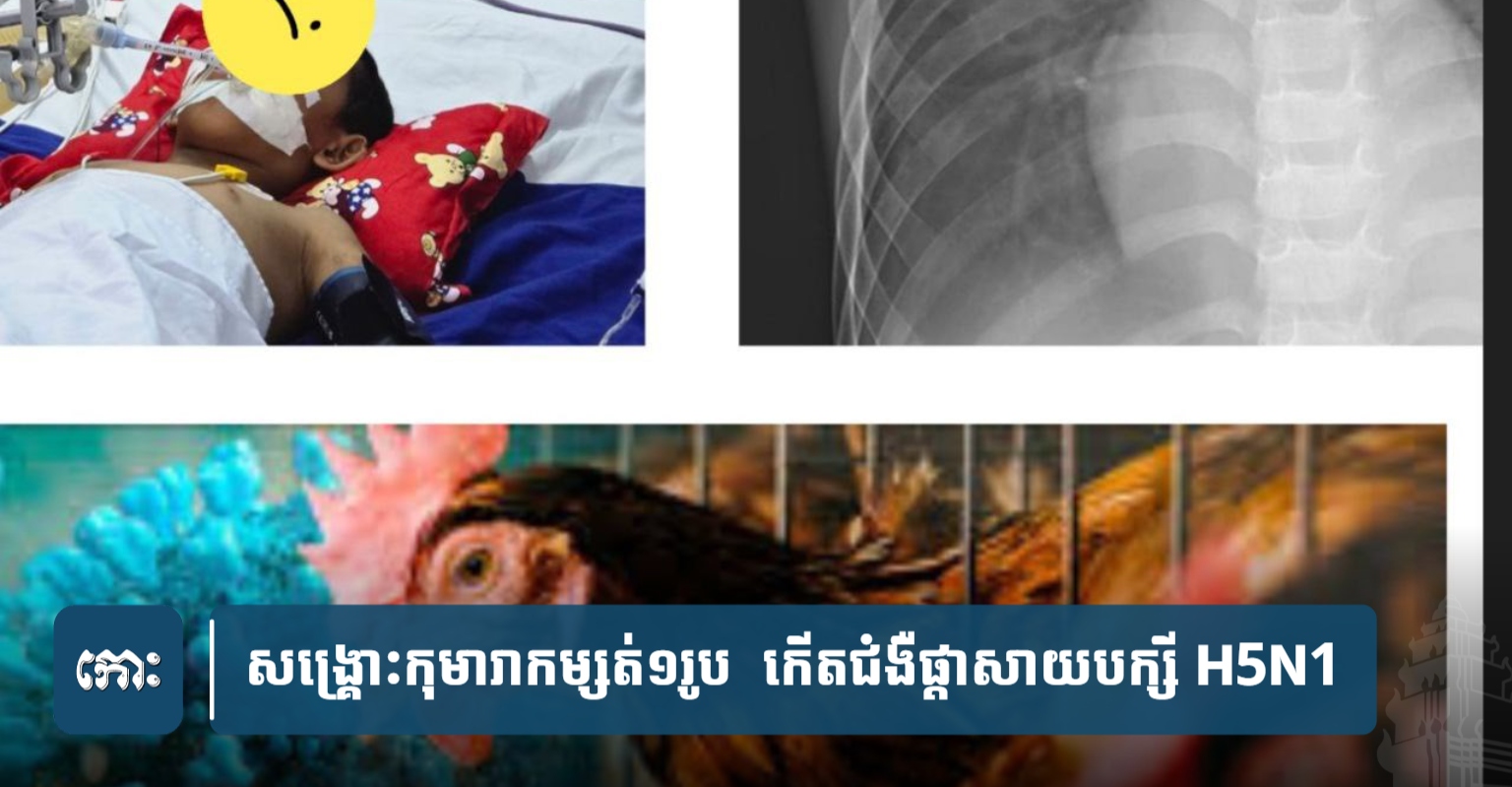
I believe the 6 year old in post #19 is:The child was saved by a ventilator and suctioned air from the rotting lung tissue and was treated for 20 days. The child has now returned home after being treated by a team of emergency doctors at Kantha Bopha Hospital in Phnom Penh.
Cambodia - Male, 6, sick chicken contact, ICU, Tbong Khmum province
...There is another case of bird flu in a 6-year-old boy who was confirmed positive for the H5N1 avian influenza virus by the National Institute of Public Health on July 21, 2025.
Comment
-
on X
translated:
Pokrath Hansasuta
@pokrath
·
46m
No further news yet about the child infected with birdflu H5N1 in #Cambodia. The last news was that it was pneumonia. Stay safe. It's a highly contagious strain. Thais living near the border, be extra cautious. If you find dead poultry (birds, ducks, geese, chickens), don't let children play with them. Wear gloves and burn them. Inform the authorities.
Quote
Pokrath Hansasuta
@pokrath
·
Aug 6
birdflu H5N1 is the 15th case of 2025 in #Cambodia. The patient is a 6-year-old girl from Prey Mok Village (where thousands of chickens were sick last month), northeastern Trat. She has symptoms of fever, cough, and shortness of breath. She likely contracted the disease from dead chickens brought back for cooking. No human-to-human transmission has been found. Thailand has announced a 90-day ban on poultry imports from Cambodia.
Comment
-
Translated:Originally posted by Shiloh View Post
Phnom Penh: A young boy with severe bird flu was saved by doctors at Kantha Bopha Hospital.
According to Kantha Bopha Hospital, on August 8, 2025, a 6-year-old boy was brought from Tbong Khmum province with severe pneumonia caused by the H5N1 bird flu virus. When he arrived at Kantha Bopha Hospital, he was in critical condition and was breathing his last....
Comment
-
translation
October 16, 2025
Three-Year-Old Cambodian Girl Confirmed to Have Infected with H5N1 Avian Influenza
Domestic Reporter: Hu Chenxin, October 16, 2025, 10:11 PM
(Phnom Penh) – The Ministry of Health announced on the evening of the 16th that a three-year-old girl in Spetses Province has been confirmed to have been infected with the H5N1 avian influenza virus.
The Ministry of Health stated that the girl was confirmed to have been infected with the H5N1 virus by the National Institute of Public Health and the Pasteur Institute on the 15th. She has developed symptoms including fever, diarrhea, cough, and abdominal pain and is currently receiving medical treatment. An investigation revealed that chickens and ducks kept in the girl's home and those of neighboring households had become ill and died in the week prior to her onset of illness.
The Ministry of Health stated that the emergency response team is currently conducting an epidemiological investigation with local authorities and relevant departments to trace the possible source of infection and continuously monitor suspected cases and close contacts to prevent further spread. The Ministry of Health has also distributed the antiviral drug Tamiflu to close contacts and is conducting health promotion and prevention awareness campaigns in the affected villages to raise public awareness of avian influenza.
Comment
-
[Transated, emphasis is mine]
Newly diagnosed H5N1 bird flu case in 3-year-old girl
2025/10/16 10:09:58 pm
The Ministry of Health of the Kingdom of Cambodia on October 16, 2025 issued a press release to inform the public: There is another case of bird flu in a 3-year-old girl who was confirmed to be positive for the H5N1 bird flu virus by the National Institute of Public Health and the Pasteur Institute of Cambodia on October 15, 2025. The patient lives in Chek Village, Svay Chachep Commune, Parset District, Kampong Speu Province, and has symptoms of fever, diarrhea, cough, and abdominal pain. The patient is currently receiving intensive treatment from a medical team. According to inquiries, chickens and ducks in the patient’s house and neighboring houses have been sick and dying for about a week before the child became sick.
The emergency response team of the national and sub-national Ministry of Health has been and is working with the provincial and local agricultural departments and local authorities at all levels to actively investigate the outbreak of bird flu and respond according to technical methods and protocols, find sources of infection in both animals and humans, and find suspected cases and contacts to prevent further transmission in the community, as well as distribute Tamiflu to close contacts and conduct health education campaigns among residents in the villages where the incident occurred.
-snip-
...https://btv.com.kh/article/87587Comment
-
A new case - the 14 year old in Takeo province -
Avian Influenza Report is a weekly report produced by the Surveillance Division of the Communicable Disease Branch of the Centre for Health Protection. This report highlights global avian influenza activity in humans and birds.
Reporting period: October 12, 2025 – October 18, 2025 (Week 42)
(Published on October 21, 2025)
Summary
Since the previous issue of Avian Influenza Report (AIR), there were two new human
cases of avian influenza A(H5N1) from Cambodia reported by the World Health
Organization (WHO) and the Cambodian Ministry of Health in October 2025. From 2015
to 2024, 0 to 145 confirmed human cases of avian influenza A(H5N1) were reported to the
WHO annually (according to onset date).*
Since the previous issue of AIR, there were no new human cases of avian influenza
A(H5N6). Since 2014 (as of October 18, 2025), there were 93 human cases of avian
influenza A(H5N6) reported globally and 92 of them occurred in the Chinese Mainland.
The latest case was reported on July 24, 2024.
Since the previous issue of AIR, there were no new human cases of avian influenza
A(H7N9). Since March 2013 (as of October 18, 2025), there were a total of 1568 human
cases of avian influenza A(H7N9) reported globally (all were reported in the seven waves
between 2013 and September 2019). The latest case was reported on April 5, 2019.
* Since November 21, 2012, WHO only publishes information on human cases with avian influenza A(H5N1)
infection in “Influenza at human – animal interface: Monthly Risk Assessment Summary”. Only cases of human
infection with H5N1 involved in events that are unusual or associated with potential increased risks will be
reported in Disease Outbreak News. The latest report was published in October 2025.
Click on image:
Continued: https://www.chp.gov.hk/files/pdf/202...vol21_wk42.pdf
Last edited by sharon sanders; October 21, 2025, 07:31 AM.Comment
-
-
Cambodian MOH Announces 18th H5N1 Case of 2025
#18,948
Three years ago an older clade of H5N1 (2.3.2.1.x) reemerged in Cambodia's population after a 9 year absence, spilling over into 6 humans in 2023. The following year, an additional 10 people were infected, and so far in 2025, we've been notified of 18 new cases (see map above).
The majority of these cases have been in children and adolescents, and sadly, roughly half have died. Contact with sick or dead poultry has often been cited as the source of infection.
Unlike H5N1 cases reported in the United States - which are due to a milder clade 2.3.4.4b - recent Cambodian cases have been caused by a new reassortment of an older clade of the H5N1 virus (recently renamed 2.3.2.1e) - which appears to be spreading rapidly through both wild birds and local poultry.
Overnight the Cambodian MOH Facebook page (below) announced their latest (fatal) case, that of a 22-year-old man from the Capital, Phnom Penh. This is the first case in this series reported from the Capital district.
Unlike most of the other cases we've seen, the MOH has apparently not yet determined the source of this man's exposure.
First a (machine) translation, after which I'll have a bit more.
(Translation)Kingdom of Cambodia, Nation, Religion, King
Ministry of Health
Press Release
Death from bird flu in 22-year-old man
The Ministry of Health of the Kingdom of Cambodia would like to inform the public: There is 1 case of bird flu in a 22-year-old man who was confirmed positive for avian influenza virus type H5N1 by the National Institute of Public Health on November 15, 2025. The patient resides in Kien Khleang Village, Chroy Changvar Sangkat, Chroy Changvar District, Phnom Penh. Despite the care and rescue efforts of the medical team, the patient died on November 15, 2025 at 9:41 am due to serious conditions including fever, cough, shortness of breath, and difficulty breathing.
The emergency response teams of the national and sub-national ministries of health have been collaborating with the provincial agriculture departments and local authorities at all levels to actively investigate the outbreak of bird flu and respond according to technical methods and protocols, find sources of transmission in both animals and humans, and search for suspected cases and contacts to prevent further transmission in the community, as well as distribute Tamiflu to close contacts and conduct health education campaigns among residents in the affected villages.
The Ministry of Health would like to remind all citizens to always pay attention to and be vigilant about bird flu because H5N1 bird flu continues to threaten the health of our citizens. We would also like to inform you that if you have a fever, cough, sputum discharge, or difficulty breathing and have a history of contact with sick or dead chickens or ducks within 14 days before the start of the symptoms, do not go to gatherings or crowded places and seek consultation and treatment at the nearest health center or hospital immediately. Avoid delaying this, which puts you at high risk of eventual death.
How it is transmitted: H5N1 bird flu is a type of flu that is usually spread from sick birds to other birds, but it can sometimes be spread from birds to humans through close contact with sick or dead birds. Bird flu in humans is a serious illness that requires prompt hospital treatment. Although it is not easily transmitted from person to person, if it mutates, it can be contagious, just like seasonal flu.
Address: Lot No. 80, Samdech Pen Nut Street (289)
Sangkat Boeung Kak 2, Khan Toul Kork, Phnom Penh
Phone: (+855) 23 885 970
Email: info@moh.gov.kh
Website: www.moh.gov.kh
Telegram: t.me/MOHCambodia
While we continue to focus on clade 2.3.4.4b H5N1 viruses, this case reminds us that there are many other incarnations HPAI H5 circulating around the globe - with new ones emerging at an increasing rate - each on their own evolutionary trajectory.
This week's first report of a human H5N5 case in the United States, 2024's report of an H5N2 case in Mexico, and a small but rising number of clade 2.3.2.1a infections in humans and cats India/Bangladesh continue to illustrate HPAI H5's ability to evolve and diversify.
Even if we get lucky, and H5Nx faces some type of insurmountable species barrier (see Are Influenza Pandemic Viruses Members Of An Exclusive Club?), nature's laboratory is open 24/7, and new emerging threats are inevitable (see Sci. Advances: Assessing the Risk of Diseases with Epidemic and Pandemic Potential in a Changing World).
The only real question worth asking is, will we be prepared when that happens?
https://afludiary.blogspot.com/2025/...h5n1-case.htmlAll medical discussions are for educational purposes. I am not a doctor, just a retired paramedic. Nothing I post should be construed as specific medical advice. If you have a medical problem, see your physician.Comment
-
-
ISSN: 1080-6059
Disclaimer: Early release articles are not considered as final versions. Any changes will be reflected in the online version in the month the article is officially released.
Volume 32, Number 3—March 2026
Research Letter
Detecting Influenza A(H5N1) Viruses through Severe Acute Respiratory Infection Surveillance, Cambodia
...
William W. Davis , Kathrine R. Tan, Borann Sar, Alyssa Finlay, Heng Seng, Vicheth Long, Savuth Chin, Darapheak Chau, Kim Sreng Leang, Mich Vann, Sovandara Lam, Dara Chan, Ly Vannara Tek, Sovann Ly, and Timothy M. Uyeki
Author affiliation: US Centers for Disease Control and Prevention, Atlanta, Georgia, USA (W.W. Davis, K.R. Tan, B. Sar, A. Finlay, T.M. Uyeki); US Centers for Disease Control and Prevention, Phnom Penh, Cambodia (H. Seng, V. Long, S. Ly); Cambodia National Institute of Public Health, Phnom Penh (S. Chin, D. Chau); National Pediatric Hospital, Phnom Penh (K.S. Leang); Khmer Soviet Hospital, Phnom Penh (M. Vann); Kampot Provincial Hospital, Kampot, Cambodia (S. Lam); Svay Rieng Provincial Hospital, Svay Rieng, Cambodia (D. Chan); Kuntha Bopha Phnom Penh Hospital, Phnom Penh (L.V. Tek)
Suggested citation for this article
Abstract
Of 19 human cases of avian influenza A(H5N1) virus infection detected during January 2023–March 2025 in Cambodia, 12 (63%) were detected directly by surveillance for severe acute respiratory infection (SARI) or indirectly by testing ill close contacts. SARI surveillance can supplement other surveillance sources for identifying H5N1 cases.
Novel influenza A viruses have pandemic potential, and early identification of infections in humans is crucial for rapid response and containment. Detection of human infection with a novel influenza A virus initiates response activities, including antiviral postexposure prophylaxis for close contacts, symptom monitoring, and implementation of interventions to reduce transmission risk. In addition, timely clinical suspicion and early diagnosis of novel influenza A virus infections in humans are critical for optimizing clinical management: the Centers for Disease Control and Prevention recommend persons with suspected novel influenza A virus infection be promptly isolated, tested for influenza A viruses, and started on empiric antiviral treatment without waiting for testing results (1).
The primary goal of sentinel surveillance for severe acute respiratory infection (SARI) (2) is to detect trends in severe seasonal influenza and other respiratory viruses (3). Typically, surveillance sites are referral hospitals where a subset of patients meeting the SARI case definition (acute respiratory illness causing temperature >38°C and cough that has onset within the previous 10 days and requires hospitalization) (2) have respiratory specimens collected and tested for seasonal and (if negative) novel influenza A viruses. A reliably functioning SARI surveillance system for seasonal influenza also provides an infrastructure for detecting novel influenza A virus infections, including rapid identification of severely ill patients, shipping and testing of specimens, and reporting chains for response.
During February 2023–March 2025, a total of 19 human cases of influenza A(H5N1) were identified in Cambodia. Nine (47%) of the 19 cases were detected by SARI surveillance; 3 (16%) additional cases that involved exposure to sick or dead poultry were identified by testing close contacts of those cases. Investigations concluded that findings were most consistent with poultry-to-human transmission, although in some cases human-to-human transmission could not be completely ruled out. Of the remaining 7 identified cases, 6 (26%) were suspected by clinicians on the basis of patients’ history of exposure to sick or dead poultry, 1 (5%) was found through active case finding in response to one of those cases, and 1 (5%) was diagnosed by postmortem testing. Of the 19 H5N1 patients, 14 were <18 years of age; 7 pediatric cases were identified at SARI surveillance sites, and 3 of those 7 were detected at the National Pediatric Hospital in Phnom Penh. A highly pathogenic avian influenza A(H5N1) virus isolated from 1 patient was selected as an influenza A(H5) vaccine candidate (4).
Compared with the 5 cases diagnosed by clinicians, the 9 cases detected by SARI surveillance were diagnosed earlier (time from symptom onset to diagnosis: median 6 [range 3–9] days vs. median 8 [range 4–12] days) and treated with oseltamivir earlier (time from symptom onset to initiation of treatment: median 5 [range 2–7] days vs. median 7 [range 4–12] days). Oseltamivir treatment of H5N1 patients is associated with survival when initiated within 2 days of illness onset (5); however, most cases identified by SARI surveillance were identified much later. All but 1 of the 14 case-patients sought care at other healthcare facilities before seeking care at the hospital where they were diagnosed with influenza A(H5N1), highlighting an urgent need for clinician education to identify cases and start oseltamivir treatment as soon as possible.
SARI surveillance has limitations in detecting novel influenza A virus infections. Some novel influenza A case-patients might not develop SARI, and others with SARI might seek care at a private clinic that may not have influenza testing. Because SARI surveillance tests a subset of eligible SARI patients and does not usually have national coverage, H5N1 virus infections will be missed (6,7). SARI surveillance systems are costly, detections of novel influenza A viruses are rare (8)—in Cambodia, roughly 1 H5N1 virus was detected per 1,000 SARI cases (Table)—and other forms of surveillance are effective for detecting novel influenza A infections. For example, clinician suspicion led to diagnosis of 5 (25%) of 19 H5N1 cases in Cambodia during the study period. Thus, a combination of sentinel and event-based surveillance systems ideally should be used to detect novel influenza A viruses (9). Training clinicians at private clinics, outpatient settings, and nonsentinel site hospitals on the manifestations, diagnosis, and reporting of novel influenza A virus infections and expanding access to influenza testing, including for influenza A(H5) viruses, especially in areas with novel influenza A viruses circulating among poultry and other animals, is essential to improving detection of human cases.
In conclusion, during February 2023–March 2025, sentinel SARI surveillance in Cambodia directly or indirectly detected 63% (12/19) of human cases of influenza A(H5N1). To improve surveillance coverage and decrease times from symptom onset to detection, countries should consider multilayered surveillance systems, including event-based surveillance and educating clinicians on diagnosis of novel influenza A, especially in areas with high zoonotic transmission risk (10).
Dr. Davis is an epidemiologist working as program director for the Influenza Division, National Center for Immunization and Respiratory Diseases, US Centers for Disease Control and Prevention, in Nonthaburi, Thailand. His primary research interest is influenza, particularly H5N1 outbreak response.
...
Comment

- Do not take medical advice from the internet. If you have any medical questions please consult your medical practitioner.
LATEST POSTS - click HERE
Check out the FAQ,Terms of Service & Disclaimers by clicking the link. Please register to be able to post. By viewing this site you are agreeing to our Terms of Service and Acknowledge our Disclaimers.
FluTrackers.com Inc. does not provide medical advice. Information on this web site is collected from various internet resources, and the FluTrackers board of directors makes no warranty to the safety, efficacy, correctness or completeness of the information posted on this site by any author or poster. The information collated here is for instructional and/or discussion purposes only and is NOT intended to diagnose or treat any disease, illness, or other medical condition. Every individual reader or poster should seek advice from their personal physician/healthcare practitioner before considering or using any interventions that are discussed on this website. By continuing to access this website you agree to consult your personal physican before using any interventions posted on this website, and you agree to hold harmless FluTrackers.com Inc., the board of directors, the members, and all authors and posters for any effects from use of any medication, supplement, vitamin or other substance, device, intervention, etc. mentioned in posts on this website, or other internet venues referenced in posts on this website.- We are not asking for any donations. Do not donate to any entity who says they are raising funds for us.
 Tweet
Tweet




Comment