

Pathfinder
Editor, Senior Moderator
Why swine flu could kill you... (especially if you haven't got it)
<SCRIPT src="http://scripts.dailymail.co.uk/js/diggthis.js" type=text/javascript></SCRIPT>
By Frances Childs
Last updated at 12:34 AM on 15th December 2009
Revealed, how pandemic panic is making doctors miss more serious illnesses. Here, Frances Childs tells the story of how her partner was misdiagnosed with swine flu when he actually had dangerously advanced pneumonia that could have cost him his life
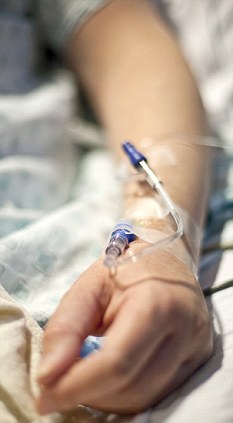
For almost two weeks Paul was left fighting for breath and so weak he could barely walk
When my partner Paul was diagnosed with swine flu, I wasn't surprised.
So many friends were going down with the same thing that it never occurred to me to be alarmed. Nor did it occur to me to question the diagnosis.
In fact, it was a crucial mistake which could have cost him his life. Paul - a fit, vigorous man of 47 - didn't have swine flu. He had pneumonia.
For almost two weeks he was left fighting for breath and so weak he could barely walk.
When he went to A&E ten days after his initial diagnosis, the consultant who examined him was staggered.
He suggested junior doctors listen to Paul's chest, as this was such a rare example of advanced pneumonia - the condition is normally treated before it becomes so dangerous.
Paul is just one of countless victims of swine flu misdiagnosis. These are patients who have found their health compromised and their lives at risk because their very real symptoms are being ignored in the rush to log another swine flu case.
The Health Protection Agency, an independent body dedicated to protecting public health, estimates that just 5 per cent of people diagnosed with swine flu actually have the H1N1 virus. Last week it was announced that 800,000 people have been given Tamiflu when they didn't have swine flu at all.
Paul started feeling unwell six weeks ago. He had a high temperature, complained about feeling cold and was shivering and coughing. Bumping into friends in town, many of them had a friend or relative who'd contracted swine flu.
Thinking that perhaps Paul had it, too, I rang the National Pandemic Flu Service. The voice on the other end of the line didn't fill me with confidence. Stumbling over her words, she sounded as though she were reading from a computer check list.
I have since discovered this is exactly what she was doing. The staff manning the helpline are not medically qualified - they are call centre operators who've received as little as three hours training in diagnosing swine flu.
We ploughed our way through the questions, I began to feel uneasy. The symptoms - fever, coughing, nausea - were so broad they could be indicative of almost anything.
Despite Paul not having some of the signs of swine flu, such as nausea and vomiting, I was told that he did have the virus and would be entitled to a course of Tamiflu, the anti-viral drug used to treat the H1N1 virus.
I collected it for him, but he refused to take it. He'd heard that Tamiflu could have unpleasant side-effects, such as sickness and nausea. Instead, he decided to take paracetamol.
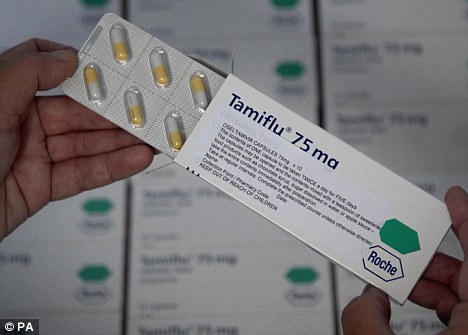 Despite Paul not having some of the signs of swine flu he was told that he did have the virus and would be entitled to a course of Tamiflu
I knew that swine flu is a very unpleasant illness, but I was worried when, three days later, Paul woke up on Saturday morning so ill he could barely get out of bed to use the bathroom.
He had a roaring temperature and was sweating so much the sheets were sodden. As well as suffering shaking fits, his breathing was laboured and he struggled to finish even a sentence.
It was the longest weekend of my life. Looking back, I should have taken him to hospital. Instead I rang NHS Direct.
This time I spoke to a nurse. When I described Paul's symptoms, she assured me he did have swine flu and that he would start to get better in a few days.
Still very uneasy, I waited until Monday morning, when I rang our GP. At first she was reluctant to visit because Paul had been diagnosed with swine flu.
'But he hasn't eaten for four days and he can't breathe,' I insisted. I was worried that Paul might be one of the unfortunate people who are so seriously affected by swine flu that they need to be hospitalised. When she finally agreed to make a home visit, my heart lifted.
She duly examined Paul and said that he did indeed have the H1N1 flu virus. His symptoms - high temperature and aching all over - were, I suppose, suggestive of flu.
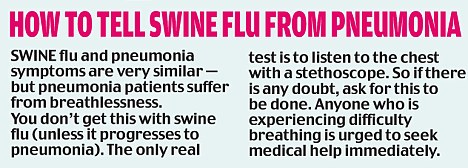
But I've since found out that difficulty breathing is not a flu symptom and should have alerted the doctor to the possibility of pneumonia.
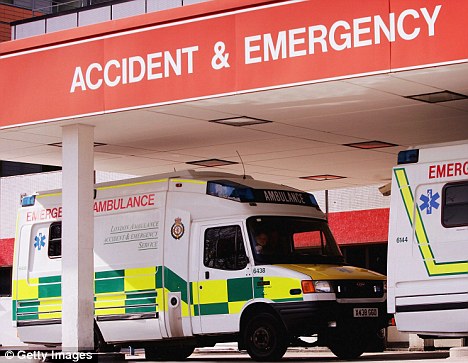 'By the time we arrived in accident and emergency, having dashed across town in a taxi, Paul, at 47, looked more like a 60-year-old'
Instead, she reassured me that 'swine flu is very debilitating. He'll start to get better in a few days'.
Paul didn't start to get better. By Wednesday, he was so ill he couldn't lift his head. When I lifted it for him, my hand came away soaked in sweat.
He was suffering convulsions, shaking and sweating, his breathing was laboured and he was hallucinating. I rang the doctor again.
'He can't breathe and he's hallucinating,' I insisted. 'He's really ill.' I started to cry. I was terrified I was going to lose him.
Swayed by my tears, the GP came again: 'I've told you it's swine flu. It's a serious illness,' she said.
Listening to Paul's chest, she conceded that he sounded a bit wheezy and wrote him out a prescription for penicillin. She thought Paul might have a bacterial chest infection on top of the virus. 'He'll start to get better in a day or so,' she said.
Saturday, Paul's joints swelled up. It was agony for him to bend his fingers or open his mouth. He came out in a vicious red rash across his body. He'd had an allergic reaction to the penicillin, and thank goodness he had.
When I rang an out-of-hours doctor, she told me to take him to hospital immediately.
By the time we arrived in accident and emergency, having dashed across town in a taxi, Paul, at 47, looked more like a 60-year-old. He could move only with great difficulty-he could barely talk and he needed a wheelchair to make his way across the corridor.
The staff took one look at him and admitted him. To our horror, the consultant said that Paul had never had swine flu. He'd had a chest infection. Because it had been misdiagnosed and untreated, it had become pneumonia.
Had Paul not had the allergic reaction to penicillin I dread to think of the consequences. One in 20 people who contract pneumonia dies of it.
Once he was in hospital, Paul responded well to antibiotics and steroids.
He was home two days later - still shaky, still very weak, but the terrible fevers, the shaking and sweating had gone.
He's been told that it will take him a year to recover fully and completely regain his strength. The aftermath of pneumonia has left him physically exhausted, but he is on the mend and, with every day that passes, I feel incredibly grateful that he is a tiny step closer to being well again.
Our experience was horrific and terrifying, but it wasn't a one-off.
Because swine flu has received so much attention, other serious illnesses are being missed as doctors make the assumption that someone with a fever, a cough and aches and pains has swine flu - there have been cases of patients with meningitis dying because they were told they had swine flu.
Of course, most cases of swine flu aren't diagnosed by a doctor - they are diagnosed over the phone, by someone reading off a check list of symptoms. Even so, doctors may be too ready to jump to the wrong conclusion.
'Swine flu is swamping our resources and we are in danger of ignoring other very serious and potentially fatal illnesses,' says Dr Martin Johnson, a GP in Barnsley and trustee of the Patients' Association. 'Some GPs might be getting too hung up on swine flu.'
The important thing, he counsels, 'is to be vigilant and if the patient's symptoms change or get worse, seek medical help immediately'.
And based on my experience, I would advise seeing a different doctor from the one who diagnosed swine flu in the first place.
Read more: http://www.dailymail.co.uk/health/article-1235859/Why-swine-flu-kill---especially-havent-got-it.html?ITO=1490#ixzz0ZisBqjJ2
<SCRIPT src="http://scripts.dailymail.co.uk/js/diggthis.js" type=text/javascript></SCRIPT>
By Frances Childs
Last updated at 12:34 AM on 15th December 2009
Revealed, how pandemic panic is making doctors miss more serious illnesses. Here, Frances Childs tells the story of how her partner was misdiagnosed with swine flu when he actually had dangerously advanced pneumonia that could have cost him his life
For almost two weeks Paul was left fighting for breath and so weak he could barely walk
When my partner Paul was diagnosed with swine flu, I wasn't surprised.
So many friends were going down with the same thing that it never occurred to me to be alarmed. Nor did it occur to me to question the diagnosis.
In fact, it was a crucial mistake which could have cost him his life. Paul - a fit, vigorous man of 47 - didn't have swine flu. He had pneumonia.
For almost two weeks he was left fighting for breath and so weak he could barely walk.
When he went to A&E ten days after his initial diagnosis, the consultant who examined him was staggered.
He suggested junior doctors listen to Paul's chest, as this was such a rare example of advanced pneumonia - the condition is normally treated before it becomes so dangerous.
Paul is just one of countless victims of swine flu misdiagnosis. These are patients who have found their health compromised and their lives at risk because their very real symptoms are being ignored in the rush to log another swine flu case.
The Health Protection Agency, an independent body dedicated to protecting public health, estimates that just 5 per cent of people diagnosed with swine flu actually have the H1N1 virus. Last week it was announced that 800,000 people have been given Tamiflu when they didn't have swine flu at all.
Paul started feeling unwell six weeks ago. He had a high temperature, complained about feeling cold and was shivering and coughing. Bumping into friends in town, many of them had a friend or relative who'd contracted swine flu.
Thinking that perhaps Paul had it, too, I rang the National Pandemic Flu Service. The voice on the other end of the line didn't fill me with confidence. Stumbling over her words, she sounded as though she were reading from a computer check list.
I have since discovered this is exactly what she was doing. The staff manning the helpline are not medically qualified - they are call centre operators who've received as little as three hours training in diagnosing swine flu.
We ploughed our way through the questions, I began to feel uneasy. The symptoms - fever, coughing, nausea - were so broad they could be indicative of almost anything.
Despite Paul not having some of the signs of swine flu, such as nausea and vomiting, I was told that he did have the virus and would be entitled to a course of Tamiflu, the anti-viral drug used to treat the H1N1 virus.
I collected it for him, but he refused to take it. He'd heard that Tamiflu could have unpleasant side-effects, such as sickness and nausea. Instead, he decided to take paracetamol.
I knew that swine flu is a very unpleasant illness, but I was worried when, three days later, Paul woke up on Saturday morning so ill he could barely get out of bed to use the bathroom.
He had a roaring temperature and was sweating so much the sheets were sodden. As well as suffering shaking fits, his breathing was laboured and he struggled to finish even a sentence.
It was the longest weekend of my life. Looking back, I should have taken him to hospital. Instead I rang NHS Direct.
This time I spoke to a nurse. When I described Paul's symptoms, she assured me he did have swine flu and that he would start to get better in a few days.
Still very uneasy, I waited until Monday morning, when I rang our GP. At first she was reluctant to visit because Paul had been diagnosed with swine flu.
'But he hasn't eaten for four days and he can't breathe,' I insisted. I was worried that Paul might be one of the unfortunate people who are so seriously affected by swine flu that they need to be hospitalised. When she finally agreed to make a home visit, my heart lifted.
She duly examined Paul and said that he did indeed have the H1N1 flu virus. His symptoms - high temperature and aching all over - were, I suppose, suggestive of flu.
But I've since found out that difficulty breathing is not a flu symptom and should have alerted the doctor to the possibility of pneumonia.
Instead, she reassured me that 'swine flu is very debilitating. He'll start to get better in a few days'.
Paul didn't start to get better. By Wednesday, he was so ill he couldn't lift his head. When I lifted it for him, my hand came away soaked in sweat.
He was suffering convulsions, shaking and sweating, his breathing was laboured and he was hallucinating. I rang the doctor again.
'He can't breathe and he's hallucinating,' I insisted. 'He's really ill.' I started to cry. I was terrified I was going to lose him.
Swayed by my tears, the GP came again: 'I've told you it's swine flu. It's a serious illness,' she said.
Listening to Paul's chest, she conceded that he sounded a bit wheezy and wrote him out a prescription for penicillin. She thought Paul might have a bacterial chest infection on top of the virus. 'He'll start to get better in a day or so,' she said.
Saturday, Paul's joints swelled up. It was agony for him to bend his fingers or open his mouth. He came out in a vicious red rash across his body. He'd had an allergic reaction to the penicillin, and thank goodness he had.
When I rang an out-of-hours doctor, she told me to take him to hospital immediately.
By the time we arrived in accident and emergency, having dashed across town in a taxi, Paul, at 47, looked more like a 60-year-old. He could move only with great difficulty-he could barely talk and he needed a wheelchair to make his way across the corridor.
The staff took one look at him and admitted him. To our horror, the consultant said that Paul had never had swine flu. He'd had a chest infection. Because it had been misdiagnosed and untreated, it had become pneumonia.
Had Paul not had the allergic reaction to penicillin I dread to think of the consequences. One in 20 people who contract pneumonia dies of it.
Once he was in hospital, Paul responded well to antibiotics and steroids.
He was home two days later - still shaky, still very weak, but the terrible fevers, the shaking and sweating had gone.
He's been told that it will take him a year to recover fully and completely regain his strength. The aftermath of pneumonia has left him physically exhausted, but he is on the mend and, with every day that passes, I feel incredibly grateful that he is a tiny step closer to being well again.
Our experience was horrific and terrifying, but it wasn't a one-off.
Because swine flu has received so much attention, other serious illnesses are being missed as doctors make the assumption that someone with a fever, a cough and aches and pains has swine flu - there have been cases of patients with meningitis dying because they were told they had swine flu.
Of course, most cases of swine flu aren't diagnosed by a doctor - they are diagnosed over the phone, by someone reading off a check list of symptoms. Even so, doctors may be too ready to jump to the wrong conclusion.
'Swine flu is swamping our resources and we are in danger of ignoring other very serious and potentially fatal illnesses,' says Dr Martin Johnson, a GP in Barnsley and trustee of the Patients' Association. 'Some GPs might be getting too hung up on swine flu.'
The important thing, he counsels, 'is to be vigilant and if the patient's symptoms change or get worse, seek medical help immediately'.
And based on my experience, I would advise seeing a different doctor from the one who diagnosed swine flu in the first place.
Read more: http://www.dailymail.co.uk/health/article-1235859/Why-swine-flu-kill---especially-havent-got-it.html?ITO=1490#ixzz0ZisBqjJ2

 :yinyang:
 > </o
> </o