
• FluTrackers.com Inc. does not provide medical advice. Information on this web site is collected from various internet resources, and the FluTrackers board of directors makes no warranty to the safety, efficacy, correctness or completeness of the information posted on this site by any author or poster. The information collated here is for instructional and/or discussion purposes only and is NOT intended to diagnose or treat any disease, illness, or other medical condition. Every individual reader or poster should seek advice from their personal physician/healthcare practitioner before considering or using any interventions that are discussed on this website. By continuing to access this website you agree to consult your personal physican before using any interventions posted on this website, and you agree to hold harmless FluTrackers.com Inc., the board of directors, the members, and all authors and posters for any effects from use of any medication, supplement, vitamin or other substance, device, intervention, etc. mentioned in posts on this website, or other internet venues referenced in posts on this website.
  • We are not asking for any donations. Do not donate to any entity who says they are raising funds for us.

Why blood of bird flu survivors is a lifesaver [Discussion]

Re: Why blood of bird flu survivors is a lifesaver [Discussion]

OoF:o, such a well writen reflexion text that quote my syringe filter thing just filled me with doubt:eek:, that was something someone told me it exist but I did not see it myself...

But I found more info about that...

monoject_corvac_clear_label_mottled_stopper-01c.jpg
This is a regular centrifuge tube with
a gel barrier to efficiently separrate serum from blood.

The gel barrier is not recquire to obtain serum but it ensure a better serum clearness.
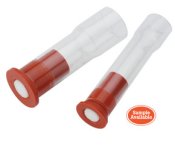


ml0713.jpghttp://www.marketlabinc.com/files/products/images/medium/ml0713.jpg?1157207894&SSImageQuality=FullHere is some filter device to allow serum collection.
  • Designed to work with the internal taper in blood collection tubes
  • Leak-resistant, one-way valve allows specimens to be stored up to seven days
  • One-way valve prevents backflow into primary collection tube
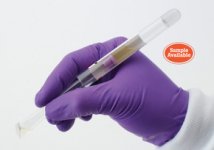
http://www.marketlabinc.com/files/products/images/medium/ml0715.jpg?1157207894&SSImageQuality=Fullml0715.jpgHere is a direct serum collector...

I do not provide the link because it is a lab stuff sale site.

I would not advice anybody to do that desperate action but like JJackson wrote...
There may still be a role for crude single donor to single patient treatment if a cheap disposable filter was available
In such a case, individual trust between donor, patient and medical staff would be crucial.
 
Last edited:
Re: Why blood of bird flu survivors is a lifesaver [Discussion]

I get the Ok from JJacson to copy this.
He also had a interesting reflexion line to follow...
________________________________________
Quote:
<TABLE cellSpacing=0 cellPadding=6 width="100%" border=0><TBODY><TR><TD class=alt2 style="BORDER-RIGHT: 1px inset; BORDER-TOP: 1px inset; BORDER-LEFT: 1px inset; BORDER-BOTTOM: 1px inset">Yes, in the absence of any other timely treatments, this line of attack might generate more interest.

Have you any knowledge of Air Lift Fermentation or Mab production techniques? The literature keeps saying it is expensive but I am not clear why, most of what I have read has been very small scale (and I can see why that would be costly) but once you have created a bacteria or yeast that produces the Mab you want it seems relatively simple to then produce large quantities. Far more so than setting up large scale vax plants and the inferstructure can be reused to produce any other type of Mab as need arises.

-JJackson

</TD></TR></TBODY></TABLE>

You know, most of the price in biothechnology world are the fact of small production and of R&D and fine tuning cost.

Just as an example there is much more technology in your laserman or in your DVD player than in a PCR thermocycler but the first two one can be found under 100$ while the later cans range from 20000$ to 50000%.

As I can tell, because I work some years ago on a GMO detection research team ( for some months ) the process of transfecting a lab strain bacteria with a choosen protein gene, select the transformed bacteria, culture it like a yogourt and purify it is very simple.
Because they are techniques and knowledge from a very little scientific elite, everything is expensive.

But if we look it without artifice, once the protocol is fixed there is no reason why recombinant protean or Mab production should be more difficult to produce than wine.

The problem is to optimise protocol.
There is also the price of the various kits.
In research, every little tricks or methods have their kits sold by various biothech company at high cost protected by many patents. But it make the research process quicker and less heavy to accomplish.
As they are made for research purpose, there is no "mass scale" kits.

So from this point the problem is to ingeneer the production plant scale "kit".

I think there is more thehnology in many electronic gadget than in most of the Biothech procedures.
Get this out of patent and in massive production, there is few reason why everything biothechly produce should be sold 250$/50ul.

Ming
 
Re: Why blood of bird flu survivors is a lifesaver [Discussion]

The following post is another part of the conversation with Mingus referred to in his post above.

Your last post put in writing what I already suspected.

Stage 1
Preparation of the organism. This is very much what an academic might do during research in the area, lots of lab time by scientists with specialized knowledge and some expensive kit you would find in a good university or bio-tech co. - Expensive but a one off cost.

Stage 2
Air Lift Fermentation.
Glorified brewery probably sold at exorbitant markup by a bio-tech co. - If this was given to the Russians or Chinese to make I suspect we would get exactly that a slightly modified winery, acceptable but not so high tech. - Cheap per unit production running cost.

Stage 3
Purification, packaging & storage.
Industrial again but needing some rather more specialized equipment. Final product to be paced in single shot disposable syringes (preferably by self administration). - Reasonably cheap

Stage 4
Distribution
Initially to be distributed to the health services of the various governments and then on Pandemic Stage 6 mass immunisation by virtually every HCW in the world capable of giving an injection (or self administration) then the doctors would have to be ready to deal with the adverse reactions.


How to achieve all this.
Stage 1 should be by a new model, commissioned and paid for from the $1.9 billion pledged to the WHO with any resultant patents held by them in thrust for humanity as a whole.
Stage 2 & 3 by open tender and paid for by the governments of the world in the proportion of their UN dues.
Stage 4 responsibility of the individual governments with NGOs, Gates Foundation, public appeals (a la Tsunami) etc. asked to help in the poorest countries.

The truly sad thing is that I would not be surprised to see something very close to this implemented but only after a sever pandemic had been and gone. Until our governments are forced to see the dangers in the status quo there could never be the collective political will to implement something like this. The concepts of patents being held outside of the Corporation and medicine production as a high volume / low margin industry would send the executives in big pharma into shock. The political fallout would not allow the US administration to support it and that pressure would kill it in the UN.

One can but dream.
 
Re: Why blood of bird flu survivors is a lifesaver [Discussion]

I'm not sure whether I understood all this correctly and I didn't read very carefully - the thread is long - so I'd like to see this summarized in one
question :


can I add some kit to my preps which would enable me
as a layman to transfer a portion of my blood (how much ?)
into the body of a relative or friend, while it is determined
now whether this would be safe enough and the blood is OK
and compatible ?

What would it cost ? Should I transfer the blood prophylactically or only when that relative/friend also becomes ill ? I assume this
almost redoubles his chances to survive.
 
Re: Why blood of bird flu survivors is a lifesaver [Discussion]

gsgs said:
I'm not sure whether I understood all this correctly and I didn't read very carefully - the thread is long - so I'd like to see this summarized in one
question :


can I add some kit to my preps which would enable me
as a layman to transfer a portion of my blood (how much ?)
into the body of a relative or friend, while it is determined
now whether this would be safe enough and the blood is OK
and compatible ?

What would it cost ? Should I transfer the blood prophylactically or only when that relative/friend also becomes ill ? I assume this
almost redoubles his chances to survive.

OK firstly I am not a doctor and am not therefore in a position to give the kind of advice you are asking for. What we have been doing in this thread is exploring the ramifications of research in a number of papers in the hope that someone will jump in and point out why we are wide of the mark.
What we need is expertise on the Immune system, lab & large scale monoclonal antibody production, serum fractionation and an MD.

To try and answer your questions.

The 1918 research showed that serum from recovered patients markedly improved the prognosis of current patients. This is assumed to have been due to the H1N1 antibodies in the serum. What I am less clear on is if this was due to their direct binding to the antigenic sites on the H1N1 (so interfering with binding & endocytosis) or if it also produces an on going immune response.

“can I add some kit to my preps which would enable me as a layman to transfer a portion of my blood (how much ?)”
The thing to add to your kit would be the syringe with integral filter to separate serum from the whole blood (you would have to trust the donor to be free of HIV, Hepatitis etc.), how much is not clear, the article is on the effects from several different trials and does not really address this issue beyond saying “U.S. Food and Drug Administration regulations (62) allow individuals to donate 1000 to 1200 mL of plasma per week. A single H5N1 convalescent donor could provide a weekly volume of plasma sufficient to treat multiple patients with H5N1 influenza”
What should be noted here is they were treating advanced stage patients who had already developed pneumonia. If the injected antibodies are binding to the antigenic sites and inactivating virons then the treatment should be more effective if given just before exposure or as soon as possible after infection. The reasoning being that any given number of antibodies (n) can bind to and disrupt an equivalent number of viral antigenic sites. In theory even a small amount could help reduce the chance of infection if it was in the right place at the right time – or at least decrease net viral load.

would be safe enough and the blood is OK and compatible ?
As I understand it compatibility – or lack there of – is due to blood type (A, B, O etc) and is due to the red blood cells, which are removed by the filter, the remaining serum is not type specific. The serum still contains a wide range of products which could cause adverse reactions but the questions is if you think you have been exposed are you willing to risk these side effects to reduce the risk – or severity - of H5N1 infection. More sophisticated filtration/fractionation techniques will lead to the removal of more of these other serum products and so reduce the risk of adverse reaction (however these are beyond the scope of DIY treatment).

What would it cost ?
Not much but I am not sure where you could buy these items retail. The illustrations Mingus found are from a lab/medical equipment supply catalogue and will not be expensive for a hospital to buy but are not designed for lay use. Needless to say under normal circumstance the kind of thing we are talking about is not exactly encouraged by the medical profession.

The last part of your question is already covered in other parts of this post.

I hope this helps but as I have argued in other posts in this thread this is really a fix in the event that TPTB fail to provide a viable alternative. Mass production of monoclonal antibodies seems a far safer and more accurately targeted solution but is defiantly not a DIY option.

JJ
 
Re: Why blood of bird flu survivors is a lifesaver [Discussion]

This is a link to an interesting paper on the merits of Mabs posted in the scientific literature section. It has two main strengths; it shows both the power of Mabs as a tool in elucidating the relationship between the epitope binding and the 3D structure of the HA trimer - and the resultant binding affinity changes of specific point mutations- and the possibility of quickly producing a tailored polyMab cocktail from 'stock' Mabs for any flu - pandemic or seasonal.
http://www.flutrackers.com/forum/showthread.php?t=23457
 
Back
Top