• FluTrackers.com Inc. does not provide medical advice. Information on this web site is collected from various internet resources, and the FluTrackers board of directors makes no warranty to the safety, efficacy, correctness or completeness of the information posted on this site by any author or poster. The information collated here is for instructional and/or discussion purposes only and is NOT intended to diagnose or treat any disease, illness, or other medical condition. Every individual reader or poster should seek advice from their personal physician/healthcare practitioner before considering or using any interventions that are discussed on this website. By continuing to access this website you agree to consult your personal physican before using any interventions posted on this website, and you agree to hold harmless FluTrackers.com Inc., the board of directors, the members, and all authors and posters for any effects from use of any medication, supplement, vitamin or other substance, device, intervention, etc. mentioned in posts on this website, or other internet venues referenced in posts on this website.
  • We are not asking for any donations. Do not donate to any entity who says they are raising funds for us.

Volcano erupts near Tokyo

Sally Furniss

Well-known member
hat tip Senior Moderator Fla Medic -


Volcano erupts near Tokyo


TOKYO (AFP) — A volcano near Tokyo erupted early Monday, with white smoke billowing and ash falling on the capital, the Meteorological Agency said.

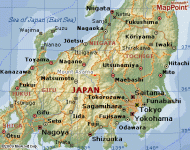
There were no immediate reports of injuries or damage following the minor eruption of the 2,568-metre (8,425 feet) Mount Asama, 150 kilometres (95 miles) northwest of Tokyo.

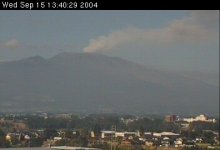
The volcano last erupted in August last year. Live television footage showed smoke coming from the snow-covered mountain seven hours after the eruption, shortly before 2:00 am (1700 GMT Sunday).

Carried by winds, volcanic ash was seen in towns at the foot of the mountain as well as in the heart of Tokyo, according to the agency.

The agency warned of a possible fall of rocks within four kilometres of the crater.

http://www.google.com/hostednews/afp/article/ALeqM5iJ6xVOWbhIoZUq33BZgqIuLFfNjw
 
Re: Volcano erupts near Tokyo

Mount Redoubt Volcano highlights danger of the Ring of Fire

Add a Comment

January 31, 3:20 PM
by Patricia Phillips, Space News Examiner


? Previous

Next ?


alask_volcanoes_on_ring_of_fire_avo_via_noaa.png
Scientists continue to monitor Alaska's volatile Mount Redoubt Volcano, expected to erupt at just about any time. There's been no increase in activity this morning, according to the monitors at the Alaska Volcano Observatory. Reader Janet Martin Dobler asked:
Am I the only one noticing a pattern of volcanic eruptions around the globe?
That's a topic that invites both scientific research and also less-traditional approaches to "what in the heck is going on around here"? Janet, years ago I tracked links between earthquakes and volcanoes around the world. The synopsis of this very informal look: sometimes if a volcano or earthquake occurred at Point A, then one would occur at Point B on roughly the other side of the globe.
But closer at hand, Alaska's Mount Redoubt and its volcanoes are part of the inter-related Ring of Fire. In its series "Naked Earth," the National Geographic Channel featured the Ring of Fire, saying:
Startling new evidence suggests the chain of volcanoes and earthquake zones surrounding the Pacific Ocean may be getting more dangerous.
The National Geographic's Xpeditions for students, teachers, and anyone interested in learning more explained:
We usually don't think about the inside of the Earth as "fire," but the Earth is actually very hot below its surface. Parts of the Earth's interior are even hot enough to melt solid rock. Most of the time this fiery substance, called magma, stays where we can't see it, but sometimes it makes its presence known in dangerous ways.
Magma plays an important role in two natural hazards: earthquakes and volcanoes. Why? To understand this, you need to know about plate tectonics.
The theory of plate tectonics says the Earth's crust, or top layer, is made up of more than a dozen major plates, or pieces. The plates float on top of rock and magma that is below them. The plates collide, slide against, and move under and on top of other plates. When they move quickly, they can cause earthquakes. The plates' movement also creates the energy that results in the release of magma.
Most of this activity takes place on the edge of the plate that is covered by the Pacific Ocean, an area called the Ring of Fire. Seventy-five percent of the Earth's volcanoes?plus a large number of earthquakes?happen there.
Taking things in another direction, the recent outbreaks of volcanoes and earthquakes have been seen by many as signs of major Earth changes predicted by various prophecies. The popular Coast to Coast show focused on those questions in "Earth Changes," broadcast in 2008:
A group of experts discussed earthquakes, volcanic eruptions, and climate change, and shared their predictions as to what we might expect in 2008 and beyond. First, geologist Jim Berkland and author/earthquake 'sensitive' Cal Orey spoke about quakes and weather cycles. Berkland noted that there's a relationship between earthquakes and heavy rain/snow, which can cause loading to the crust.

Offering their predictions, Orey suggested that there'd be flooding in the Tahoe area, a possible quake in Alaska affecting the West Coast, and around a 6.0 quake in or offshore Northern California within a year. Berkland finds it more likely that a 6.0 will hit Southern California this year, with a seismic window particularly strong in the new moon periods of May, June and July. As a sensitive, Orey said she sometimes hears "ear tones" before a quake; Berkland stated that some sensitives get headaches before earthquakes.

In the third hour, volcanologist R.B. Trombley and author Stan Deyo appeared. Deyo warned of extremes in the weather, and severe crop failures in the next 7-10 years. We could be facing extreme heat and fires if the sun's core starts to shrink, he said, citing solar changes as well as biblical and American Indian prophecies.

Trombley reported there've been 21 eruptions so far this year (some began in 2007), including Mount St. Helens. Yellowstone had some "background seismicity" but is rumbling along in normal mode.
This National Geographic channel takes a look at the Ring of Fire and what causes volcanoes.
http://www.examiner.com/x-504-Space...Volcano-highlights-danger-of-the-Ring-of-Fire


<object height="344" width="425">


<embed allowfullscreen="true" allowscriptaccess="always" type="application/x-shockwave-flash" src="http://www.youtube.com/v/jKJkVHCcUGI&hl=en&fs=1" height="344" width="425"></object>

 
Re: Volcano erupts near Tokyo

<table id="ss" cellspacing="0"><tbody><tr id="ss-navigation"><td id="ss-zoom-single" colspan="3">
zoom-in.gif
</td></tr><tr><td colspan="3">
ALeqM5hPE8dVwBrNdn29vksnh3VtVDrhKg

</td></tr><tr><td id="ss-caption" colspan="3">Smoke billows from a crater of Mt.Asama, central Japan early Monday, Feb. 2, 2009. The mountain spewed volcanic smoke earlier this morning. The country's Meteorological Agency warned Sunday that the volcano was in danger in erupting after detecting an increase in seismic activity. (AP Photo/Kyodo News, Shigeyuki Inakuma)
</td></tr></tbody></table>

Volcano erupts near Tokyo raining ash down on city

20 minutes ago
TOKYO (AP) — A volcano erupted near Tokyo early Monday, spewing a plume of smoke more than a mile (1.6 kilometers) high and raining ash down on parts of the city. There were no immediate reports of injuries or damage.
Mount Asama, about 90 miles (145 kilometers) northwest of Tokyo, erupted at 1:51 am (0451 GMT) Monday, according to Japan's Meteorological Agency. Chunks of rock from the explosion were found about 3,300 feet (1,000 meters) away from the volcano.
The agency said volcanic ash fell on nearby areas as well as parts of Tokyo. TV reports showed neighborhoods sprinkled with white flakes.
An alert level of three, which urges nearby residents to take caution, was kept in place for a 2.5 mile (4 kilometer) radius. Alert level four advises residents to prepare for evacuation, while level five, the highest, orders evacuation, according to the agency.
The last major eruption of Mount Asamo took place in September 2004, the agency said.
With 108 active volcanos, Japan is among the most seismically busy countries in the world. The country lies in the "Ring of Fire" — a series of volcanoes and fault lines that outline the Pacific Ocean.

http://www.google.com/hostednews/ap/article/ALeqM5gFF77Ih3yrC30UkSEn8uX7Meq5zAD9635SB00
 
Re: Volcano erupts near Tokyo

Source: http://search.japantimes.co.jp/cgi-bin/nn20090203a1.html

Tuesday, Feb. 3, 2009

Asama has mild eruption; ash reaches Kanto
Kyodo News

Mount Asama, straddling Gunma and Nagano prefectures, had a minor eruption early Monday from its summit crater, sending ash as far as Tokyo and Yokohama in the southern Kanto region, the Meteorological Agency said.

The agency warned of the possibility of large amounts of ash being scattered within a radius of about 4 km from the 2,568-meter volcano's crater due to the minor eruption that occurred at 1:51 a.m.

After the eruption, smoke billowed to heights of about 2,000 meters shortly after 2 a.m. but subsided to around 100 meters above the crater after daybreak, the agency said.

The smoke moved southeastward, and falling ash was observed in Tokyo and Saitama, Kanagawa and Chiba prefectures in addition to Karuizawa, Nagano Prefecture, and Tomioka, Gunma Prefecture.

The agency said the situation appeared to be subsiding because the frequency of volcanic earthquakes, believed focused below the crater, eased after the eruption.

At the famed Karuizawa resort area at the base of the mountain, children wore masks when they went to Karuizawa Tobu Elementary School. They were urged to stay indoors between classes.

A 39-year-old male worker at a hotel in Tsumagoi, Gunma Prefecture, about 5 km northeast of the mountain, heard the eruption.

"I heard the Earth rumbling, sounding like a boiler. Customers here were not worried," the employee at Kita-Karuizawa Highland Hotel said.

Ash drifted as far as Hodogaya Ward, Yokohama, about 150 km from the volcano, leaving a coating on parked cars.

The eruption was Mount Asama's first since August. The volcano had a moderate outburst in September and November 2004, causing damage to local crops.

On Sunday, the agency raised the eruption alert level for Asama from 2 to 3 on the 5-stage warning scale. Level 3 prohibits people from being on the mountain. Level 2 restricts them from approaching the crater area.

About 2 mm of ash fell in Karuizawa.
 
Re: Volcano erupts near Tokyo

Source: http://search.japantimes.co.jp/cgi-bin/nn20090203a5.html

Tuesday, Feb. 3, 2009

Volcano alert system successful

By MINORU MATSUTANI
Staff writer

The Meteorological Agency managed to issue a warning to municipalities about 13 hours before the eruption early Monday of Mount Asama, boasting its first successful alert since it started up the system in December 2007.

The agency alerted the municipalities of Miyota, Karuizawa and Komoro, all in Nagano Prefecture, and Tsumagoi, Gunma Prefecture, at 1 p.m. Sunday that the volcano warning level had been upgraded to 3 from 2, according to agency volcano department official Sadayuki Kitagawa.

All four municipalities responded promptly, Kitagawa said.

The warning was "the first success of this system," he said.

A level 3 warning bars access to Mount Asama, whereas a level 2 would bar people from getting near the volcanic crater.

A Karuizawa official said the town closed some toll road sections after receiving the agency alert.

The agency heightened the warning level after observing signs of an eruption, including ground movements and an increase in the number of earthquakes with a high frequency of seismic waves, Kitagawa said.

Before a medium-size eruption in 2004, a sensor on the mountain captured similar signs, but the agency at that time was unable to predict the event or issue a warning because of a lack of accumulated data, according to a news report.

Last August, the agency raised the level to 2 from 1 for Mount Asama because of an increase in volcanic tremors and smoke discharge.

The agency system has warnings up to level 5. Level 1 means no risk, level 4 means prepare for an evacuation and level 5 means get away from the volcano.

Mount Asama last erupted in August. This was preceded by larger-scale outbursts between September and December 2004, the agency said.

Separately, the agency upgraded the warning level to 3 from 2 on Sakurajima in Kagoshima Prefecture after the volcano continuously erupted Sunday and Monday.
 
Back
Top