Re: USA - Indiana: 4 humans, many pigs confirmed with H3N2v - suspected additional human cases mentioned presenting with similar symptoms
hat tip Michael Coston
Wednesday, July 25, 2012
Reports Of H3N2v In Indiana
# 6449
Over the past year we’ve been carefully watching the evolution and spread of a novel swine flu variant called
H3N2v (formerly trH3N2), which is a reassortment of the
swine H3N2 virus with
the Matrix (M) gene segment from the
2009 H1N1 virus.
So far, the number of cases has been small, and while some human-to-human transmission appears to have occurred, the CDC has not seen evidence of sustained and efficient transmission in humans.
The last reported human detection goes back to March of this year (see
CDC Update On Utah H3N2v Infection), but overnight local media outlets and the
Associated Press are reporting on a small cluster of
H3N2v that occurred recently, apparently in connection with infected swine at the LaPorte County Fair (
held July 8th-14th).
First, a quick look at a couple of these reports, then I’ll return with more on variant influenza. From the AP:
This short report goes on to say that the ISDH has confirmed a
`variant influenza A virus’ in these four people, and that the same virus has been isolated in local swine.
While
H3N2v is not directly identified in the AP report, it does appear prominently in other reports, including this lengthy one from the local CBS network affiliate
WSBT (
includes a 3 minute video newscast).
While only 4 new human cases have tested positive for the virus,
WSBT reports talking to the parents of a number of children who also fell ill with flu-like symptoms after visiting the pig barn.
According to this report, some local citizens have expressed deep concerns over the handling of this outbreak at the fair, stating that organizers did not quarantine the pigs even after 41 were found to have high fevers.
In the past, we have seen reluctance on the part of some hog farmers to test their herds after the bad publicity their industry suffered during the 2009 H1N1 (`Swine Flu’) pandemic (see
Swine Flu: Don’t Test, Don’t Tell).
As to the exact strain in this outbreak, the reports are calling it
H3N2v and
suggest that it is the same strain that has previously been detected in 13 people over the past 12 months.
We’ll obviously be interested in a more precise description from the
CDC in the coming days.
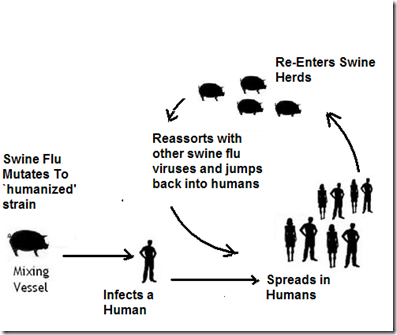
Swine are highly susceptible to the influenza virus, and are capable of serving as
`mixing vessels’, allowing them to
reassort into new hybrid strains. When that happens, once in a great while a swine virus can emerge that is capable of spreading in humans.
While the number of confirmed H3N2v infections remain small
, the CDC is obviously concerned and has ordered
enhanced surveillance, testing, and reporting around the country as to better gauge the prevalence of this virus.
In January we learned that the CDC was working on a vaccine candidate (see
H3N2v Vaccine Trials), in the event this virus ever develops
`legs’. And earlier this year the
CDC Released Updated H3N2v Interim Guidance documents.
For the most part, these documents provide background information, context, and a bit of advice for specific groups on the emergence of this new variant virus.
Seventeen cases over a year’s time (
even assuming a substantial number of undetected cases) does not a pandemic make - and so far at least - we are not aware of this virus causing any serious illness or death.
Although this swine flu variant could one day evolve into a greater public health concern, it could also up in the evolutionary dustbin of failed organisms; little more than an interesting footnote in the history of influenza in the 21st century.
For now, the threat to the public appears low, and we remain in a watchful waiting mode. But anytime a virus jumps species – as this one has - we are particularly attentive.
For more on the H3N2v virus, you may wish to revisit some of these older blogs.
And for more background on variant flu viruses, you may wish to visit the following
CDC webpage:
Posted by Michael Coston at
http://afludiary.blogspot.com/2012/07/reports-of-h3n2v-in-indiana.html 2012-07-25T06:10:00-04:00 6:10 AM