

Pathfinder
Editor, Senior Moderator
News Update
Bird Flu Vaccine Trial May Offer Hope for Protecting Hawaiian Monk Seals
September 9, 2025
Bird flu threatens ocean health
The world is experiencing a rapidly spreading outbreak of H5N1, a highly contagious and deadly strain of avian influenza, or bird flu. As the virus jumps from species to species, from wild birds to domesticated birds and even to mammals, global biodiversity faces an existential threat.
Seals and sea lions are ocean predators that are vital to maintaining balance in the ecosystem. But as bird flu has exploded globally over the last several years, tens of thousands of seals and sea lions have been killed by the virus, including more than 17,000 southern elephant seal pups in Argentina. Not only is the loss of each individual animal a tragedy, but recovery from drastic declines in populations like this can take decades and can pose serious risks to ocean health from further imbalance of ecosystems.
Monitoring the virus in marine mammals
As the world’s largest marine mammal hospital, experts at The Marine Mammal Center learn an extraordinary amount of information from our seal, sea lion and sea otter patients. Our researchers monitor long-term changes in animal health and also identify emerging diseases that present population-wide threats to marine mammals or threats to human health.
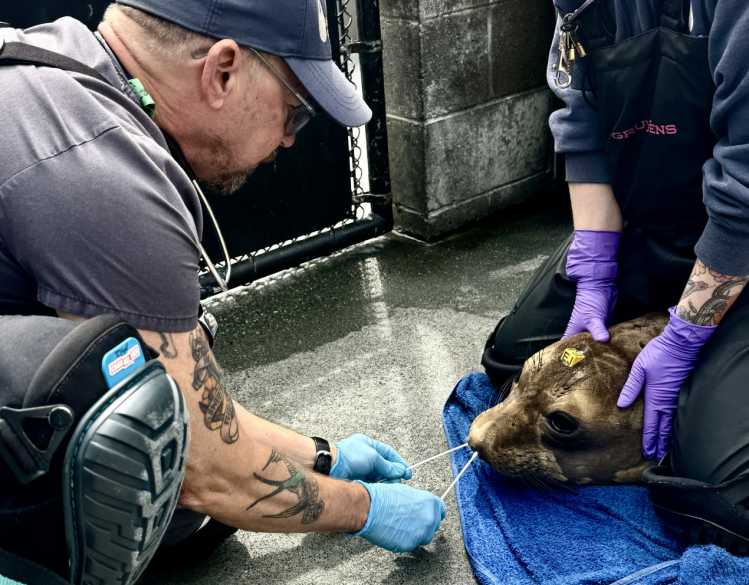
Veterinarian Dr. Dane Whitaker collects nasal swab samples from an elephant seal pup in Sausalito, California. photo by Bill Hunnewell © The Marine Mammal Center
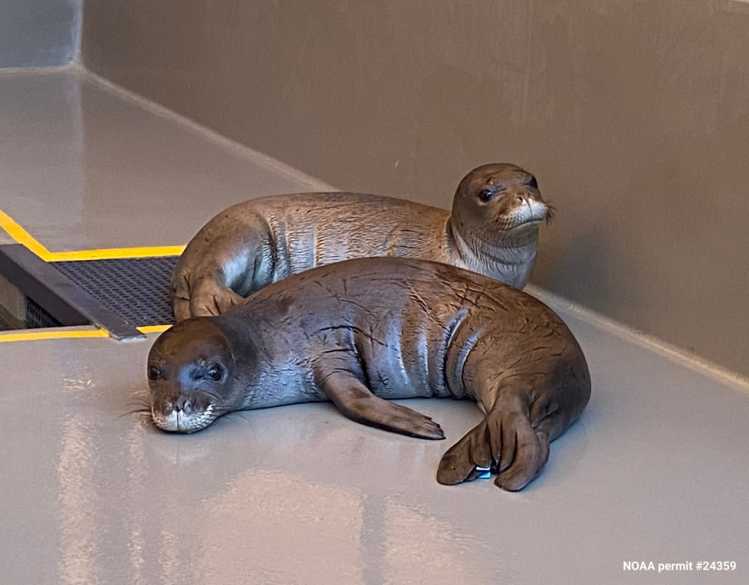
Hawaiian monk seal pups Miki‘ala and Kaukāhi receive expert care at Ke Kai Ola, our hospital on Hawai‘i Island. photo by Sophie Whoriskey © The Marine Mammal Center / NOAA permit
In a critical effort to monitor bird flu in marine mammals, we are constantly assessing our patients for any signs of the virus and collecting samples at our hospital facilities in California and Hawai‘i. While our patients have all fortunately tested negative for the virus so far, researchers have grown increasingly concerned for the future of the Hawaiian monk seal population.
Endangered Hawaiian monk seals risk extinction
Hawaiian monk seals are one of the most endangered seal species in the world with only about 1,600 individuals alive today. Conservation efforts have been critical to saving this species, but the potential spread of bird flu in Hawai‘i could be catastrophic. Hawaiian monk seals have no known natural immunity to the virus, and an outbreak could set their recovery back decades—or even drop the population below recoverable levels.
Until late last year, the Hawaiian Islands had been free from H5N1 avian influenza. But after the virus was confirmed in a backyard flock of birds and a wild duck on Oʻahu in November 2024, marine mammal researchers reevaluated next steps for disease preparedness.
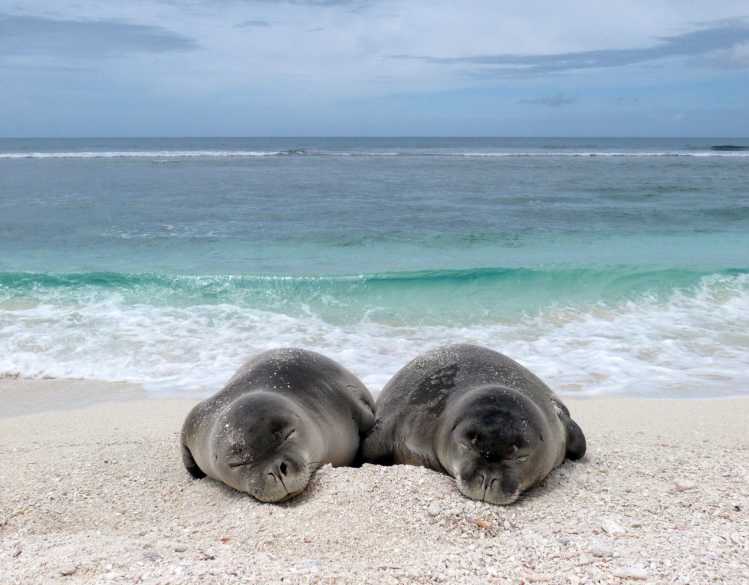
Hawaiian monk seals are especially vulnerable to disease threats because of their small population size. photo © NOAA
Vaccination as a conservation tool
In addition to preventing the spread and severity of dangerous diseases in humans and pets, vaccination is also an effective conservation tool that can be used to save endangered wildlife. In fact, a highly successful vaccination program for Hawaiian monk seals has been in place by the National Oceanic and Atmospheric Administration (NOAA) since 2016 to reduce the risk of morbillivirus infection, a contagious and deadly group of viruses that includes canine distemper and human measles. And recently, the crucial effort to immunize critically endangered California condors from the current H5N1 strain of avian influenza was conducted by U.S. Fish and Wildlife Service (USFWS) and U.S. Department of Agriculture (USDA).
Now, these established vaccination programs for other diseases and wildlife species provide effective roadmaps for our researchers to protect Hawaiian monk seals from bird flu. Led by Dr. Sophie Whoriskey, the Center’s Associate Director of Hawai‘i Conservation Medicine, our groundbreaking collaborative project is currently underway to study and potentially provide this species with a life-saving, preventative vaccine.
Bird flu vaccine trial at our Sausalito hospital
Before we can potentially vaccinate endangered Hawaiian monk seals for bird flu, we need to understand the vaccine’s safety and efficacy in a similar, non-endangered species. With our patients’ wellbeing at the forefront, a vaccine trial was conducted at the Center’s hospital in Sausalito, California. Researchers carefully designed the trial with critical expertise from Zoetis, the animal health company that has developed several bird flu vaccines over the past decades, as well as important input from federal partners.
Our primary goals with wildlife rehabilitation are to improve animal health and welfare and do no harm. Amidst the mass wildlife die-offs caused by the virus the past few years, researchers determined that the benefits of a bird flu vaccine trial greatly outweighed any possible risks.
“This is a huge opportunity to develop a preventative tool that could protect an entire population from extinction,” said Dr. Dominic Travis, the Center’s Chief Programs Officer.
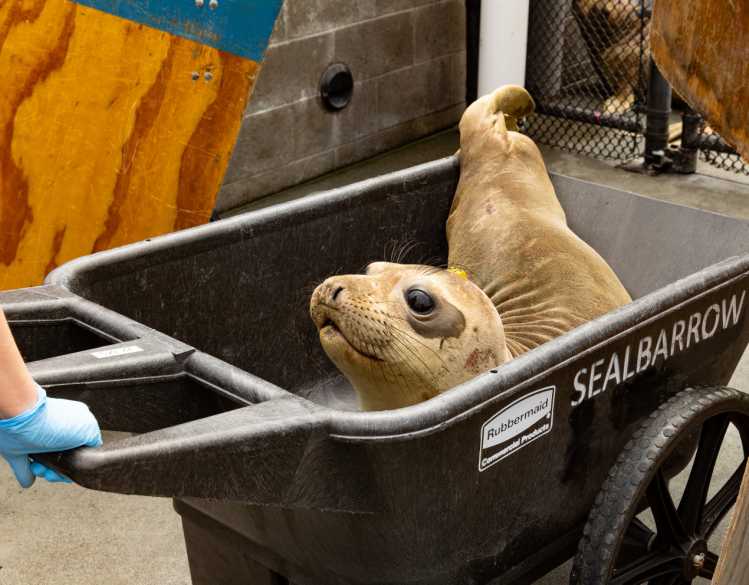
Animal care experts transport an elephant seal during the vaccine trial. photo by Bill Hunnewell © The Marine Mammal Center
The bird flu vaccine trial began in July 2025 with northern elephant seal patients participating as a surrogate species (a species that is used to represent another species in conservation science). As two closely related species, northern elephant seals have helped to inform the Center’s Hawaiian monk seal research and care protocols for many years.
Six elephant seal patients were selected for the study based on their health status and rehabilitation trajectory. All participants were rescued due to severe malnutrition and were improving well in care. The study included about a month and a half of monitoring the animals, and each seal’s expected release timing was carefully considered to avoid a longer stay at our hospital than necessary. The Center’s goal for every patient is to return them to their ocean home.
By conducting the vaccine trial at our state-of-the-art hospital, our veterinary experts were able to provide the best possible medical care while closely monitoring the patients in a controlled environment. Our animal care protocols also included a variety of enrichment items, like imitation kelp and a box at the bottom of the pool stuffed with fish, which stimulates the seals’ natural instincts and improves physical and mental wellbeing.
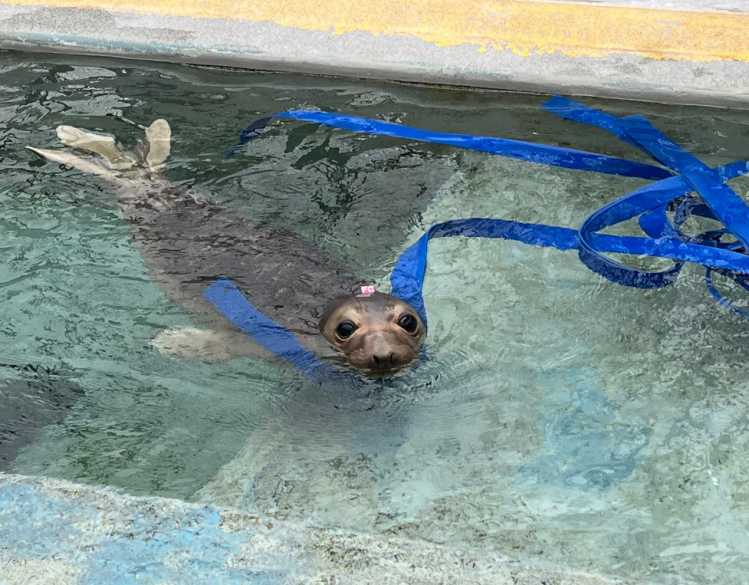
An elephant seal patient in the vaccine trial interacts with imitation kelp as part of her behavioral enrichment. photo by Cara Field © The Marine Mammal Center Under close veterinary supervision, the first group of three seals received a series of two vaccine doses 21 days apart, while a second control group of three seals received placebo injections of sterile saline. There is not currently a bird flu vaccine specific for marine mammals, so a vaccine developed for cows, the most closely related species to seals with a safe and conditionally licensed vaccine, was used in the trial. Since it is an expensive and rigorous process to develop and validate each approved vaccine for various species, using those approved in another domestic species is common in wildlife conservation science.
Understanding the vaccine’s safety and efficacy
The Center’s veterinary experts monitored the seals closely throughout the trial for any reactions, as well as their overall health and wellbeing. None of our patients experienced any severe reactions, such as an unexpected allergic reaction or infection at the injection site, but our veterinary care team was well-prepared with strict criteria for response if necessary.
Most adverse reactions to vaccines are mild and short-lived, like minor discomfort and swelling at the injection site. As vaccines work by safely mimicking an infection and helping the body learn to defend itself, these minor reactions can be positive signs that the immune system is responding appropriately.
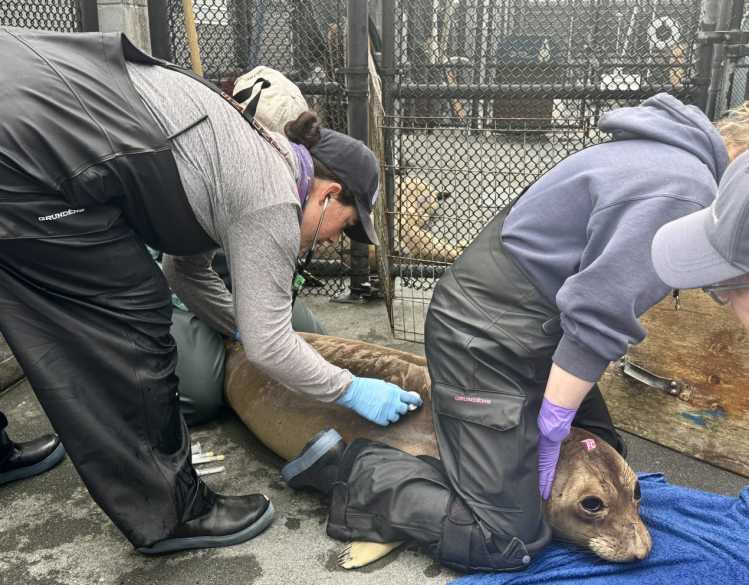
Clinical Veterinarian Dr. Emily Whitmer listens with a stethoscope to monitor an elephant seal’s vitals. photo by Bill Hunnewell © The Marine Mammal Center
While the rescued elephant seals in this study were all well on the road to recovery when the trial began, other underlying conditions can sometimes arise in our patients and unfortunately change their prognosis. Prior to the trial ending, one patient in the placebo control group died suddenly and unexpectedly. Although this animal had only received an injection of sterile saline, not the bird flu vaccine, a thorough safety investigation was conducted. This patient’s cause of death is still being assessed, but researchers were able to rule out any connection to the vaccine trial.
The Center performs a necropsy, or animal autopsy, on every patient that dies at the hospital, and tissue samples are collected for further studies. This is critical in helping scientists better understand why marine mammals die, identifying patterns for different threats and diseases, and developing life-saving treatments.
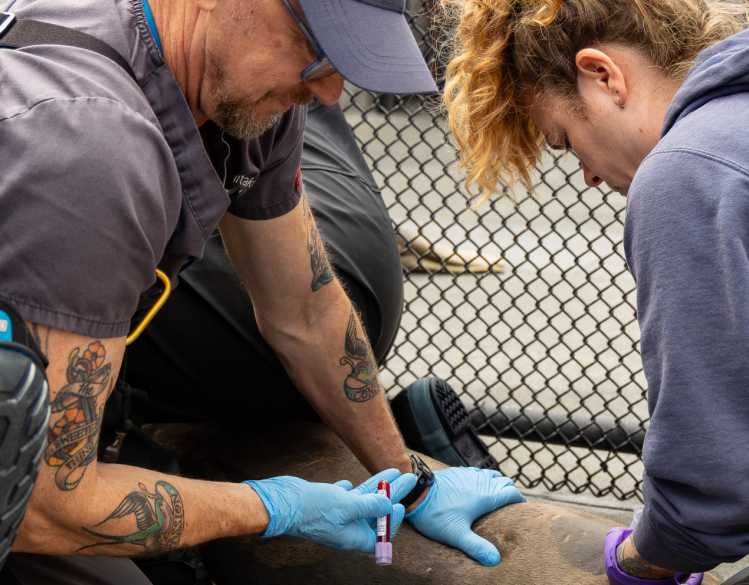 Dr. Whitaker and Sarah Pattison, RVT, Director of Hospital Operations, collect a blood sample from an elephant seal. photo by Bill Hunnewell © The Marine Mammal Center While the study is still being evaluated, researchers are encouraged by early results, and the bird flu vaccine seems to be safe in our elephant seal patients. Our next step is to understand the vaccine’s efficacy (how well the vaccine works to prevent viral infection in a controlled environment).
Blood samples were collected multiple times throughout the trial from the seals that received the active vaccine and those that received saline placebo injections. To identify the animals’ immune responses to the vaccine, researchers will measure and compare the levels of antibodies in the blood, which are protective proteins produced by the immune system. If the seals that received the vaccine have produced the specific antibodies, our researchers can determine whether they have developed protective immunity to bird flu.
Releasing our patients back to the wild
Our research studies don’t necessarily end when a patient returns to the ocean. The Center uses a number of different tagging and tracking tools to provide researchers with information about how released patients fare in the wild. Prior to their release, two elephant seals that received the vaccine and one that received the saline placebo injection were fitted with temporary satellite tags so we can continue monitoring their movements and behaviors.
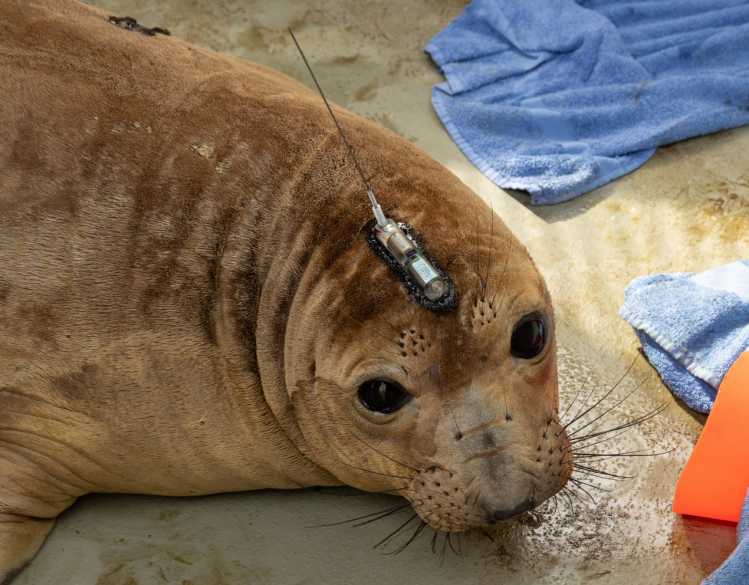
Satellite tags allow our researchers to track the elephant seals in the wild after their release. photo by Bill Hunnewell © The Marine Mammal Center Patients at our hospital also receive bright orange flipper tags with identification numbers. This allows us to track individuals if they are spotted again in the wild throughout their lives. In addition to their flipper tags, all five seals were marked on the sides of their body with an animal-safe black hair dye, increasing the chance of them being resighted and identified in the wild.
After months of receiving life-saving care and helping researchers gain critical insights about the bird flu vaccine, our patients returned to the ocean with a second chance.
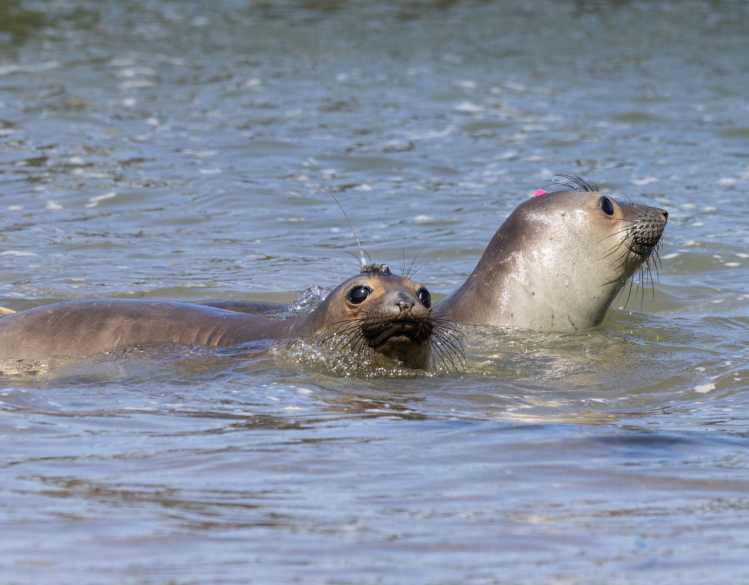
Our elephant seal patients return to their ocean home. photo by Chris Deimler © The Marine Mammal Center
Protecting Hawaiian monk seals and advancing ocean health
With more than 50 years of experience advancing marine mammal and ocean health, the Center’s conservation work is crucial to the survival of endangered Hawaiian monk seals. As we continue gathering and evaluating results from the bird flu vaccine trial, researchers are hopeful that our findings can be used to save this species from a potential outbreak. If the vaccine proves to be protective in elephant seals as a similar species, we can help make scientifically supported decisions about our next steps and recommendations for immunizing Hawaiian monk seals.
“Locally on the Hawaiian Islands, our hope is to use the bird flu vaccine as a preventative tool to protect Hawaiian monk seals from an extinction-level outbreak,” said Dr. Whoriskey. “And if we can use this tool to protect an endangered population, this paves the way for similar conservation efforts worldwide.”
The Center’s experts are leading contributors to global knowledge about marine mammal health, developing innovative medical techniques and conducting vital research. As bird flu continues to threaten humans and animals around the world, including endangered populations, our work to study and potentially immunize Hawaiian monk seals can inform global efforts to protect ocean health and biodiversity.
https://www.marinemammalcenter.org/...ffer-hope-for-protecting-hawaiian-monk-seals
Bird Flu Vaccine Trial May Offer Hope for Protecting Hawaiian Monk Seals
September 9, 2025
- Species conservation
Bird flu threatens ocean health
The world is experiencing a rapidly spreading outbreak of H5N1, a highly contagious and deadly strain of avian influenza, or bird flu. As the virus jumps from species to species, from wild birds to domesticated birds and even to mammals, global biodiversity faces an existential threat.
Seals and sea lions are ocean predators that are vital to maintaining balance in the ecosystem. But as bird flu has exploded globally over the last several years, tens of thousands of seals and sea lions have been killed by the virus, including more than 17,000 southern elephant seal pups in Argentina. Not only is the loss of each individual animal a tragedy, but recovery from drastic declines in populations like this can take decades and can pose serious risks to ocean health from further imbalance of ecosystems.
Monitoring the virus in marine mammals
As the world’s largest marine mammal hospital, experts at The Marine Mammal Center learn an extraordinary amount of information from our seal, sea lion and sea otter patients. Our researchers monitor long-term changes in animal health and also identify emerging diseases that present population-wide threats to marine mammals or threats to human health.
Veterinarian Dr. Dane Whitaker collects nasal swab samples from an elephant seal pup in Sausalito, California. photo by Bill Hunnewell © The Marine Mammal Center
Hawaiian monk seal pups Miki‘ala and Kaukāhi receive expert care at Ke Kai Ola, our hospital on Hawai‘i Island. photo by Sophie Whoriskey © The Marine Mammal Center / NOAA permit
In a critical effort to monitor bird flu in marine mammals, we are constantly assessing our patients for any signs of the virus and collecting samples at our hospital facilities in California and Hawai‘i. While our patients have all fortunately tested negative for the virus so far, researchers have grown increasingly concerned for the future of the Hawaiian monk seal population.
Endangered Hawaiian monk seals risk extinction
Hawaiian monk seals are one of the most endangered seal species in the world with only about 1,600 individuals alive today. Conservation efforts have been critical to saving this species, but the potential spread of bird flu in Hawai‘i could be catastrophic. Hawaiian monk seals have no known natural immunity to the virus, and an outbreak could set their recovery back decades—or even drop the population below recoverable levels.
Until late last year, the Hawaiian Islands had been free from H5N1 avian influenza. But after the virus was confirmed in a backyard flock of birds and a wild duck on Oʻahu in November 2024, marine mammal researchers reevaluated next steps for disease preparedness.
Hawaiian monk seals are especially vulnerable to disease threats because of their small population size. photo © NOAA
Vaccination as a conservation tool
In addition to preventing the spread and severity of dangerous diseases in humans and pets, vaccination is also an effective conservation tool that can be used to save endangered wildlife. In fact, a highly successful vaccination program for Hawaiian monk seals has been in place by the National Oceanic and Atmospheric Administration (NOAA) since 2016 to reduce the risk of morbillivirus infection, a contagious and deadly group of viruses that includes canine distemper and human measles. And recently, the crucial effort to immunize critically endangered California condors from the current H5N1 strain of avian influenza was conducted by U.S. Fish and Wildlife Service (USFWS) and U.S. Department of Agriculture (USDA).
Now, these established vaccination programs for other diseases and wildlife species provide effective roadmaps for our researchers to protect Hawaiian monk seals from bird flu. Led by Dr. Sophie Whoriskey, the Center’s Associate Director of Hawai‘i Conservation Medicine, our groundbreaking collaborative project is currently underway to study and potentially provide this species with a life-saving, preventative vaccine.
Bird flu vaccine trial at our Sausalito hospital
Before we can potentially vaccinate endangered Hawaiian monk seals for bird flu, we need to understand the vaccine’s safety and efficacy in a similar, non-endangered species. With our patients’ wellbeing at the forefront, a vaccine trial was conducted at the Center’s hospital in Sausalito, California. Researchers carefully designed the trial with critical expertise from Zoetis, the animal health company that has developed several bird flu vaccines over the past decades, as well as important input from federal partners.
Our primary goals with wildlife rehabilitation are to improve animal health and welfare and do no harm. Amidst the mass wildlife die-offs caused by the virus the past few years, researchers determined that the benefits of a bird flu vaccine trial greatly outweighed any possible risks.
“This is a huge opportunity to develop a preventative tool that could protect an entire population from extinction,” said Dr. Dominic Travis, the Center’s Chief Programs Officer.
Animal care experts transport an elephant seal during the vaccine trial. photo by Bill Hunnewell © The Marine Mammal Center
The bird flu vaccine trial began in July 2025 with northern elephant seal patients participating as a surrogate species (a species that is used to represent another species in conservation science). As two closely related species, northern elephant seals have helped to inform the Center’s Hawaiian monk seal research and care protocols for many years.
Six elephant seal patients were selected for the study based on their health status and rehabilitation trajectory. All participants were rescued due to severe malnutrition and were improving well in care. The study included about a month and a half of monitoring the animals, and each seal’s expected release timing was carefully considered to avoid a longer stay at our hospital than necessary. The Center’s goal for every patient is to return them to their ocean home.
By conducting the vaccine trial at our state-of-the-art hospital, our veterinary experts were able to provide the best possible medical care while closely monitoring the patients in a controlled environment. Our animal care protocols also included a variety of enrichment items, like imitation kelp and a box at the bottom of the pool stuffed with fish, which stimulates the seals’ natural instincts and improves physical and mental wellbeing.
An elephant seal patient in the vaccine trial interacts with imitation kelp as part of her behavioral enrichment. photo by Cara Field © The Marine Mammal Center Under close veterinary supervision, the first group of three seals received a series of two vaccine doses 21 days apart, while a second control group of three seals received placebo injections of sterile saline. There is not currently a bird flu vaccine specific for marine mammals, so a vaccine developed for cows, the most closely related species to seals with a safe and conditionally licensed vaccine, was used in the trial. Since it is an expensive and rigorous process to develop and validate each approved vaccine for various species, using those approved in another domestic species is common in wildlife conservation science.
Understanding the vaccine’s safety and efficacy
The Center’s veterinary experts monitored the seals closely throughout the trial for any reactions, as well as their overall health and wellbeing. None of our patients experienced any severe reactions, such as an unexpected allergic reaction or infection at the injection site, but our veterinary care team was well-prepared with strict criteria for response if necessary.
Most adverse reactions to vaccines are mild and short-lived, like minor discomfort and swelling at the injection site. As vaccines work by safely mimicking an infection and helping the body learn to defend itself, these minor reactions can be positive signs that the immune system is responding appropriately.
Clinical Veterinarian Dr. Emily Whitmer listens with a stethoscope to monitor an elephant seal’s vitals. photo by Bill Hunnewell © The Marine Mammal Center
While the rescued elephant seals in this study were all well on the road to recovery when the trial began, other underlying conditions can sometimes arise in our patients and unfortunately change their prognosis. Prior to the trial ending, one patient in the placebo control group died suddenly and unexpectedly. Although this animal had only received an injection of sterile saline, not the bird flu vaccine, a thorough safety investigation was conducted. This patient’s cause of death is still being assessed, but researchers were able to rule out any connection to the vaccine trial.
The Center performs a necropsy, or animal autopsy, on every patient that dies at the hospital, and tissue samples are collected for further studies. This is critical in helping scientists better understand why marine mammals die, identifying patterns for different threats and diseases, and developing life-saving treatments.
Blood samples were collected multiple times throughout the trial from the seals that received the active vaccine and those that received saline placebo injections. To identify the animals’ immune responses to the vaccine, researchers will measure and compare the levels of antibodies in the blood, which are protective proteins produced by the immune system. If the seals that received the vaccine have produced the specific antibodies, our researchers can determine whether they have developed protective immunity to bird flu.
Releasing our patients back to the wild
Our research studies don’t necessarily end when a patient returns to the ocean. The Center uses a number of different tagging and tracking tools to provide researchers with information about how released patients fare in the wild. Prior to their release, two elephant seals that received the vaccine and one that received the saline placebo injection were fitted with temporary satellite tags so we can continue monitoring their movements and behaviors.
Satellite tags allow our researchers to track the elephant seals in the wild after their release. photo by Bill Hunnewell © The Marine Mammal Center Patients at our hospital also receive bright orange flipper tags with identification numbers. This allows us to track individuals if they are spotted again in the wild throughout their lives. In addition to their flipper tags, all five seals were marked on the sides of their body with an animal-safe black hair dye, increasing the chance of them being resighted and identified in the wild.
After months of receiving life-saving care and helping researchers gain critical insights about the bird flu vaccine, our patients returned to the ocean with a second chance.
Our elephant seal patients return to their ocean home. photo by Chris Deimler © The Marine Mammal Center
Protecting Hawaiian monk seals and advancing ocean health
With more than 50 years of experience advancing marine mammal and ocean health, the Center’s conservation work is crucial to the survival of endangered Hawaiian monk seals. As we continue gathering and evaluating results from the bird flu vaccine trial, researchers are hopeful that our findings can be used to save this species from a potential outbreak. If the vaccine proves to be protective in elephant seals as a similar species, we can help make scientifically supported decisions about our next steps and recommendations for immunizing Hawaiian monk seals.
“Locally on the Hawaiian Islands, our hope is to use the bird flu vaccine as a preventative tool to protect Hawaiian monk seals from an extinction-level outbreak,” said Dr. Whoriskey. “And if we can use this tool to protect an endangered population, this paves the way for similar conservation efforts worldwide.”
The Center’s experts are leading contributors to global knowledge about marine mammal health, developing innovative medical techniques and conducting vital research. As bird flu continues to threaten humans and animals around the world, including endangered populations, our work to study and potentially immunize Hawaiian monk seals can inform global efforts to protect ocean health and biodiversity.
https://www.marinemammalcenter.org/...ffer-hope-for-protecting-hawaiian-monk-seals