

Pathfinder
Editor, Senior Moderator
[FONT="] Home ? News ? 2017 ? March ? SLU Researchers Predict Zika Hot Spots in the U.S.
[/FONT]
[FONT="] [h=1]SLU Researchers Predict Zika Hot Spots in the U.S.[/h] Where in the continental United States is Zika most likely to occur?
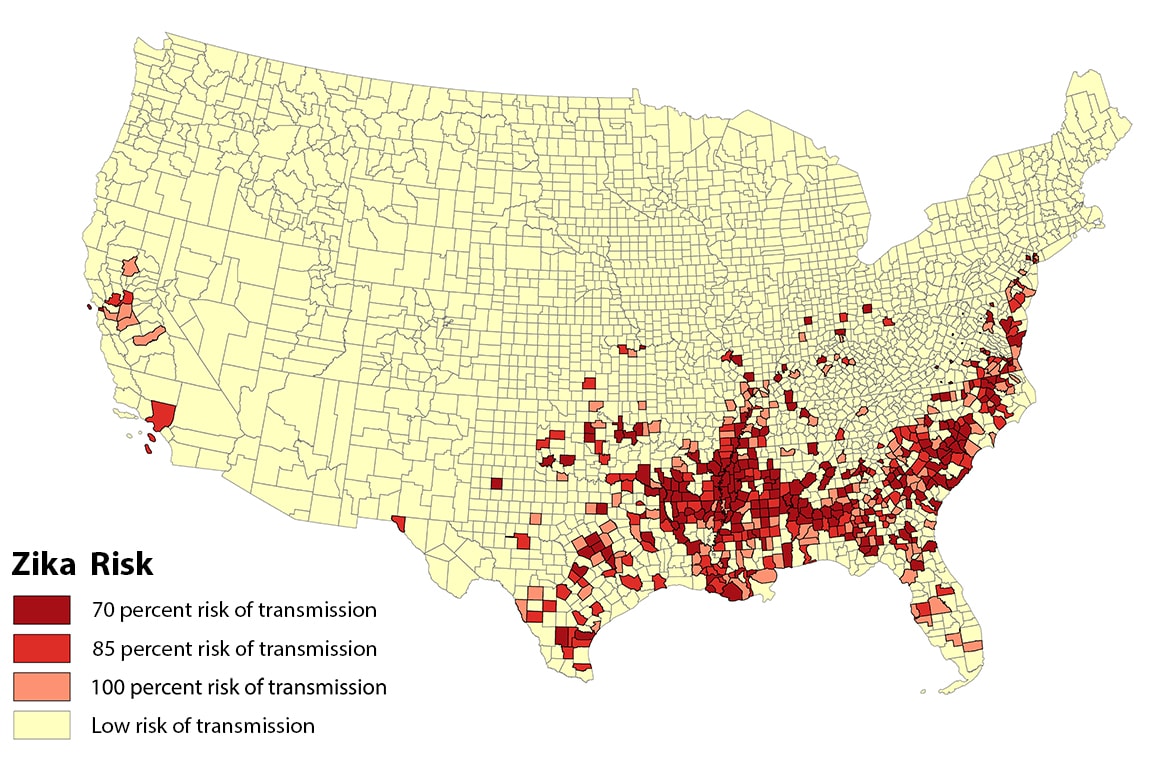
An early online article in the American Journal of Public Health by Saint Louis University researchers puts the bulls-eye of Zika transmission on the Mississippi delta.
The City of St. Louis and St. Clair County, Illinois, also are among the areas considered at high risk for transmission of Zika infection.
?The purpose of this study was not to create unwarranted alarm, but rather to enhance Zika prevention methods such as mosquito control, effective prevention message dissemination, and treatment and care preparation, in advance of a Zika epidemic in the contiguous U.S.,? said Enbal Shacham, Ph.D., M.Ed., associate professor of behavioral sciences and health education at Saint Louis University and the lead author of the study.
?We need significant planning and prevention in areas and populations most likely to experience the highest burdens from Zika infection. Timely strategies to communicate risk, control mosquito populations, and prevent disease transmission are imperative to preventing a large-scale Zika epidemic in the United States.?
Zika poses the most serious threat to unborn babies who may die or develop devastating birth defects, such as brain damage, after their mothers contract Zika during pregnancy.
Shacham and her collaborators studied 3,108 counties in the U.S. They determined 507 ?high risk? areas for Zika transmission based on several factors: the presence of Aedes aegypti mosquitoes; high rates of sexually transmitted infections, which is an established surrogate marker for unprotected sex; number of women of child-bearing age; and an estimate of birth rates for each county.
...
https://www.slu.edu/news/2017/march/predicted-zika-hot-spots.php
[/FONT]
[/FONT]
[FONT="] [h=1]SLU Researchers Predict Zika Hot Spots in the U.S.[/h] Where in the continental United States is Zika most likely to occur?
An early online article in the American Journal of Public Health by Saint Louis University researchers puts the bulls-eye of Zika transmission on the Mississippi delta.
The City of St. Louis and St. Clair County, Illinois, also are among the areas considered at high risk for transmission of Zika infection.
?The purpose of this study was not to create unwarranted alarm, but rather to enhance Zika prevention methods such as mosquito control, effective prevention message dissemination, and treatment and care preparation, in advance of a Zika epidemic in the contiguous U.S.,? said Enbal Shacham, Ph.D., M.Ed., associate professor of behavioral sciences and health education at Saint Louis University and the lead author of the study.
?We need significant planning and prevention in areas and populations most likely to experience the highest burdens from Zika infection. Timely strategies to communicate risk, control mosquito populations, and prevent disease transmission are imperative to preventing a large-scale Zika epidemic in the United States.?
Zika poses the most serious threat to unborn babies who may die or develop devastating birth defects, such as brain damage, after their mothers contract Zika during pregnancy.
Shacham and her collaborators studied 3,108 counties in the U.S. They determined 507 ?high risk? areas for Zika transmission based on several factors: the presence of Aedes aegypti mosquitoes; high rates of sexually transmitted infections, which is an established surrogate marker for unprotected sex; number of women of child-bearing age; and an estimate of birth rates for each county.
...
https://www.slu.edu/news/2017/march/predicted-zika-hot-spots.php
[/FONT]
