• FluTrackers.com Inc. does not provide medical advice. Information on this web site is collected from various internet resources, and the FluTrackers board of directors makes no warranty to the safety, efficacy, correctness or completeness of the information posted on this site by any author or poster. The information collated here is for instructional and/or discussion purposes only and is NOT intended to diagnose or treat any disease, illness, or other medical condition. Every individual reader or poster should seek advice from their personal physician/healthcare practitioner before considering or using any interventions that are discussed on this website. By continuing to access this website you agree to consult your personal physican before using any interventions posted on this website, and you agree to hold harmless FluTrackers.com Inc., the board of directors, the members, and all authors and posters for any effects from use of any medication, supplement, vitamin or other substance, device, intervention, etc. mentioned in posts on this website, or other internet venues referenced in posts on this website.
  • We are not asking for any donations. Do not donate to any entity who says they are raising funds for us.

Resources on climate change

LaMenchos

Moderator
RealClimate Blog - topics and resources

http://www.flutrackers.com/forum/forumdisplay.php?f=1367

We’ve often been asked to provide a one stop link for resources that people can use to get up to speed on the issue of climate change, and so here is a first cut. Unlike our other postings, we’ll amend this as we discover or are pointed to new resources. Different people have different needs and so we will group resources according to the level people start at.
For complete beginners:
NCAR: Weather and climate basics
Oxford University: The basics of climate prediction
Pew Center: Global Warming basics
Wikipedia: Global Warming
NASA: Global Warming update
National Academy of Science: Understanding and Responding to Climate Change
Encyclopedia of Earth: Climate Change Collection
Global Warming FAQ (Tom Rees)
Global Warming: Man or Myth? (Scott Mandia, SUNY Suffolk)
There is a new booklet on Climate Literacy from multiple agencies (NOAA, NSF, AAAS) available here (pdf).
The UK Govt. has a good site on The Science of Climate Change (added Sep 2010).
The portal for climate and climate change of the ZAMG (Zentralaanstalt für Meteorologie und Geodynamik, Vienna, Austria). (In German) (added Jan 2011)
Those with some knowledge:
The IPCC AR4 Frequently Asked Questions (here (pdf)) are an excellent start. These cover:

RealClimate: Start with our index
Informed, but in need of more detail:
Science: You can’t do better than the IPCC reports themselves (AR4 2007, TAR 2001).
History: Spencer Weart’s “Discovery of Global Warming” (AIP)
Art: Robert Rohde’s “Global Warming Art
Informed, but seeking serious discussion of common contrarian talking points:
All of the below links have indexed debunks of most of the common points of confusion:

Please feel free to suggest other suitable resources, particularly in different languages, and we’ll try to keep this list up to date.

http://www.realclimate.org/index.php/archives/2007/05/start-here/
 
Re: Resources on climate change

NASA Climate Change Blog: MY BIG FAT PLANET - Dr. Amber Jenkins
<table border="0" cellpadding="0" cellspacing="0" width="100%"><tbody><tr><td width="540">Climate change chronicles from NASA</td><td rowspan="4" width="10">
spacer.gif
</td></tr><tr><td>
spacer.gif
</td><td colspan="2">
spacer.gif
</td></tr><tr><td height="1" valign="top">
blogRule.gif
</td><td rowspan="2" valign="top">

<table bgcolor="#87a25b" border="0" cellpadding="1" cellspacing="0" width="193"><tbody><tr><td style="padding: 5px; padding-left: 10px; color: #ffffff;">Recent Posts</td></tr><tr><td> <table class="pageContent" bgcolor="#ffffff" border="0" cellpadding="10" cellspacing="0" width="100%"><tbody><tr><td> <table class="pageContent" border="0" cellpadding="0" cellspacing="0"><tbody><tr><td></td><td>
</td><td>In a State of Flux</td></tr><tr><td></td><td>
</td><td>Shaky ground, shaky ice</td></tr><tr><td></td><td>
</td><td>All boots on deck</td></tr><tr><td></td><td>
</td><td>What an astronaut sees</td></tr><tr><td></td><td>
</td><td>Pick of the pics</td></tr></tbody></table> </td></tr></tbody></table> </td></tr></tbody></table>
<table bgcolor="#87a25b" border="0" cellpadding="1" cellspacing="0" width="193"><tbody><tr><td style="padding: 5px; padding-left: 10px; color: #ffffff;">Most Commented</td></tr><tr><td> <table class="pageContent" bgcolor="#ffffff" border="0" cellpadding="10" cellspacing="0" width="100%"><tbody><tr style="background-color: #ffffff;;"><td>1. Pulling for the deniers </td></tr><tr style="background-color: #d9e7c4;;"><td>2. State of Flux </td></tr><tr style="background-color: #ffffff;;"><td>3. It's a bug's life </td></tr><tr style="background-color: #d9e7c4;;"><td>4. Second life? </td></tr><tr style="background-color: #ffffff;;"><td>5. Adapting to climate change </td></tr></tbody></table> </td></tr></tbody></table>
<table bgcolor="#87a25b" border="0" cellpadding="1" cellspacing="0" width="193"><tbody><tr><td style="padding: 5px; padding-left: 10px; color: #ffffff;">Archives</td></tr><tr><td> <table class="pageContent" bgcolor="#ffffff" border="0" cellpadding="10" cellspacing="0" width="100%"><tbody><tr><td> August 2011
June 2011
April 2011
March 2011
February 2011
January 2011
December 2010
November 2010
October 2010
September 2010
August 2010
July 2010
June 2010
May 2010
April 2010
March 2010
February 2010
January 2010
December 2009
November 2009
October 2009
September 2009
August 2009
July 2009
</td></tr></tbody></table> </td></tr></tbody></table>
<table bgcolor="#87a25b" border="0" cellpadding="1" cellspacing="0" width="193"><tbody><tr><td style="padding: 5px; padding-left: 10px; color: #ffffff;">Blogroll</td></tr><tr><td> <table class="pageContent" bgcolor="#ffffff" border="0" cellpadding="10" cellspacing="0" width="100%"><tbody><tr><td> 350
Climate 411
Climate Ark
Climate Feedback
Climate Progress
Climate Watch
DeSmogBlog
Dot Earth
Elegant Figures
George Monbiot?s Blog
Green Inc.
Green Living Tips
Greenversations
Grist
It?s Getting Hot in Here
Notes from the Field
Open Mind
RealClimate
Treehugger
What on Earth
Worldchanging
</td></tr></tbody></table> </td></tr></tbody></table>
<table bgcolor="#87a25b" border="0" cellpadding="1" cellspacing="0" width="193"><tbody><tr><td style="padding: 5px; padding-left: 10px; color: #ffffff;">Other Sites</td></tr><tr><td> <table class="pageContent" bgcolor="#ffffff" border="0" cellpadding="10" cellspacing="0" width="100%"><tbody><tr><td> Climate Central
Greenhouse Gas Online
IPCC
Oxfam International Climate Change
Skeptical Science
The Climate Project
The Earth Institute of Columbia University: Media Outreach Guide
The Good Human
Yale Climate Change & Media Forum
</td></tr></tbody></table> </td></tr></tbody></table>
<table bgcolor="#87a25b" border="0" cellpadding="1" cellspacing="0" width="193"><tbody><tr><td style="padding: 5px; padding-left: 10px; color: #ffffff;">NASA Sites</td></tr><tr><td> <table class="pageContent" bgcolor="#ffffff" border="0" cellpadding="10" cellspacing="0" width="100%"><tbody><tr><td> @EarthVitalSigns on Twitter
Eyes on the Earth
NASA Climate Change
NASA Earth Observatory
NASA Earth Portal
</td></tr></tbody></table> </td></tr></tbody></table>
</td></tr><tr><td style="padding-top: 15px;" valign="top"> <table border="0" cellpadding="0" cellspacing="0" width="540"><tbody><tr><td> In a State of Flux
100 images of our changing planet </td></tr></tbody></table> <table class="pageContent" border="0" cellpadding="0" cellspacing="0" width="100%"><tbody><tr><td>
spacer.gif
</td></tr><tr><td width="536">
newsPage-575.jpg
</td></tr><tr><td>
spacer.gif
</td></tr></tbody></table> <table border="0" cellpadding="0" cellspacing="0" width="100%"><tbody><tr><td>They say a picture says a thousand words. This week we published our 100th image in State of Flux, our gallery showing images of change around our planet. So hopefully by now you?re in awe of our home planet and the ways in which it is constantly changing, and aware of the impact us humans can have.
Each week for the past couple of years, we?ve published new images of different locations on planet Earth, showing change over time periods ranging from centuries to days. The pictures have been taken from space, by NASA?s Eyes on the Earth (its fleet of satellites whizzing above our heads), and from the ground, by real-life people. Some of the changes seen are related to, or exacerbated by, climate change, and some are not. Some document the effects of urbanization and man?s impact on the land, while others the ravage of disasters such as fires and floods.
Seeing our planet from space gives us a global view that we can?t get elsewhere. Through those eyes, we?ve witnessed damage caused by the recent tsunami in Japan, glacier melt in the Himalayas, the greening of China, the growth of Las Vegas and a century of global warming. We?ve looked at the march of deforestation in Bolivia, the rumblings of the (unpronounceable) Icelandic volcano Eyjafjallaj?kull, and the damming of the River Nile. Take a look below at some of our favorites. Sign up to our monthly newsletter or subscribe to our Facebook page if you want to keep up to date with our latest images. We?ll be launching a brand spanking new version of the gallery soon!


ImageLarge-1092.jpg

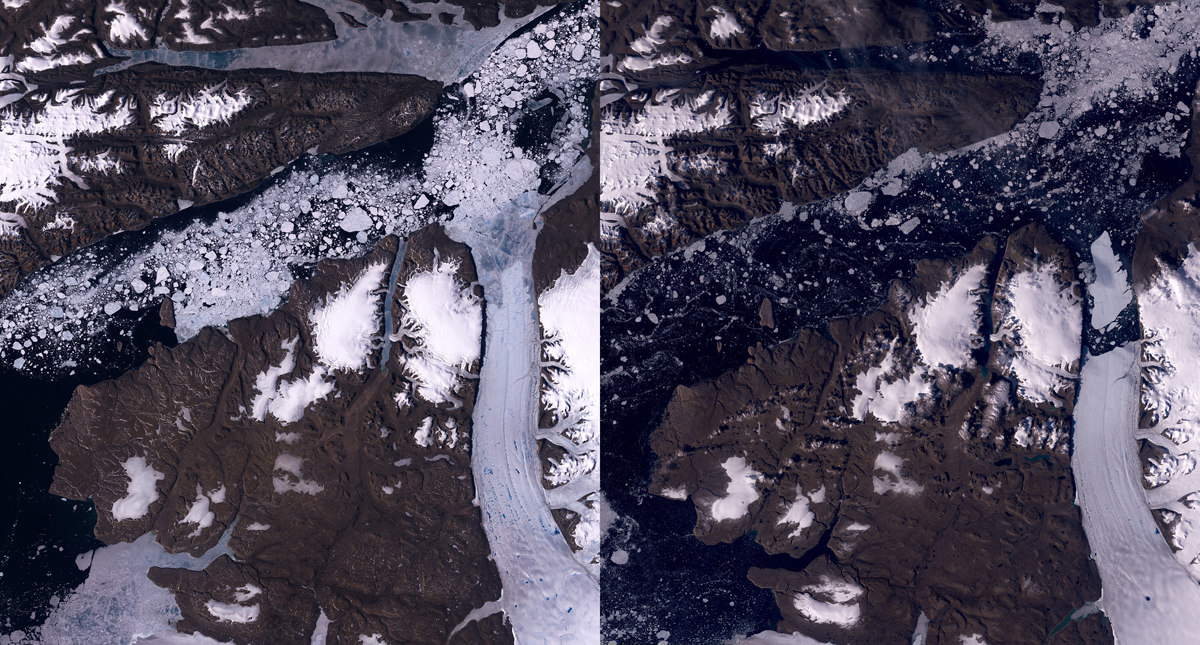
COLD SNAP. Petermann Glacier, Greenland. Left: June 26, 2010. Right: August 13, 2010. An iceberg more than four times the size of Manhattan broke off the Petermann Glacier (the curved, nearly vertical stripe stretching up from the bottom right of the images) along the northwestern coast of Greenland. Warmer water below the floating ice and at the sea?s surface were probably responsible for the break.


ImageLarge-103.jpg

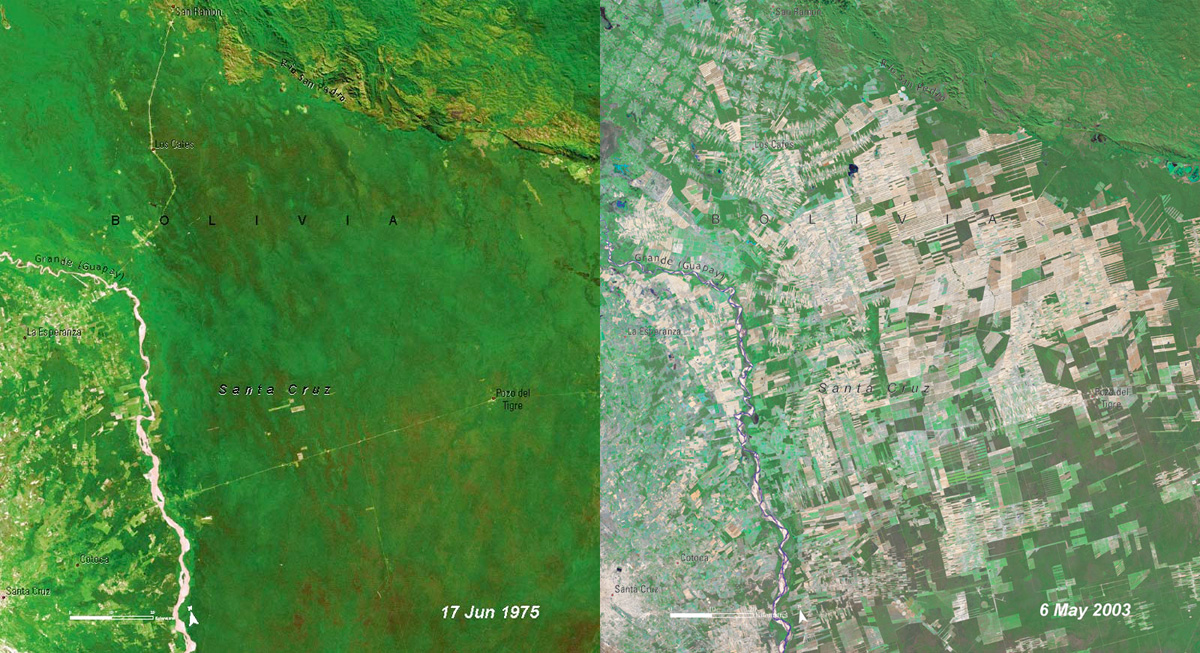
A FOREST FALLS. Santa Cruz, Bolivia. Left: June 17, 1975. Right: May 6, 2003. In 1975, the forest stretched from Rio San Pedro to the Rio Grande (Guapay) River. By 1986, roads linked the region to population centers, enabling a large influx of people. Forests were clear-cut and converted to pastures and cropland as part of the Tierras Baja project. By 2003, almost the entire region had been converted to agriculture, including the area east of La Esperanza across the Rio Grande.


ImageLarge-12.jpg

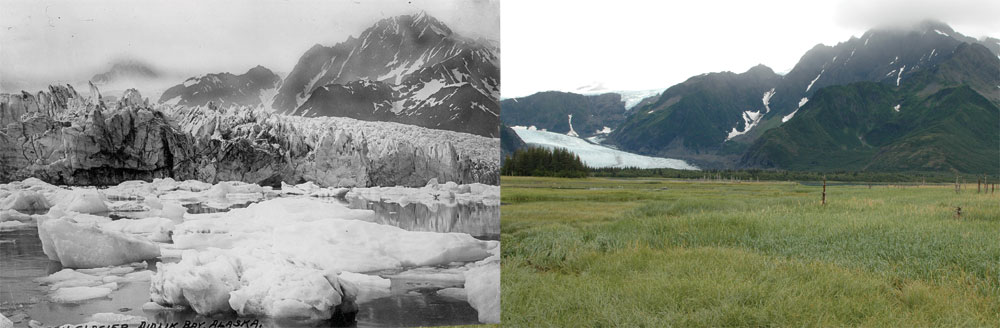
PEDERSEN PAST AND PRESENT. The retreat of Pedersen Glacier, Alaska. Left: summer 1917. Right: summer 2005.


ImageLarge-61.jpg

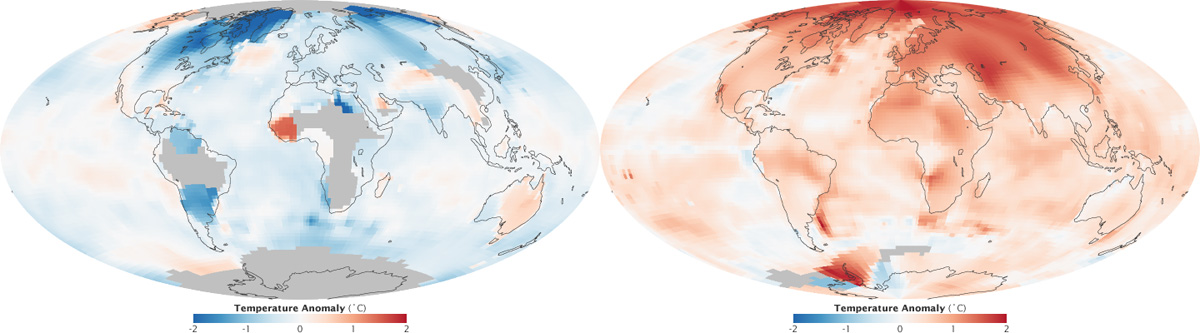
A CENTURY OF WARMING. Global temperature changes. Left: 1880-89. Right: 2000-09. These maps compare temperatures in each region of the world to what they were from 1951 to 1980. NASA's Goddard Institute for Space Studies conducted the analysis using ship-based and satellite observations of sea-surface temperature, and data from Antarctic research stations and 6,300 meteorological stations around the world. Earth's average surface temperature has increased by about 0.7 ?C (1.3 ?F) since 1880. Two-thirds of the warming has occurred since 1975, at a rate of roughly 0.15 to 0.20 ?C per decade.


ImageLarge-52.jpg

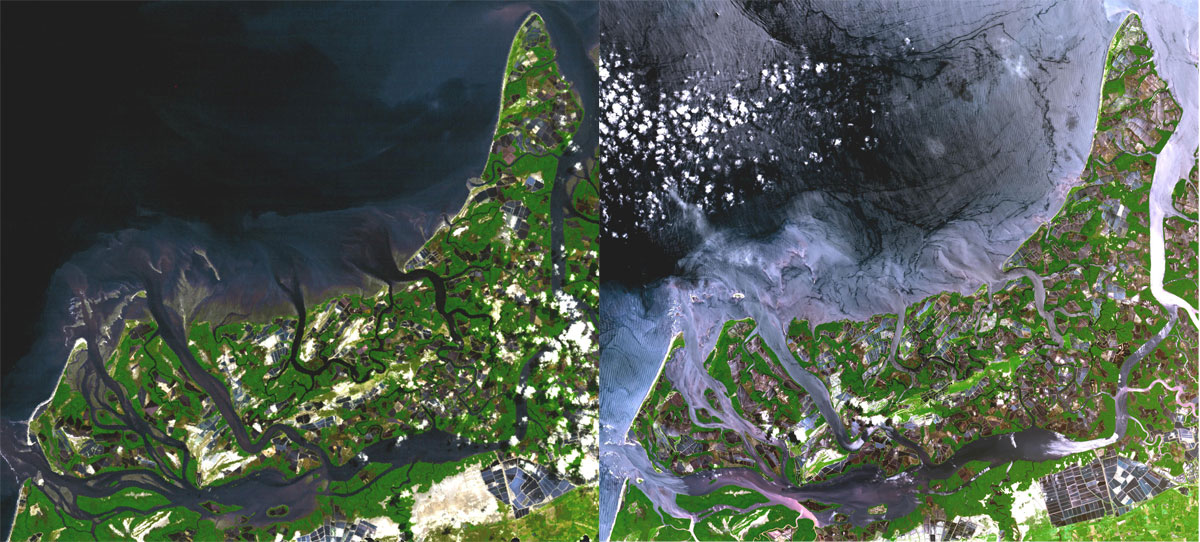
WETLAND WOES. Left: 1991. Right: 2001. In many parts of the world, wetlands are being converted to shrimp ponds in order to farm these crustaceans for food and sale. One example is on the west coast of Ecuador, south of Guayaquil. The 1991 Landsat satellite image on top shows a coastal area where 143 square kilometers of wetlands were converted to shrimp ponds. By the time NASA's ASTER instrument 'snapped' the right-hand image in 2001, 243 square kilometers had been converted, eliminating 83 percent of the wetlands. These scenes cover an area of 30 x 31 kilometers.


ImageLarge-114.jpg

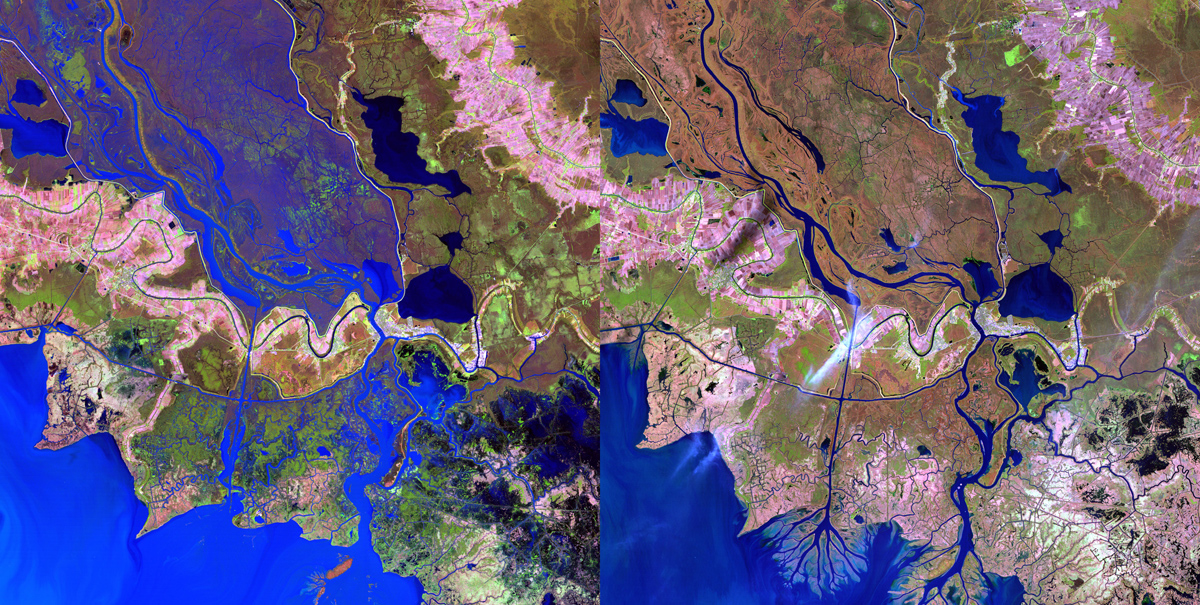
DELTA DEFENSE. Wax Lake Delta, Louisiana. Left: January 13, 1983. Right: January 2, 2011. The delta, where the Atchafalaya River flows into the Gulf of Mexico, was formed by sediment following the construction of a canal through Wax Lake in 1941. Since Hurricane Katrina in 2005, the delta has served as a model for restoring wildlife habitat and protection against storm surge in the Mississippi River delta region.


ImageLarge-74.jpg

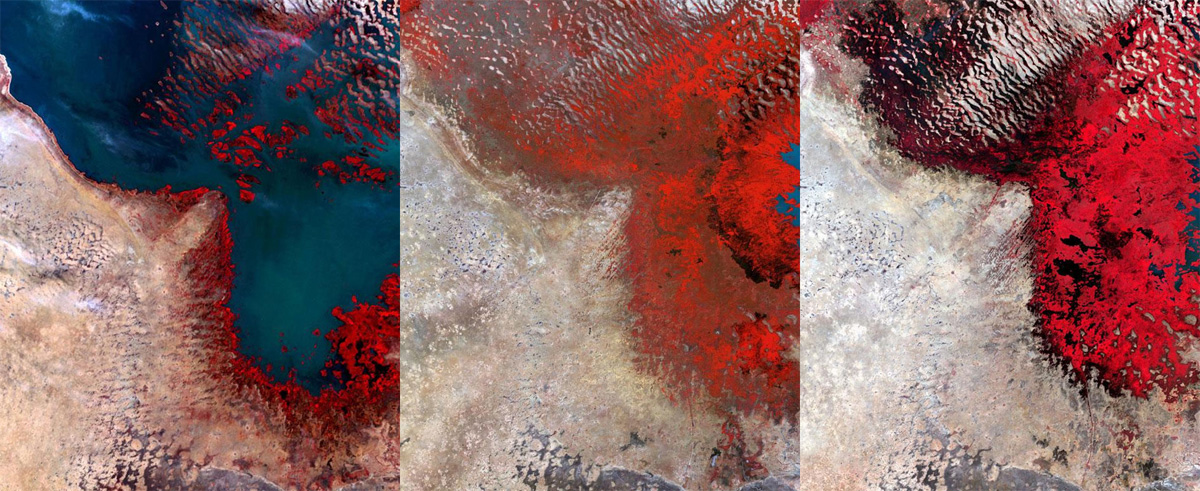
SHRINKING LAKE CHAD. Lake Chad, Africa. Left: December. 8, 1972. Middle: December 14, 1987. Right: December. 18, 2002. Persistent drought has shrunk Lake Chad, once the world?s sixth largest lake, to about one-twentieth of the size it was in the 1960s. Only 16 to 26 feet (5 to 8 meters) deep in ?normal? times, small changes in depth have resulted in large changes in area. As the lake has receded, large wetland areas (shown in red) have replaced open water.


ImageLarge-136.jpg

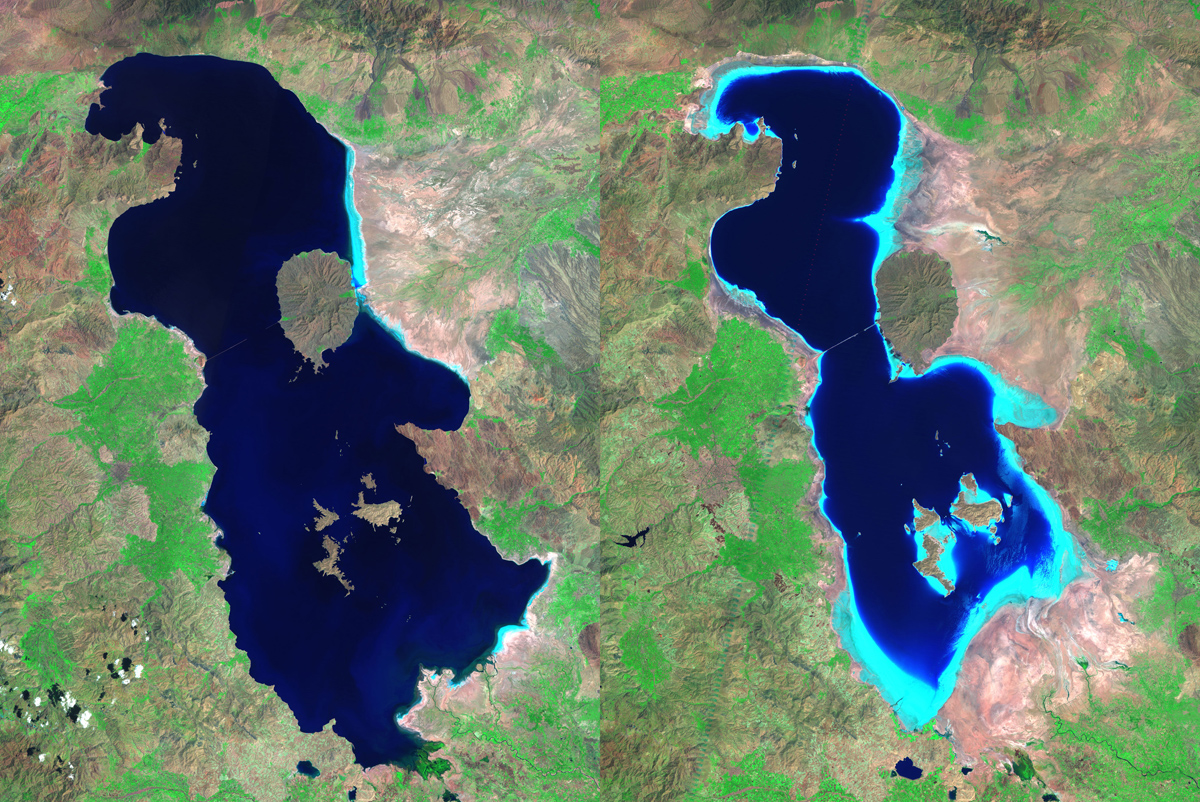
DRYING OUT. Left: August 1985. Right: August 2010. Iran?s Lake Oroumeih (also spelled Urmia) is the largest lake in the Middle East and the third largest saltwater lake on Earth. But dams on feeder streams, expanded use of ground water, and a decades-long drought have reduced it to 60 percent of the size it was in the 1980s. Light blue tones in the 2010 image represent shallow water and salt deposits. Increased salinity has led to an absence of fish and habitat for migratory waterfowl. At the current rate, the lake will be completely dry by the end of 2013.


ImageLarge-35.jpg

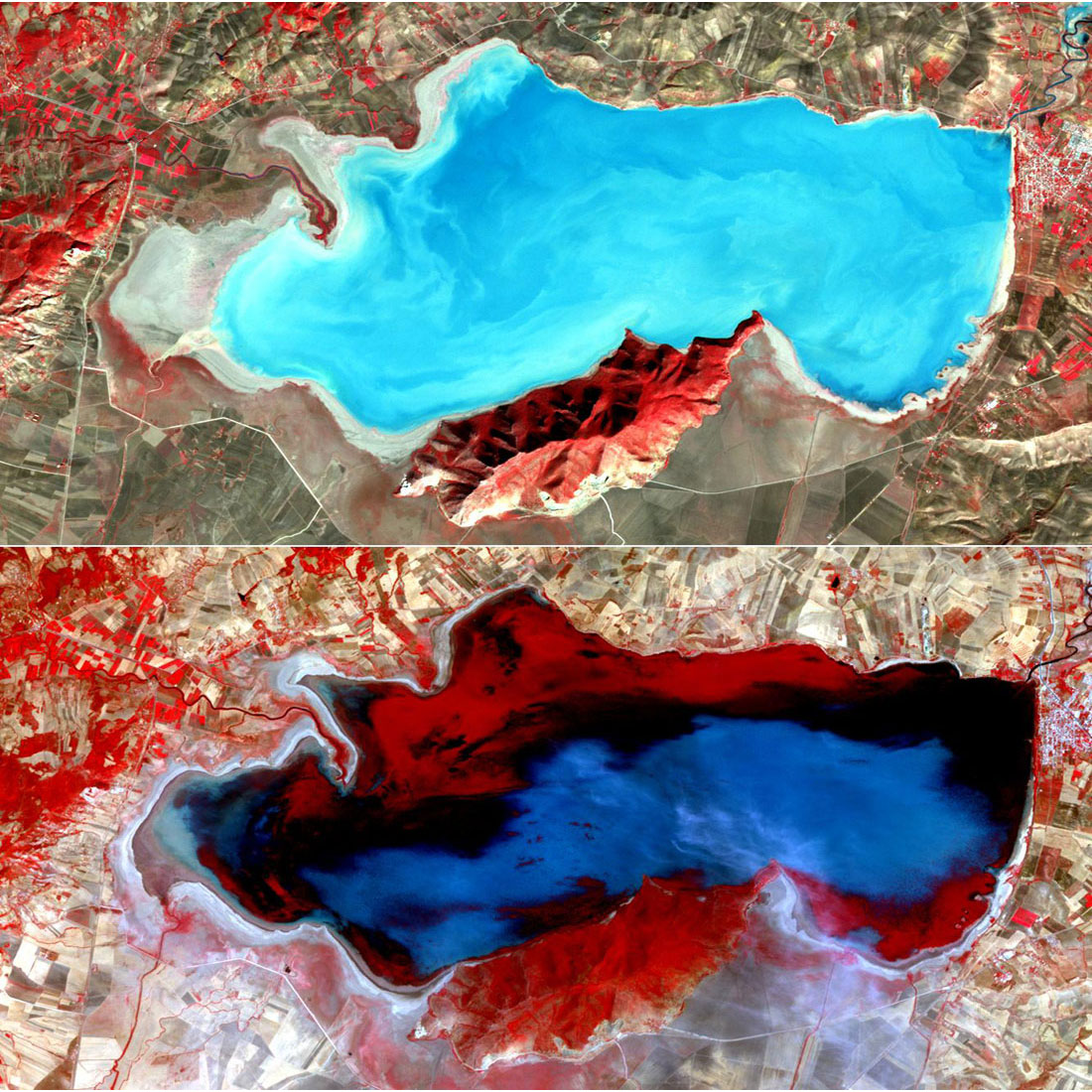
AVIAN REST STOP. Ichkeul Lake in northern Tunisia. Top: November 14, 2001. Bottom: July 29, 2005; the water level is higher, but a large part of the lake appears red due to the presence of aquatic plants. Ichkeul Lake and wetlands are a major stopover point for hundreds of thousands of migrating birds who come to feed and nest. It is the last remaining lake in a chain that once extended across North Africa, and has badly deteriorated as a result of the construction of three dams on rivers supplying it and its marshes, which have cut off almost all inflow of freshwater. The Tunisian government plans to undertake various measures to retain freshwater in the lake on a year-round basis and reduce the salinity of the lake.


ImageLarge-39.jpg

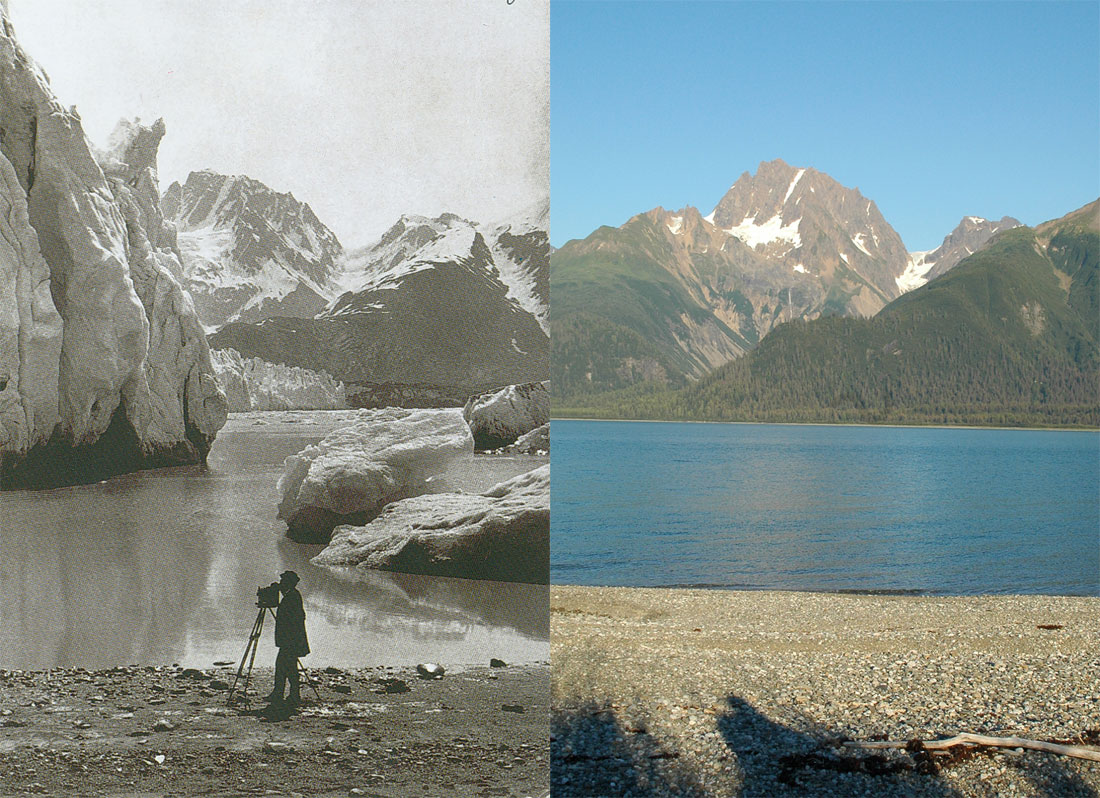
TIME TRAVEL. Muir Glacier in Alaska. Left: 1891. Right: 2005. They don't make cameras like that anymore.

</td></tr><tr><td>
spacer.gif
</td></tr></tbody></table></td></tr></tbody></table>
http://climate.nasa.gov/blogs/
 
Re: Resources on climate change

Managing the Risks of Extreme Events and Disasters to Advance Climate Change Adaptation

An 800-page assessment, Intergovernmental Panel on Climate Change (IPCC) says global warming will magnify the frequency and force of extreme weather events, and defences must be prepared now to avoid worse misery in the future.

http://www.google.com/hostednews/afp...cc8372265e.7a1

IPCC

Special Report: Managing the Risks of Extreme Events and Disasters to Advance Climate Change Adaptation (SREX)
 
Back
Top