

tetano
Editor, Senior Moderator
Preliminary analysis of the fifth epidemic of avian influenza A/H7N9
10 Mar 2017 by jameshadfield
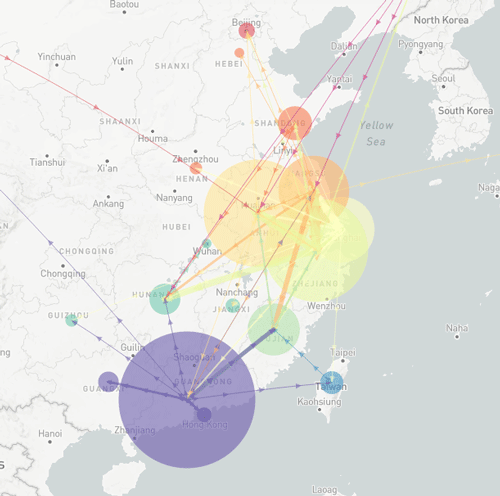 [h=3]Background[/h] Avian influenza A(H7N9) has resulted in annual epidemics over the past five years in China. H7N9 has a high mortality rate of around 40% and the currently ongoing fifth epidemic is the largest yet, with 460 infections reported by February 27th, 2017 (WHO report). Transmission is still predominantly from poultry, where H7N9 viruses continue to circulate, and human-to-human transmission is thought to be rare. The CDC considers H7N9 to have "the greatest potential to cause a pandemic" of all influenza A viruses. For more information, see this CDC information page.
[h=3]Nextstrain[/h] Nextstrain now has the ability to display phylogenies and geographical data for both the NA and HA genes, drawn from over 1200 samples covering all five human epidemics of H7N9. This analysis was possible thanks to the data sharing of the influenza research community through GISAID. It is our hope that making these analyses available to the community will aid understanding of this epidemic as it unfolds. Please note that the analysis currently presented in nextstrain is preliminary and further research is required.
...
http://bedford.io/blog/avian-influenza-h7n9/
10 Mar 2017 by jameshadfield
[h=3]Nextstrain[/h] Nextstrain now has the ability to display phylogenies and geographical data for both the NA and HA genes, drawn from over 1200 samples covering all five human epidemics of H7N9. This analysis was possible thanks to the data sharing of the influenza research community through GISAID. It is our hope that making these analyses available to the community will aid understanding of this epidemic as it unfolds. Please note that the analysis currently presented in nextstrain is preliminary and further research is required.
...
http://bedford.io/blog/avian-influenza-h7n9/