

sharon sanders
Editor-in-Chief & President
More Preparedness For Kids

Credit Florida Disaster.org
# 7540
Although I probably would have embraced preparedness had I been raised somewhere else, I?m certain growing up in Florida with early encounters with hurricanes and the Cuban Missile Crisis, along with spending 15 years of my life living aboard boats, had more than a little to do with my mindset.
You?ll find audio-stories on topics like lightning safety, wildfires, and hurricanes along with interactive games like the one below, that teaches kids what items are needed for a disaster supply kit.
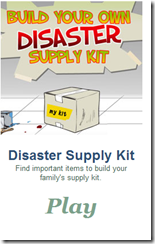
And to go along with these activities for kids, the site provides guides for parents and teachers to help them discuss these issues with kids.
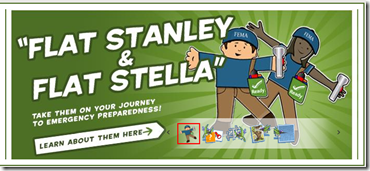
And for even more disaster preparedness for kids, you will also want to check out FEMA/Ready.gov?s preparedness for kids website which I highlighted last September in NPM12: Preparedness For Kids
Posted by Michael Coston at <a class="timestamp-link" href="http://afludiary.blogspot.com/2013/08/more-preparedness-for-kids.html" rel="bookmark" title="permanent link"><abbr class="published" title="2013-08-04T10:38:00-04:00">10:38 AM</abbr>
Credit Florida Disaster.org
# 7540
Although I probably would have embraced preparedness had I been raised somewhere else, I?m certain growing up in Florida with early encounters with hurricanes and the Cuban Missile Crisis, along with spending 15 years of my life living aboard boats, had more than a little to do with my mindset.
Growing up on the water I learned to swim, fish, row a boat, throw a cast net, read a map, basic first aid, and (somewhat paradoxically as a boy scout) my way around the `woods? at a very early age.
In 1962 the Cuban Missile Crisis had the schools handing out graphic pamphlets on radiation poisoning and nuclear war survival to elementary school children, students practicing duck & cover drills each day, and twice-a-week evacuation drills.
Admittedly, not the ideal way for an 8 year-old to learn about preparedness.
Thankfully today preparedness messaging ? particularly for kids ? is `kinder-and-gentler? (and far less graphic) than during the `bad-old-days? of the cold war.
But the core message ? that disasters happen, and we should all be prepared ? hasn?t changed.
Florida Division of Emergency Management?s Kids Get A Plan page provides an excellent interactive introduction to preparedness for children.
You?ll find audio-stories on topics like lightning safety, wildfires, and hurricanes along with interactive games like the one below, that teaches kids what items are needed for a disaster supply kit.
And to go along with these activities for kids, the site provides guides for parents and teachers to help them discuss these issues with kids.
Some of these stories and activities are geared for kids as young as 5 or 6, while others are aimed at slightly older children.
If you?ve got kids, or grandkids ? and would like to introduce them to preparedness concepts without inducing undue trauma - this site is very much worth while checking out.
And for even more disaster preparedness for kids, you will also want to check out FEMA/Ready.gov?s preparedness for kids website which I highlighted last September in NPM12: Preparedness For Kids
Posted by Michael Coston at <a class="timestamp-link" href="http://afludiary.blogspot.com/2013/08/more-preparedness-for-kids.html" rel="bookmark" title="permanent link"><abbr class="published" title="2013-08-04T10:38:00-04:00">10:38 AM</abbr>