Source:
https://www.elsiglodedurango.com.mx...a-y-durango-por-brote-de-influenza-aviar.html
Senasica reports all farms inspected in Coahuila and Durango due to avian influenza outbreak
A total of 887 thousand 672 birds died between disease and slaughter
THE CENTURY OF TORREÓN, Tuesday, May 17, 2022, updated at 9:24 p.m.

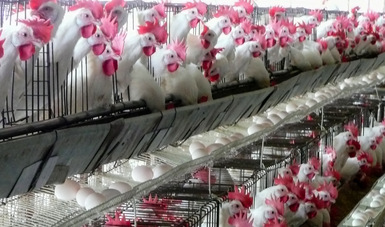
The National Service for Agri-Food Health, Safety and Quality (Senasica) reported that it concluded the review of one hundred percent of the poultry farms located in the region of Durango and Coahuila, where the outbreak of highly pathogenic avian influenza AH7N3 occurred.
The report specified that a total of 887,672 birds from the states of Coahuila and Durango died between disease and slaughter.
The agency of the Ministry of Agriculture and Rural Development explained that samples were taken in 298 poultry production units.
He explained that there was suspicion of disease in 48 farms in the north of the country - three of them located in Chihuahua - and through laboratory analysis the presence was confirmed in 20 units, of which 10 in Coahuila and 10 in Durango.
With these actions, more than 35 million birds were protected in the region, a large part of them of high genetic value and, currently, cleaning, disinfection and sanitary vacuum work is being carried out on the contaminated farms to later allow their repopulation, he said in a communicated the Senasica.
It was indicated that at this time experts from the United States-Mexico Commission for the Prevention of Foot-and-Mouth Disease and Other Exotic Animal Diseases (CPA) of the Senasica carry out weekly samplings of all the poultry production units of Coahuila and Durango, with the aim of in order to verify that there is no longer any circulation of the virus in the region and lift, where appropriate, the internal quarantine established by the Agriculture agency.
The National Service stressed that, even though the outbreak is under control at the moment, it will activate the National Emergency Device for Animal Health (Dinesa) to intensify epidemiological surveillance throughout the national territory and prevent the spread of the H7N3 virus, present in several states in the center of the country since 2012, the source of the current northern outbreak.
He specified that the implementation of the device will also allow the application of preventive measures in the face of the threat posed by the waterfowl migration season that occurs between the months of October and March, since the ducks and geese that travel south during the winter they can bring with them various strains of avian influenza virus that do not exist in the national territory, such as the highly pathogenic H5N1 that is currently spreading through the United States and has caused the death of nearly 40 million poultry in that country. country.