• FluTrackers.com Inc. does not provide medical advice. Information on this web site is collected from various internet resources, and the FluTrackers board of directors makes no warranty to the safety, efficacy, correctness or completeness of the information posted on this site by any author or poster. The information collated here is for instructional and/or discussion purposes only and is NOT intended to diagnose or treat any disease, illness, or other medical condition. Every individual reader or poster should seek advice from their personal physician/healthcare practitioner before considering or using any interventions that are discussed on this website. By continuing to access this website you agree to consult your personal physican before using any interventions posted on this website, and you agree to hold harmless FluTrackers.com Inc., the board of directors, the members, and all authors and posters for any effects from use of any medication, supplement, vitamin or other substance, device, intervention, etc. mentioned in posts on this website, or other internet venues referenced in posts on this website.
  • We are not asking for any donations. Do not donate to any entity who says they are raising funds for us.

Mayotte - Chikungunya outbreak 2025

Pathfinder

Editor, Senior Moderator
Translation Google
Identification of a first imported case of chikungunya in Mayotte

Press release
March 5, 2025

Vignettes%20ARS%20Mayotte.pdf_.png


The Mayotte Regional Health Agency announced that a first case of imported chikungunya was detected on the island this Wednesday, March 5. It concerns a resident of Mamoudzou, who recently returned from a stay in Reunion. Following this identification, the ARS of Mayotte immediately implemented vector control actions in order to identify larval breeding sites around the person's home.

Epidemiological situation and ORSEC level 1B plan

Since August 23, 2024, Reunion Island has been facing a chikungunya epidemic, with 3,390 cases recorded ( data from 03/05/2025 ). Although the number of cases has gradually increased, there has been a clear epidemic increase over the last three weeks.

As a security and prevention measure, although no cases had been declared to date, the ARS of Mayotte moved, at the end of 2024, to level 1B of the ORSEC plan ( active circulation in the Indian Ocean zone ) to prepare for a possible introduction of chikungunya into the territory.

This first reported case is therefore an imported case – no indigenous case has been reported in Mayotte to date.


Fast support in Mamoudzou

As soon as the case was identified, vector control agents from the ARS of Mayotte went to the patient's home. An operation to search for and destroy the nesting sites around her home was carried out. Treatment and awareness-raising actions for residents, aimed at eliminating larval breeding sites and protecting themselves from mosquito bites, will be organized throughout the week.
Local health professionals and emergency services have been informed of the situation.


Recommendations for travelers to and from Reunion Island

In view of the epidemic circulation on the neighboring island and in order to avoid the introduction of new cases, the ARS of Mayotte recommends that all travelers to and from Reunion Island strictly comply with the instructions of the health authorities and put into practice the barrier gestures:
  1. Protect yourself against mosquito bites in the days following arrival to avoid transmitting the disease in case you have contracted it.
  2. If symptoms appear:
    • Consult your doctor quickly and tell him about your stay in Reunion;
    • It is imperative that you continue to protect yourself from mosquito bites for at least a week to avoid contaminating those around you.
Recommendations to the population of Mayotte

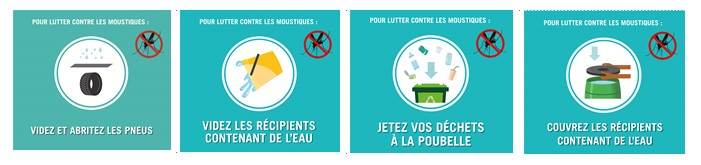
> Limit the development of mosquitoes
2020-02-20_143200.jpg

> Protect yourself from mosquito bites
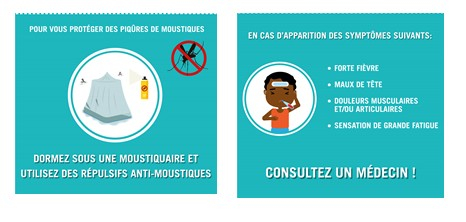
2020-02-20_143211.jpg


Symptoms of chikungunya appear on average 4 to 7 days after a mosquito bite. Chikungunya is characterized by a high fever that appears suddenly and is often accompanied by joint pain, mainly affecting the joints of the extremities (wrists, ankles, phalanges).

Although the disease is not fatal, joint pain can persist for several months and require medical attention.


...
https://www.mayotte.ars.sante.fr/identification-dun-premier-cas-importe-de-chikungunya-mayotte


Translation Google

Health authorities fear a Chikungunya epidemic in Mayotte

ARS agents conduct daily mosquito control operations to prevent the spread of Chikungunya in Mayotte. With the emergence of indigenous cases and the situation in Réunion, they fear the start of an epidemic in the department.

Raphael Cann • Published on April 12, 2025 at 2:04 p.m.

Agents from the Mayotte Regional Health Agency intervened this Saturday in Longoni, where an indigenous case of Chikungunya was detected. “We're trying to treat the exterior of homes and eliminate anything that could be a breeding ground,” explains Philippe Ali, a health technician. “It could be flower saucers, negligence, or intentional water reserves.” With 20 cases of Chikungunya now detected, including four indigenous cases, “we have to be really careful not to leave any stagnant water,” adds his colleague, his stock of insecticide at the ready.

“Sometimes, it's very complicated to know where the cases come from, we have to conduct surveys among the population, associations, and in clinics,” continues Philippe Ali. With more than 6,000 cases detected per week in Réunion, ARS agents do not hide their fear of an epidemic in Mayotte, “from a time when there are indigenous cases and people who come from outside and are asymptomatic.” To avoid this, mosquito control operations are organized daily to prevent mosquito reproduction, each adult being able to lay up to 150 to 200 larvae. The latter only have to spend seven days in the water before reaching adulthood.

https://la1ere.francetvinfo.fr/mayo...pidemie-de-chikungunya-a-mayotte-1577782.html
 
Translation Google

Chikungunya: 55 cases recorded in the territory

Benoit Jaëglé
April 25, 2025

The Mayotte Regional Health Agency (ARS) has recorded 55 cases of chikungunya as of Friday, April 25, 2025, including 25 imported cases and 17 indigenous cases. Thirteen cases are still under investigation, and only one hospitalization has occurred to date. There have been no deaths. The ARS has treated and raised awareness in 1,120 homes across the country. 978 breeding sites have been identified, including 267 positive breeding sites (i.e., those containing mosquito larvae and pupae). ARS vector control agents will travel to Pamandzi, Mamoudzou, Koungou, Kaweni, and Malamani this week.

The ARS reminds the public that to avoid contracting chikungunya, it is essential to protect yourself from mosquito bites with repellents and mosquito nets, especially for travelers to or from Réunion Island, where the epidemic is raging. It is also recommended to prevent mosquitoes from multiplying in your home by eliminating stagnant water and storing tires in yards, which can retain them in case of rain.

If symptoms appear (sudden fever, joint pain), it is essential to consult a doctor and continue to protect yourself from mosquitoes so as not to contaminate those around you.

https://lejournaldemayotte.yt/2025/04/25/chikungunya-55-cas-recenses-sur-le-territoire/
-------------------------------------------------
25/04/25 - Bulletin d'information chikungunya

Screenshot:
image.png - Click image for larger version  Name:	image.png Views:	1 Size:	169.8 KB ID:	1012178

...
 
Translation Google

89 cases of chikungunya now recorded in Mayotte, two patients hospitalized

According to the latest bulletin from the Mayotte Regional Health Agency, 89 cases of chikungunya have been recorded in the department, including 28 indigenous cases. Two patients required hospitalization.

Raphael Cann • Published on May 2, 2025 at 4:47 p.m.

The number of chikungunya cases continues to rise in Mayotte. According to the Regional Health Agency's information bulletin, released this Friday, May 2, 89 cases have been recorded in the department, compared to 32 two weeks ago. The situation is divided between 28 imported cases, 28 indigenous cases, and 33 cases under investigation. Two patients have been hospitalized.

The ARS is also continuing its vector control efforts to raise awareness and destroy breeding sites in stagnant water. Its agents will be visiting Mamoudzou, Pamandzi, Mtsangamouji, Koungou, and Tsingoni this week. In the neighboring department of Réunion, the epidemic continues to rage, with 20 additional deaths that could be attributed to the virus.

A vaccination campaign against Chikungunya has begun in both territories, but has been marked by three "serious adverse events," including one death . At the end of last week, health authorities announced that they were "immediately" withdrawing people aged 65 and over from the vaccination campaign in Réunion and Mayotte.

https://la1ere.francetvinfo.fr/mayo...ux-patients-ont-ete-hospitalises-1583123.html

--------------------------------------------------------​
02.05.25 - Bulletin d'information chikungunya

image.png

...
 
Translation Google

Chikungunya in Mayotte: "Very few people are vaccinated," comments the head of health emergencies at the ARS

The number of chikungunya cases continues to rise in Mayotte. Although the vaccination campaign was launched two weeks ago, only five people have been vaccinated in the department after adverse reactions were detected in people over 65.

Raphael Cann • Published on May 6, 2025 at 11:42 a.m.

Chikungunya continues to spread in Mayotte. The number of cases has skyrocketed over the past month, without reaching the same epidemic level as in the neighboring department of Réunion. The Regional Health Agency is trying to limit the spread through vector control and vaccination, even though the campaign is still in its infancy. We asked Tanguy Cholin, head of the security and health emergencies department at the Regional Health Agency of Mayotte, about this.

Mayotte la 1ère: What is the current situation in Mayotte?

Tanguy Cholin: We have 98 confirmed cases, including 41 indigenous cases, 29 imported cases, and around thirty currently under investigation to determine whether they were infected in Mayotte or whether they come from a territory where the virus is actively circulating, such as Réunion. It's a virus that is very rarely fatal; in one case per 1,000, there may be severe cases that require hospitalization in intensive care, but this is a very small proportion of cases. The majority of cases only require a consultation with a general practitioner, but nothing more. The disease resolves on average between 5 and 7 days.

We perform two types of diagnostics. There is the one we can do here, the PCR, if we are in the first five days of the onset of symptoms, with results that are returned within 48 hours. If we have to do serology, for symptoms more distant in time, it is something that we send to mainland France, with the transport and interpretation times, it can take between ten and 15 days.

Mayotte 1st: The vaccination campaign began two weeks ago but was disrupted by the discovery of three cases of serious adverse events, one of which led to the death of the patient. How is the campaign going in Mayotte?

TC: Very few people have been vaccinated. We administered five vaccinations before suspending the campaign while awaiting the opinion of the High Health Authority, and we only resumed it very recently, which explains these rather low figures. The HAS has suspended vaccination for people aged over 65; it is currently open to those aged 18 to 64 with comorbidities.

Mayotte la 1ère: This is the first vaccine against chikungunya to obtain marketing authorization, how can we reassure patients?

This is a new vaccine, and there is very strict pharmacovigilance: that is, we are recording all the adverse effects, serious and non-serious, associated with vaccination. There is this first filter from the High Health Authority, which has reacted, but in Mayotte we have chosen to be even more secure by encouraging prescribers to pay attention to the most severe comorbidities, by encouraging them to carefully calculate the benefit-risk balance. For the population aged 55 to 64, we will give a booster on D+4 to ensure that there are no adverse effects.

https://la1ere.francetvinfo.fr/mayo...des-urgences-sanitaires-de-l-ars-1584086.html
 
Translation Google

Chikungunya: Faced with the intensification of the number of indigenous cases in Mayotte, the Regional Health Agency triggers level 2B of the ORSEC plan

Press release
May 16, 2025


Vignettes%20ARS%20Mayotte.pdf_.png


Given the evolving situation and the risk of an epidemic in the coming weeks, Mr. Sergio Albarello, Director General of ARS Mayotte, in consultation with Mr. François-Xavier Bieuville, Prefect of Mayotte, has decided to activate today the transition to level 2B of the ORSEC plan.
Triggering of level 2B of the ORSEC plan in Mayotte.


The current chikungunya epidemic in Réunion and the increasing number of cases in Mayotte have led the Director General of the ARS to trigger level 2B of the ORSEC plan. This alert level corresponds to an intensification of indigenous viral circulation and the risk of development into an epidemic. It notably results in a strengthening of public health actions and partnership actions with municipalities and inter-municipalities. The ARS teams, in conjunction with municipal services, continue their daily awareness-raising and mosquito control interventions in the affected neighborhoods.
Everyone's commitment is essential to minimize the scale of the epidemic and its consequences.

Level 2B of the ORSEC plan provides in particular:
- Strengthening public health and mosquito control actions across the island;
- Reinforced partnership actions to combat the virus with municipalities and inter-municipalities in identified virus circulation areas:
• actions to ensure the cleanliness and maintenance of public and private spaces (pruning, increased waste collection, etc.)
• awareness and mobilization of the population, treatments
- The identification of reinforcements that can be mobilized in an epidemic situation for actions to combat treatment larval breeding sites, and for the increase in the load of hospital services, as well as the preparation of their possible mobilization;
- Strengthening the information provided to health professionals ;
- Monitoring of stocks (repellents, mosquito nets) present in the territory
- Strengthening actions in health and medico-social establishments to combat mosquitoes and protect users and staff;
Increasing biological diagnostic capabilities.

The involvement of municipalities and inter-municipal authorities through their public health initiatives is making a significant contribution to strengthening the treatment and awareness-raising efforts led by the Regional Health Agency (ARS). This mobilization is now essential to reverse the trend. The coming weeks will be crucial in the fight against the spread of the disease.

Chikungunya, a disease with sometimes serious consequences.


Chikungunya is a disease transmitted to humans by mosquito bites carrying the virus, causing a sudden onset of high fever often accompanied by joint pain , particularly in the wrists, ankles and phalanges, rashes and headaches . Elderly people or those with chronic illnesses, as well as newborns, are at greater risk of developing a severe form. In some cases, there are chronic forms of the disease, with joint symptoms that can last for several weeks or even years.

If symptoms appear:
  1. Consult your doctor quickly and get tested: Without a test, the ARS teams cannot intervene to combat mosquitoes in your home;
    • It is imperative that you continue to protect yourself from mosquito bites for at least a week to avoid contaminating those around you.
Together, let's fight against chikungunya: simple actions can help prevent its spread.


The ARS (Regional Health Agency) reminds us that mosquitoes reproduce by laying their eggs in all containers and objects that contain water, whether inside or outside the home. Therefore, to limit their spread in the area, it is essential to clean up your living environment: systematically cover all containers containing water, get rid of waste , and ensure that stagnant water is emptied.

Furthermore, it is also possible to get vaccinated against chikungunya in Mayotte at various dedicated locations throughout the country. The HAS recommends the IXCHIK vaccine to combat severe forms of the disease for people aged 18 to 64 with comorbidities. The latter is available upon medical prescription and free of charge for people aged 18 to 64 with comorbidities.


By protecting yourself, you also protect your loved ones.

And prevent the occurrence of serious forms in the most vulnerable.


https://www.mayotte.ars.sante.fr/ch...utochtones-mayotte-lagence-regionale-de-sante

-----------------------------------------
image.png


https://www.mayotte.ars.sante.fr/system/files/2025-05/BIC Chikungunya - 16.05.25_0.jpg


Translation Google

Chikungunya epidemic gains ground

Benoit Jaëglé
May 26, 2025

As the number of chikungunya cases continues to increase in our country at a worrying rate, the director of the ARS of Mayotte, Sergio Albarello, has triggered level 3 of the ORSEC plan as of the beginning of this week.

"The virus is circulating in an epidemic manner in the territory of Mayotte. Nearly 500 cases have been recorded to date, the majority of which are indigenous, but this number is probably underestimated... I expect there to be perhaps a thousand cases by the end of May ," Sergio Albarello told the press as he himself was vaccinated against chikungunya last Friday. The aim of the ARS director's message is to show that we must protect ourselves in order to guard against this virus, but also and above all to avoid saturating the already overloaded hospital services. Also, as of the beginning of this week, the ARS director has decided to raise the French multi-purpose emergency crisis management plan by another notch and move to level 3 of the ORSEC plan (Organization of the Civil Security Response).


Mayotte's ARS director, Sergio Albarello, was vaccinated last Friday to set an example and reassure the population about the vaccine.

Concretely, it is the prefect of Mayotte who will take the lead by mobilizing all the State services. "It's a general mobilization! There will be an increase in vector control measures with mosquito control campaigns to destroy the larvae with the help of the RSMA, the Sdis but also all the services of the prefecture ." Information will be transmitted to the population and elected officials as well as numerous prevention messages. "We will also intensify the vaccination campaign for people aged 18 to 64 with comorbidities (diabetes, hypertension, overweight, etc.) ," ​​adds Sergio Albarello.

A vaccination campaign to limit the number of serious cases

The vaccination campaign had already been launched during the visit of the President of the Republic to Mayotte on April 21, but it had to be temporarily interrupted with the sending of reinforcements due to the very alarming situation on the island of Reunion... "To date, we have not recorded any serious cases, only 3 children are currently hospitalized, they are well and are under surveillance, we do not want to take any risks. If necessary, we will plan EVASAN and increase our hospitalization capacity ," assures the director of the ARS.
...
https://lejournaldemayotte.yt/2025/05/26/lepidemie-de-chikungunya-gagne-du-terrain/

-------------------------------------------------------

image.png - Click image for larger version  Name:	image.png Views:	1 Size:	142.9 KB ID:	1013864

https://www.mayotte.ars.sante.fr/system/files/2025-05/BIC Chikungunya (1).pdf

https://www.mayotte.ars.sante.fr/bulletin-dinformation-chikungunya
 
Translation Google

Chikungunya: Faced with the sustained circulation of the virus, the Mayotte Regional Health Agency triggers level 3 of the ORSEC plan

Press release
May 27, 2025


Vignettes%20ARS%20Mayotte.pdf_.png

On the proposal of Mr. Sergio Albarello, Director General of ARS Mayotte, and in view of the development of the situation and the epidemic risk, Mr. François-Xavier Bieuville, Prefect of Mayotte, has decided to activate level 3 of the ORSEC plan today.

Triggering of level 3 of the ORSEC plan in Mayotte:

This transition to phase 3 corresponds to a low-intensity epidemic , with proven viral circulation, confirmed cases hospitalized, significant spatio-temporal spread and a measured impact on the health system. The objective is to adapt the response to the evolution of the epidemiological situation and to strengthen the means of action, by mobilizing all the actors concerned.

This third phase marks an intensification of the virus's circulation, with a more visible impact on the healthcare system and response capabilities. It aims to strengthen coordination between government services, local authorities, and healthcare providers to limit the spread of the virus.
This level provides in particular:
  1. Coordination of vector control actions throughout the territory,
  2. Increased mobilization of communities and partners,
  3. Increased monitoring of the health situation,
  4. Adjusting care capacities in health structures,
  5. Intensification of communication with the population.
The involvement of municipalities and inter-municipal authorities through their public health initiatives is making a significant contribution to strengthening the treatment and awareness-raising efforts led by the Regional Health Agency (ARS). This mobilization is now essential to reverse the trend. The coming weeks will be crucial in the fight against the spread of the disease.

Chikungunya, a disease with sometimes serious consequences.

Chikungunya is a disease transmitted to humans by mosquito bites carrying the virus, causing a sudden onset of high fever often accompanied by joint pain , particularly in the wrists, ankles and phalanges, rashes and headaches . Elderly people or those with chronic illnesses, as well as newborns, are at greater risk of developing a severe form. In some cases, there are chronic forms of the disease, with joint symptoms that can last for several weeks or even years.

If symptoms appear:
  1. People living outside Mamoudzou and Petite-Terre are invited to get tested, in order to confirm the diagnosis and allow better targeting of vector control actions in these areas.
    • For people living in Mamoudzou or Petite-Terre , the diagnosis will no longer be systematically prescribed in the event of a consultation, these sectors now being considered as epidemic hotbeds where vector control actions are already widely deployed, in particular via vaccination.
    • It is imperative that you continue to protect yourself from mosquito bites for at least a week to avoid contaminating those around you.
Together, let's fight against chikungunya: simple actions can help prevent its spread.

The ARS (Regional Health Agency) reminds us that mosquitoes reproduce by laying their eggs in all containers and objects that contain water, whether inside or outside the home. Therefore, to limit their spread in the area, it is essential to clean up your living environment: systematically cover all containers containing water, get rid of waste , and ensure that stagnant water is emptied.

Vaccination, a key tool to protect yourself and the most vulnerable.

The chikungunya vaccine is available in Mayotte and recommended for people aged 18 to 64 with comorbidities. It is free with a medical prescription for this age group. Getting vaccinated not only protects you, but also helps prevent transmission of the virus to those most vulnerable.


By protecting yourself, you also protect your loved ones.

And prevent the occurrence of serious forms in the most vulnerable.


https://www.mayotte.ars.sante.fr/ch...gence-regionale-de-sante-de-mayotte-declenche
 
Translation Google

Chikungunya: 560 cases, Mayotte in epidemic phase

Victor Diwisch
June 2, 2025

Public Health France (SPF) has announced that Mayotte has been in the epidemic phase for Chikungunya (phase 3 of the ORSEC arbovirus plan) since May 27, reflecting " intense and widespread transmission of the chikungunya virus throughout the country . "

" A total of 560 confirmed cases of chikungunya were recorded between week 10 and week 21 of 2025. The epidemic dynamics continue," notes SPF. " Chikungunya is circulating throughout Mayotte, with a persistent concentration of cases in the municipalities of Mamoudzou, Pamandzi, and Dzaoudzi."


The latest ARS bulletin

The organization emphasizes that the data are possibly underestimated due to " the lack of systematic use of biological confirmation tests for Chikungunya in emergency rooms and in community medicine, as well as limited use of care by a portion of the population."

SPF announces that it is adapting its surveillance strategy around four axes: “ cases confirmed by laboratories, syndromic surveillance (emergencies), surveillance of hospitalizations and serious cases”.

In addition, the national public health agency has noted a temporary increase in the circulation of dengue fever on the island, with 21 confirmed cases since the beginning of the year.

https://lejournaldemayotte.yt/2025/06/02/chikungunya-560-cas-mayotte-en-phase-depidemie/
----------------------------------------------​

image.png


https://www.mayotte.ars.sante.fr/system/files/2025-05/BIC Chikungunya.pdf
 
Translation Google

In Mayotte, authorities fear an intensification of the Chikungunya epidemic

By Coralie Lemke on 06/10/2025 at 3:33 p.m.

The Chikungunya epidemic, which affected Réunion, has now spread to Mayotte, where authorities fear an intensification of the epidemic in the coming months.

The chikungunya virus is actively circulating in Mayotte. Since the beginning of 2025, 746 cases have been reported in the French department. The department, which has entered the epidemic phase, is seeing a deceptive decline in the number of cases, warns the ANRS. 161 new cases were confirmed from May 26 to June 1, compared to 228 cases the previous week. The discontinuation of PCR test confirmation and the population's low use of health services may be leading to an underestimation of the true extent of the situation.

Chikungunya began to spread to the neighboring island of Réunion in August 2024, before the epidemic situation flared up in March 2025. " With a link between the two territories, namely two daily flights, we knew that the risk of importation was high ," explains Hassani Youssouf, an epidemiologist at the local unit of Public Health France.

After the first imported case was recorded on March 4, the first indigenous case – therefore due to transmission within the territory – occurred three weeks later. The situation intensified during April, with a doubling of cases. Since May 27, the island has entered the epidemic phase , with "intense and widespread transmission," according to the ANRS.

No PCR test to confirm cases

While mosquitoes can transmit the disease through their bites throughout the country, 70% of cases have been recorded in three municipalities: Mamoudzou, Dzaoudzi and Pamandzi. " All age groups are affected, but we are seeing a lot of cases among 25-34 year-olds, who represent around a quarter of the recorded cases ."

Since the first confirmed case was detected in the archipelago, 19 people have been hospitalized, including eleven pregnant women for monitoring and seven children under one year old. The first admission to neonatal intensive care was also recorded at the end of May. No deaths have been reported.

" We believe that the number of cases has been underestimated so far ," warns Hassani Youssouf. "Due to the difficulties at the hospital, doctors have been asked not to prescribe confirmation of cases so as not to overload the medical biology laboratories. Very few biological confirmations are carried out in the emergency room. At the same time, some doctors say they are not prescribing verification in the city either. "

Without PCR testing, it's impossible to know exactly how many people are affected and to understand the exact dynamics of the disease. Added to this, many patients would not seek medical care. " In Mayotte, we know that people often forgo care ," the epidemiologist explains.

Vaccination rates down and the rainy season looms

So far, very few residents have been vaccinated against the disease. The Ixchiq vaccine, authorized in 2024, is covered by the regional health agency . It is free for those targeted primarily by the campaign: people aged 18 to 64 with comorbidities (high blood pressure, diabetes, cardiovascular disease, respiratory disease, and neurovascular disease) who have not previously contracted chikungunya.

But the vaccination campaign, which began at the end of May, has resulted in only a very low number of doses administered, fewer than 10 doses, according to Hassani Youssouf. " Many people don't have access to care here. They come to the hospital when their condition is already very poor. Here again, the low level of vaccination will keep the disease circulating. " Regarding people aged 65 and over, vaccination has been suspended following reports of serious adverse effects, including one death, on Réunion Island. " While the epidemic is intensifying in Mayotte, unlike on Réunion Island, it is mainly affecting people under 65, whose need is covered by the Ixchiq vaccine ," explains the French National Authority for Health (HAS).

In France's poorest department, the outlook for the coming months is not encouraging. Weather conditions suggest a rise in cases. " We are entering the southern hemisphere winter. With the dry season, we can hope for a real decrease in the intensity of the virus ," explains Hassani Youssouf. It remains to be seen whether it will stop completely or whether residual outbreaks will persist with sporadic cases. But experts expect a resurgence of cases with the rainy season, which is scheduled to begin in November.

" This is what happened in 2005. The epidemic started in Africa and arrived via the Comoros. The 2006 wet season then caused a major epidemic ," recalls the epidemiologist. If the disease is not stopped completely during the dry season, the next rainy season promises to intensify the epidemic even more. Last year, Mayotte already faced a cholera epidemic as well as the passage of Cyclone Chido.

https://www.sciencesetavenir.fr/san...oute-une-intensification-de-l-epidemie_186309

-----------------------------------------
image.png - Click image for larger version  Name:	image.png Views:	1 Size:	143.2 KB ID:	1014561

...

https://www.mayotte.ars.sante.fr/system/files/2025-06/BIC Chikungunya - 10.06.pdf
 
Translation Google

Chikungunya: 900 confirmed cases in the country

Victor Diwisch
June 15, 2025

In its latest bulletin published Friday, June 13, Public Health France reported that it had confirmed 882 cases of Chikungunya in the country. For its part, the Regional Health Agency (ARS) recorded 913 cases over the same period. Compared to last week, there has been an increase of at least 136 additional cases, according to Public Health France.

Spread outside epidemic region

" The circulation of chikungunya remains active throughout the country, with high intensity, particularly in several municipalities outside the main epidemic hotspots of Mamoudzou, Pamandzi and Dzaoudzi, which have been less affected until now ," notes Public Health France this time, a sign that the epidemic is spreading throughout the country.

" A possible underestimation of the epidemiological situation linked to the absence of systematic recourse to biological confirmation tests in general medicine and in emergencies, as well as to limited recourse to care for a part of the population" , adds the organization, which indicates the need to strengthen vector control measures, particularly in municipalities with historical hotbeds, i.e. the three cities mentioned above.

" Targeted actions are also needed to reduce breeding sites and raise public awareness to limit the proliferation of mosquitoes."

In its latest bulletin, the ARS indicates that it has treated and raised awareness in 1,680 homes.

26 cases of dengue fever

" A case of dengue fever was confirmed in week 23, bringing the total number of cases reported in 2025 to 26 ," continues Santé Publique France, which specifies that " at this stage, there is no signal to suggest a significant resumption of circulation of the virus."

https://lejournaldemayotte.yt/2025/06/15/chikungunya-900-cas-confirmes-sur-le-territoire/
---------------------------------------------

image.png - Click image for larger version  Name:	image.png Views:	1 Size:	132.7 KB ID:	1014811

...

https://www.mayotte.ars.sante.fr/system/files/2025-06/BIC Chikungunya - 13.06.pdf
 
Translation Google

Chikungunya circulating "quietly": ARS Mayotte fears the rainy season

Mathilde HANGARD
September 8, 2025

In Mayotte, the chikungunya epidemic has receded, but the ARS (Regional Health Agency) is warning: the virus is still circulating quietly and the rainy season could revive transmission.

Calm has returned, but vigilance remains essential. In Mayotte, the chikungunya outbreak that hit the island between May and July has significantly receded. Since August, the territory has no longer been in an epidemic phase, according to the Regional Health Agency (ARS). However, the threat has not been eliminated: with the return of rains, the mosquitoes that carry the virus could restart the process.

“Low noise” traffic

At this stage, no deaths have been recorded since the start of the epidemic, but health authorities are maintaining increased vigilance.

After the peak in July, when nearly 1,200 cases were recorded, the situation has improved. "Since August, we have been recording between one and five cases per week," says Tanguy Cholin, head of the health security and emergency department at the ARS. "After a major epidemic wave in July, we are currently seeing a sharp decline in indigenous viral circulation."

On August 1, Public Health France Mayotte confirmed this trend: "The number of biologically confirmed cases of chikungunya is decreasing (...) This decrease is linked to seasonality and the decline in mosquito density. Nevertheless, the maintenance of low-level viral circulation could favor an epidemic resurgence at the start of the next rainy season."

Since January, Mayotte has recorded 1,249 confirmed cases, including 39 hospitalizations, mainly infants and pregnant women. However, no deaths have been reported, unlike in Réunion, where the epidemic has been much more severe (54,507 cases and more than 40 deaths).

Fear of the coming rains

While the numbers are declining, the period remains critical. "We have cases during the dry season, which is a bad indicator: it means the virus is still circulating, and with the rains, it could start up again," warns Tanguy Cholin.

Vector control teams are continuing their interventions in identified outbreaks. "We visit the homes of confirmed cases, we also look for suspected cases, and we return up to three times to destroy larval breeding sites within a 50-meter radius," explains Idaroussi Ambdoul-bar, head of the service. "For now, it's manageable, but the rainy season remains a real concern."

Resources were increased after Cyclone Chido, which damaged several vehicles. The ARS now has a vehicle equipped with a London Air 18/20 cold fogger, a device capable of diffusing an insecticide in the form of a very fine mist. This technique makes it possible to quickly cover large areas and kill adult mosquitoes on the spot, where they proliferate. "This is a significant improvement compared to the logistical difficulties encountered at the beginning of the year," the agency emphasizes.

Screening to be strengthened

Another challenge: better detection of cases. "The problem is that screening is not done enough," acknowledges the ARS. Diagnosis relies on two complementary techniques: PCR (polymerase chain reaction), which identifies the virus in the blood from the first days of infection, and serology, which highlights the body's immune response a few days later.

At the start of the epidemic, only PCR testing was available at the Mayotte hospital, and serological tests had to be sent to mainland France, lengthening the waiting time. A partnership with the Biogroup laboratory has since changed that: four local branches now perform these tests. "If a patient presents with suggestive symptoms, they are taken at a reference medical center, and the sample is transported to the central laboratory," the ARS specifies.

But many patients still escape screening: chikungunya often resolves spontaneously, and patients rarely seek medical help. "As long as the laboratory is not saturated, it is crucial that patients consult a doctor and that practitioners prescribe laboratory confirmation. We only intervene on the basis of confirmed cases," the agency insists.

Rapid tests (TROD), already used for other diseases, are not a miracle solution. "They could have been interesting, but their use has not been validated in France and their performance is limited," explains the ARS. Above all, they only detect the virus from the fifth day of symptoms, while the viremic period lasts only seven days.

Municipalities on the front line

The battle against mosquitoes isn't just taking place in laboratories. Municipalities will soon receive maps of high-risk breeding sites, developed with the Mayotte Intercommunal Union for Waste Management and Treatment (Sidevam), in order to organize targeted interventions.

The ARS is also urging residents to remain vigilant. Eliminating stagnant water, protecting homes with mosquito nets, and protecting themselves from bites are all simple but essential steps to limit the spread. And above all, seek medical help if you experience any symptoms. "Any fever accompanied by joint pain and a rash should prompt a consultation. By getting diagnosed, you protect your loved ones," the health authority reminds us.

Mathilde Hangard

https://lejournaldemayotte.yt/2025/...uit-lars-mayotte-craint-la-saison-des-pluies/
----------------------------------------------------------------------
image.png - Click image for larger version  Name:	image.png Views:	1 Size:	172.7 KB ID:	1019013


https://www.mayotte.ars.sante.fr/system/files/2025-09/BIC Chikungunya (4).pdf
 
Back
Top