• FluTrackers.com Inc. does not provide medical advice. Information on this web site is collected from various internet resources, and the FluTrackers board of directors makes no warranty to the safety, efficacy, correctness or completeness of the information posted on this site by any author or poster. The information collated here is for instructional and/or discussion purposes only and is NOT intended to diagnose or treat any disease, illness, or other medical condition. Every individual reader or poster should seek advice from their personal physician/healthcare practitioner before considering or using any interventions that are discussed on this website. By continuing to access this website you agree to consult your personal physican before using any interventions posted on this website, and you agree to hold harmless FluTrackers.com Inc., the board of directors, the members, and all authors and posters for any effects from use of any medication, supplement, vitamin or other substance, device, intervention, etc. mentioned in posts on this website, or other internet venues referenced in posts on this website.
  • We are not asking for any donations. Do not donate to any entity who says they are raising funds for us.

LA: DHH Confirms Naegleria Fowleri Ameba in St. Bernard, Ascension & Terrebonne Parishes Water Systems

Shiloh

Editor, Senior Moderator
Source: http://dhh.louisiana.gov/index.cfm/newsroom/detail/3470 [h=3]DHH Confirms Naegleria Fowleri Ameba in St. Bernard Parish Water System[/h] [h=4]Drinking water is safe to consume, but State urges public to take precautions[/h] Wednesday, July 22, 2015 | Contact: Media & Communications: Phone: 225.342.1532, E-mail: dhhinfo@la.gov
Baton Rouge, La.?Late Wednesday, the Louisiana Department of Health and Hospitals (DHH) confirmed the presence of the Naegleria fowleri ameba in the St. Bernard Parish Water System at the site of a leaking sampling station. The water system, which serves 44,000 residents in St. Bernard Parish, was tested by DHH as part of the State's new public drinking water surveillance program. DHH notified the water system and local officials Wednesday evening. The Department asked the water system to conduct a 60-day chlorine burn to ensure that any remaining ameba in the system are eliminated. Parish President Dave Peralta confirmed that the system would conduct the burn out of an abundance of caution.
Based on current monthly chloramine residual compliance reports, the water system has met the requirements with Louisiana rules for chloramine disinfectant levels set forth by the 2013 by emergency rule and additional requirements in 2014 by the Louisiana Legislature. Five other sites on the system tested negative for the ameba and one site did not meet the required level of disinfectant.
Tap water in St. Bernard Parish is safe for residents to drink, but the Department urges residents to avoid getting water in their noses. Naegleria fowleri is an ameba that occurs naturally in freshwater.
As Naegleria fowleri infections are extremely rare, testing for this ameba in public drinking water is still relatively new and evolving. Fewer than 10 deaths in the United States have been traced back to the ameba, with three occurring in Louisiana over the last several years. The ameba was identified in St. Bernard Parish Water System in the summer of 2013; the U.S. Centers for Disease Control and Prevention (CDC) confirmed that the system no longer tested positive for the presence of the ameba in February 2014.
DHH conducts sampling of public drinking water systems for Naegleria fowleri each summer when temperatures rise. So far, DHH has tested 12 other systems for the ameba and still awaiting lab results for each.
Naegleria fowleri causes a disease called primary amebic meningoencephalitis (PAM), which is a brain infection that leads to the destruction of brain tissue. In its early stages, symptoms of PAM may be similar to bacterial meningitis.
DHH Safe Drinking Water Program staff sampled seven sites along the St. Bernard Parish Water System. Two of the seven sites tested positive for the ameba. One positive test was at a site at the water treatment plant before the water was treated. The second positive test occurred at 948 Angela Street, which may have been contaminated by ground water due to a leak at the sampling station. Chlorine levels at the site of the positive sample did meet the 0.5 mg/l requirement. The Department will continue to consult with the water system and the CDC. T
he Department requested that the water system conduct a 60-day free chlorine burn in the water system. The chlorine burn will help reduce biofilm, or organic buildup, throughout the water system and will kill the ameba. The parish has agreed to conduct this precautionary measure.
Precautionary Measures for Families
According to the CDC, every resident can take simple steps to help reduce their risk of Naegleria fowleri infection. Individuals should focus on limiting the amount of water going up their nose. Preventative measures recommended by the CDC include the following:
  • DO NOT allow water to go up your nose or sniff water into your nose when bathing, showering, washing your face, or swimming in small hard plastic/blow-up pools.
  • DO NOT jump into or put your head under bathing water (bathtubs, small hard plastic/blow-up pools); walk or lower yourself in.
  • DO NOT allow children to play unsupervised with hoses or sprinklers, as they may accidentally squirt water up their nose. Avoid slip-n-slides or other activities where it is difficult to prevent water going up the nose.
  • DO run bath and shower taps and hoses for five minutes before use to flush out the pipes. This is most important the first time you use the tap after the water utility raises the disinfectant level.
  • DO keep small hard plastic/blow-up pools clean by emptying, scrubbing and allowing them to dry after each use.
  • DO use only boiled and cooled, distilled or sterile water for making sinus rinse solutions for neti pots or performing ritual ablutions.
  • DO keep your swimming pool adequately disinfected before and during use. Adequate disinfection means:
    • Pools: free chlorine at 1 to 3 parts per million (ppm) and pH 7.2 to 7.8, and
    • Hot tubs/spas: free chlorine 2 to 4 parts per million (ppm) or free bromine 4 to 6 ppm and pH 7.2 to 7.8.
  • If you need to top off the water in your swimming pool with tap water, place the hose directly into the skimmer box and ensure that the filter is running. Do not top off the pool by placing the hose in the body of the pool.
Residents should continue these precautions until testing no longer confirms the presence of the ameba in the water system. Residents will be made aware when that occurs. For further information on preventative measures, please visit the CDC website here: http://www.cdc.gov/parasites/naegleria/prevention.html.
The Louisiana Department of Health and Hospitals strives to protect and promote health statewide and to ensure access to medical, preventive and rehabilitative services for all state citizens. To learn more about DHH, visit www.dhh.louisiana.gov. For up-to-date health information, news and emergency updates, follow DHH's Twitter account and Facebook.
###​
[h=3][/h]
 
'Brain-Eating' Amoeba Reappears in New Orleans Water Supply

Jul 24, 2015, 1:01 PM ET
By GILLIAN MOHNEY

A potentially deadly amoeba has been found in the New Orleans water supply for at least the second time in two years.
...
It remained unclear how prevalent the amoeba was in the water system since the only two positive tests included a sample of untreated water and another sample from a station that may have been contaminated by ground water. The treated water was found to have the recommended amount of chlorine.

Jacob Groby, quality control chief for St. Bernard Parish Water and Sewer Division, said water was being flushed and retested to see if the amoeba was present anywhere else through the 225-mile water system.
...
Dr. William Schaffner, an infectious disease expert at Vanderbilt University Medical School, said people in the area should take steps to stay safe, including keeping their pool chlorinated, and stopping children from playing with hoses to stay cool.

"You don't [want] water up into the nose," Schaffner said....

http://abcnews.go.com/Health/brain-e...ry?id=32665555
 
Last edited:
200px-Map_of_Louisiana_highlighting_Ascension_Parish.svg.png

https://en.wikipedia.org/wiki/Ascension_Parish,_Louisiana

Department
PUBLIC HEALTH | DRINKING WATER

DHH Confirms Naegleria Fowleri Ameba in Ascension Consolidated Utility District 1

Drinking water is safe to consume, but State urges public to take precautions

Tuesday, July 28, 2015 | Contact: Media & Communications: Phone: 225.342.1532, E-mail: dhhinfo@la.gov

Baton Rouge, La.?Tuesday, the Louisiana Department of Health and Hospitals (DHH) confirmed the presence of the Naegleria fowleri ameba in the Ascension Consolidated Utility District 1 at the site 9295 Brou Road. The water system, which serves approximately 1,800 residents in a small community north of Donaldsonville in Ascension Parish, was tested by DHH as part of the State's new public drinking water surveillance program. DHH notified the water system and local officials Tuesday afternoon. The Department asked the water system to conduct a 60-day chlorine burn to ensure that any remaining ameba in the system are eliminated. Parish officials today confirmed that the system would conduct the burn out of an abundance of caution.

The water system was not in compliance with the requirements for chloramine disinfectant levels set forth by the 2013 by emergency rule and additional requirements in 2014 by the Louisiana Legislature at the location where the sample tested positive for the ameba. Three other sites on the system tested negative for the ameba, but did meet the requirement for disinfectant.

Tap water in from the Ascension Consolidated Utility District 1 is safe for residents to drink, but the Department urges residents to avoid getting water in their noses. Naegleria fowleri is an ameba that occurs naturally in freshwater.

As Naegleria fowleri infections are extremely rare, testing for this ameba in public drinking water is still relatively new and evolving. Fewer than 10 deaths in the United States have been traced back to the ameba, with three occurring in Louisiana over the last several years.

DHH conducts sampling of public drinking water systems for Naegleria fowleri each summer when temperatures rise. So far, DHH has tested 12 other systems for the ameba. One positive result was identified on July 22 in St. Bernard Parish. St. Bernard Parish is currently conducting a chlorine burn throughout their water system to eliminate any remaining ameba.

Naegleria fowleri causes a disease called primary amebic meningoencephalitis (PAM), which is a brain infection that leads to the destruction of brain tissue. In its early stages, symptoms of PAM may be similar to bacterial meningitis.

DHH Safe Drinking Water Program staff sampled four sites along the Ascension Consolidated Utility District 1. One of the four sites tested positive for the ameba. One positive test was located at 9295 Brou Road. Chlorine levels at the site of the positive sample were below the 0.5 mg/l requirement. The Department requested that the water system conduct a 60-day free chlorine burn in the water system. The chlorine burn will help reduce biofilm, or organic buildup, throughout the water system and will kill the ameba. The parish has agreed to conduct this precautionary measure.

Precautionary Measures for Families

According to the CDC, every resident can take simple steps to help reduce their risk of Naegleria fowleri infection. Individuals should focus on limiting the amount of water going up their nose. Preventative measures recommended by the CDC include the following:

DO NOT allow water to go up your nose or sniff water into your nose when bathing, showering, washing your face, or swimming in small hard plastic/blow-up pools.
DO NOT jump into or put your head under bathing water (bathtubs, small hard plastic/blow-up pools); walk or lower yourself in.
DO NOT allow children to play unsupervised with hoses or sprinklers, as they may accidentally squirt water up their nose. Avoid slip-n-slides or other activities where it is difficult to prevent water going up the nose.
DO run bath and shower taps and hoses for five minutes before use to flush out the pipes. This is most important the first time you use the tap after the water utility raises the disinfectant level.
DO keep small hard plastic/blow-up pools clean by emptying, scrubbing and allowing them to dry after each use.
DO use only boiled and cooled, distilled or sterile water for making sinus rinse solutions for neti pots or performing ritual ablutions.
DO keep your swimming pool adequately disinfected before and during use. Adequate disinfection means:
- Pools: free chlorine at 1 to 3 parts per million (ppm) and pH 7.2 to 7.8, and
- Hot tubs/spas: free chlorine 2 to 4 parts per million (ppm) or free bromine 4 to 6 ppm and pH 7.2 to 7.8.
If you need to top off the water in your swimming pool with tap water, place the hose directly into the skimmer box and ensure that the filter is running. Do not top off the pool by placing the hose in the body of the pool.
Residents should continue these precautions until testing no longer confirms the presence of the ameba in the water system. Residents will be made aware when that occurs. For further information on preventative measures, please visit the CDC website here: http://www.cdc.gov/parasites/naegleria/prevention.html.

http://www.dhh.state.la.us/index.cfm/newsroom/detail/3473
 
200px-Map_of_Louisiana_highlighting_Saint_Bernard_Parish.svg.png


https://en.wikipedia.org/wiki/St._Bernard_Parish,_Louisiana


Follow-up Water Samples in St. Bernard Demonstrate Positive Results

Confirmatory results at three sample sites

Wednesday, July 29, 2015 | Contact: Media & Communications: Phone: 225.342.1532, E-mail: dhhinfo@la.gov

Baton Rouge, La.?Today, the Louisiana Department of Health and Hospitals (DHH) re-confirmed that Naegleria fowleri was present in the St. Bernard Parish Water System. After last Wednesday's positive sample results, DHH re-sampled water in the area near the initial positive. All three follow-up samples tested positive for Naegleria fowleri. The water system is currently under a 60-day chlorine burn to ensure that any remaining ameba in the system are eliminated.

"The tests from today were confirmatory," said DHH State Health Officer Dr. Jimmy Guidry. Water samples were collected at 948 Angela, 701 Lebeau and 318 Pontabol in St. Bernard Parish.

Tap water in St. Bernard Parish is safe for residents to drink, but the Department advises residents to avoid getting water in their noses. Naegleria fowleri is an ameba that occurs naturally in freshwater.
...
http://dhh.louisiana.gov/index.cfm/newsroom/detail/3474
 
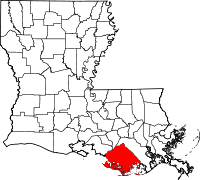
200px-Map_of_Louisiana_highlighting_Terrebonne_Parish.svg.png


https://en.wikipedia.org/wiki/Terrebonne_Parish,_Louisiana

Brain-eating amoeba found in Terrebonne water system

WWLTV.com 7:50 p.m. CDT August 17, 2015

TERREBONNE, La. ? A brain-eating amoeba has been found in the Terrebonne Parish water system, according to the Louisiana Department of Health and Hospitals.

The Naegleria fowerli amoeba was found at the last hydrant on Island Road in Pointe Aux Chenes in a sample test taken on Aug. 5.

A second site tested negative for the amoeba, but it was also below the "requirement for chloramine disinfectant levels," the DHH says. Two other sites tested negative but met the chloramine requirement.

State officials say a free chlorine burn will last for 60 days.
...

http://www.wwltv.com/story/news/loc...oeba-found--terrebonne-water-system/31886607/
 
Department
PUBLIC HEALTH | DRINKING WATER

DHH Confirms Naegleria Fowleri Ameba in Terrebonne Parish's Schriever Water System

Drinking Water is safe to consume, but residents should take precautions

Tuesday, August 18, 2015 | Contact: Media & Communications: Phone: 225.342.1532, E-mail: dhhinfo@la.gov

Baton Rouge, La.—Monday, the Louisiana Department of Health and Hospitals (DHH) confirmed the presence of the Naegleria fowleri ameba in the Schriever Water System at the site 588 Island Road, Montegut (Pointe Aux Chenes). The water system, which serves approximately 97,000 residents in the Houma area, was tested by DHH as part of the State's new public drinking water surveillance program. DHH notified the water system and local officials Monday afternoon. The Department asked the water system to conduct a 60-day chlorine burn to ensure that any remaining ameba in the system are eliminated. Parish officials began the burn Monday afternoon and will conduct an additional burn in the Houma Water System out of an abundance of caution.

The affected location of the water system did not meet the required chloramine disinfectant levels set forth by the 2013 emergency rule at the location where the sample tested positive for the ameba. A second site tested negative for the ameba but was also below the requirement for chloramine disinfectant levels. Two other sites on the system tested negative for the ameba and met the requirement for the minimum disinfectant residual level. Tap water in Terrebonne Parish is safe for residents to drink, but the Department urges residents to avoid getting water in their noses. Naegleria fowleri is an ameba that occurs naturally in freshwater.

As Naegleria fowleri infections are extremely rare, testing for this ameba in public drinking water is still relatively new and evolving. DHH conducts sampling of public drinking water systems for Naegleria fowleri each summer when temperatures rise. So far, DHH has tested a total of 21 systems for the ameba. Positive results for the ameba have previously been discovered this summer in St. Bernard and Ascension parishes. Both parishes are conducting chlorine burns as well.

Naegleria fowleri causes a disease called primary amebic meningoencephalitis (PAM), which is a brain infection that leads to the destruction of brain tissue. In its early stages, symptoms of PAM may be similar to bacterial meningitis.

The Department requested that the water system conduct a 60-day free chlorine burn in the water system. The chlorine burn will help reduce biofilm, or organic buildup, throughout the water system and will kill the ameba. The parish has agreed to conduct this precautionary measure.

Precautionary Measures for Families

According to the CDC, every resident can take simple steps to help reduce their risk of Naegleria fowleri infection. Individuals should focus on limiting the amount of water going up their nose. Preventative measures recommended by the CDC include the following:

  • DO NOT allow water to go up your nose or sniff water into your nose when bathing, showering, washing your face, or swimming in small hard plastic/blow-up pools.
  • DO NOT jump into or put your head under bathing water (bathtubs, small hard plastic/blow-up pools); walk or lower yourself in.
  • DO NOT allow children to play unsupervised with hoses or sprinklers, as they may accidentally squirt water up their nose. Avoid slip-n-slides or other activities where it is difficult to prevent water going up the nose.
  • DO run bath and shower taps and hoses for five minutes before use to flush out the pipes. This is most important the first time you use the tap after the water utility raises the disinfectant level.
  • DO keep small hard plastic/blow-up pools clean by emptying, scrubbing and allowing them to dry after each use.
  • DO use only boiled and cooled, distilled or sterile water for making sinus rinse solutions for neti pots or performing ritual ablutions.
  • DO keep your swimming pool adequately disinfected before and during use. Adequate disinfection means:
    - Pools: free chlorine at 1 to 3 parts per million (ppm) and pH 7.2 to 7.8, and
    - Hot tubs/spas: free chlorine 2 to 4 parts per million (ppm) or free bromine 4 to 6 ppm and pH 7.2 to 7.8.
  • If you need to top off the water in your swimming pool with tap water, place the hose directly into the skimmer box and ensure that the filter is running. Do not top off the pool by placing the hose in the body of the pool.
Residents should continue these precautions until testing no longer confirms the presence of the ameba in the water system. Residents will be made aware when that occurs. For further information on preventative measures, please visit the CDC website here: http://www.cdc.gov/parasites/naegleria/prevention.html.
The Louisiana Department of Health and Hospitals strives to protect and promote health statewide and to ensure access to medical, preventive and rehabilitative services for all state citizens. To learn more about DHH, visit www.dhh.louisiana.gov. For up-to-date health information, news and emergency updates, follow DHH's Twitter account and Facebook.

http://dhh.louisiana.gov/index.cfm/newsroom/detail/3500
 
Terrebonne, Lafourche cautious after amoeba found at testing site
...
Meg Farris / Eyewitness News 6:02 p.m. CDT August 18, 2015
...
In the government building in Houma, water fountains are covered up. In schools, water fountains are turned off. Next to them are cases upon cases of bottled water.

"We told the students today at recess no running because they don't need to get overheated, you know, and need more water. So they have plenty enough water to get them through the day and then tomorrow they can bring a bottled water to school," said Principal Brenda Tanner of St. Frances de Sales.

All of this is just a precaution, especially with children. Terrebonne water officials say the water is safe to drink, just not safe if it goes up the nose, and children have a tendency to push one another in line while drinking water.
...
According to Dr. Jim Diaz, who is an environmental and occupational health expert at LSU Health Sciences Center, there are three types of patients who should not drink the water with the extra chlorine in it. Those are patients with bladder or colon cancer and also people with kidney disease and on dialysis.
...
Some of the water in Lafourche Parish is also affected.

From Lafourche Parish:

PRECAUTIONARY 60-DAY FREE CHLORINE BURN STARTED FOR WATER CUSTOMERS IN MARYDALE SUBDIVISION, GRAND BOIS & ROMERO SUBDIVISION (BAYOU BLUE)

The Lafourche Parish Water District No. 1 purchases water from Terrebonne Parish Consolidated Waterworks, Schriever Plant, for the areas of Marydale Subdivision, Grand Bois, and Romero Subdivision (Romero Street, Bayou Blue).
...
http://www.wwltv.com/story/news/loca...oeba/31944367/
 
Back
Top Bottom