Michael Coston
Editor, Senior Moderator
South Korea CDC Releases Revised ‘Influenza Pandemic Preparedness and Response Plan’

#18,138
In the first decade of the 21st century, when H5N1 was making its escape out of Southeast Asia into Europe, the Middle East and Africa, we followed the development of federal, state, and local pandemic plans, and the conducting of emergency drills, were given high priority across the nation and around the world.
A few (out of hundreds of) examples include:
All 50 states were ordered to prepare individualized pandemic plans, although each was allowed to pick their own `likely' scenarios. As a result we saw a wide variance in the quality and
thoroughness of these reports.
In 2009 we got an influenza pandemic, but instead of H5N1 it turned out to be a less virulent swine-origin H1N1 virus. Deaths were far less than expected (although younger people were hit hardest), and many countries scaled back their pandemic planning.
The CDC/HHS updated their pandemic plans in 2017 (see CDC/HHS Community Pandemic Mitigation Plan - 2017), but around the country (and around the world), actual pandemic preparedness had been largely put on a back burner.
As a result, we were caught flat-footed and unprepared for the COVID pandemic of 2020.
Since COVID, we've seen very little progress in pandemic planning. In fact, we seem to have back-slid, having dismantled much of our surveillance and reporting systems.
While most governments are hoping for a decade or two's respite following COVID, viruses don't read calendars, and the threats keep accumulating. H5N1 (and other H5Nx viruses) are high on our worry list, but they aren't alone.
Today South Korea's CDC unveiled a draft of their new `Influenza Pandemic and Response Plan' at an expert symposium, calling for comments before the final version is released. The (translated) announcement follows, after which I'll have a bit more.
* Spanish flu (1918, 50-100 million people), Asian flu (1957, 2 million people), Hong Kong flu (1968, 2 million people), Swine flu (2009, 1.9 million people) (numbers are estimated deaths)
Recently, highly virulent avian influenza has been occurring not only in birds such as poultry and migratory birds, but also in various mammals such as cats, pigs, and cattle. In particular, cases of death due to infection from animals to humans continue to be reported, and a recent case of avian influenza infection spreading between mammalian dairy cows in the United States* is a danger signal that transmission between humans is also possible.
* (United States) As of June 2024, highly pathogenic avian influenza (H5N1) occurred on farms in 12 states, genetic similarity was confirmed as a result of analysis of infected livestock samples, and transmission factors such as movement of dairy cattle were reported.
The World Health Organization (WHO) warned (January 2024) that the next pandemic could be a new type of influenza and urged people to learn from COVID-19 and prepare in advance. Accordingly, the Korea Disease Control and Prevention Agency has prepared a revised influenza pandemic preparedness and response plan for the second time since the COVID-19 pandemic, following Italy (January 2021).
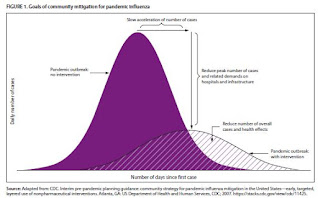
In the event of a new or variant influenza pandemic, it can lead to a large-scale epidemic exceeding that of COVID-19 and seriousness and death. Therefore, in such a pandemic situation, the peak period of the epidemic should be delayed as much as possible to maintain a manageable level within the medical system and prevent the occurrence of seriously ill patients. Focused on strategies to minimize .
The differences between the existing plan and this revised plan are:
Detailed plans for preparedness include:
Obviously, South Korea `gets it'.
That if you expect to have a viable pandemic plan available for the next global public health crisis, you'd better start writing it now.
Far too many nations, states, and agencies (and the private sector) have not updated their plans for many years, with some unchanged since 2007. Many of the older CDC pandemic guidance documents have broken links, have been `retired', or are difficult to find.
After some searching I finally found the CDC's Get your household ready for pandemic influenza - April 2017. And Ready.gov has a pandemic preparedness section.
While we may skate through without H5N1 sparking a global health emergency, another pandemic is inevitable.
And the thing we'll wish we had the most when that happens is more time to prepare.
https://afludiary.blogspot.com/2024/06/south-korea-cdc-releases-revised.html
#18,138
In the first decade of the 21st century, when H5N1 was making its escape out of Southeast Asia into Europe, the Middle East and Africa, we followed the development of federal, state, and local pandemic plans, and the conducting of emergency drills, were given high priority across the nation and around the world.
A few (out of hundreds of) examples include:
- Hong Kong : Exercise Redwood - 2009
- UK Exercise: PPE Usage In A Pandemic –2008
- Singapore: Public Involvement In Financial Sector Pandemic Drill –2008
- Florida's Pandemic Simulation – 2008
- Idaho BlogEx : July 28th –2008
- UK: Lessons Learned From Winter Willow – 2007
All 50 states were ordered to prepare individualized pandemic plans, although each was allowed to pick their own `likely' scenarios. As a result we saw a wide variance in the quality and
thoroughness of these reports.
In 2009 we got an influenza pandemic, but instead of H5N1 it turned out to be a less virulent swine-origin H1N1 virus. Deaths were far less than expected (although younger people were hit hardest), and many countries scaled back their pandemic planning.
The CDC/HHS updated their pandemic plans in 2017 (see CDC/HHS Community Pandemic Mitigation Plan - 2017), but around the country (and around the world), actual pandemic preparedness had been largely put on a back burner.
As a result, we were caught flat-footed and unprepared for the COVID pandemic of 2020.
Since COVID, we've seen very little progress in pandemic planning. In fact, we seem to have back-slid, having dismantled much of our surveillance and reporting systems.
While most governments are hoping for a decade or two's respite following COVID, viruses don't read calendars, and the threats keep accumulating. H5N1 (and other H5Nx viruses) are high on our worry list, but they aren't alone.
Today South Korea's CDC unveiled a draft of their new `Influenza Pandemic and Response Plan' at an expert symposium, calling for comments before the final version is released. The (translated) announcement follows, after which I'll have a bit more.
Revised ‘Influenza Pandemic Preparedness and Response Plan’ released
Created on 2024-06-20
Last modified date 2024-06-20
Department in Charge: Crisis Management Division
Contact number 043-719-9081
“In the event of a new or variant influenza pandemic, it can surpass COVID-19”... Revised ‘Influenza Pandemic Preparedness and Response Plan’ released
- Discussion of on-site promotion strategies through expert symposium -
o Global public health experts say, “The next pandemic will be influenza.”
o Reflecting lessons from COVID-19, establishing a strategy to protect the public and minimize social and economic damage even in the worst-case scenario of new and variant influenza (high transmissibility, high fatality rate)
The Korea Disease Control and Prevention Agency (Director Ji Young-mi) prepared a draft of a complete revision of the 'Influenza Pandemic Preparedness and Response Plan' to prepare for the next pandemic after COVID-19, released it through an expert symposium on June 20, and collected opinions.
The influenza pandemic preparedness and response plan is a plan to prepare for a pandemic caused by a new or variant type of influenza rather than the seasonal influenza that occurs every year. It was enacted in 2006 and has been revised twice in 2011 and 2018, and this is the first revision in 6 years. .
Created on 2024-06-20
Last modified date 2024-06-20
Department in Charge: Crisis Management Division
Contact number 043-719-9081
“In the event of a new or variant influenza pandemic, it can surpass COVID-19”... Revised ‘Influenza Pandemic Preparedness and Response Plan’ released
- Discussion of on-site promotion strategies through expert symposium -
o Global public health experts say, “The next pandemic will be influenza.”
o Reflecting lessons from COVID-19, establishing a strategy to protect the public and minimize social and economic damage even in the worst-case scenario of new and variant influenza (high transmissibility, high fatality rate)
The Korea Disease Control and Prevention Agency (Director Ji Young-mi) prepared a draft of a complete revision of the 'Influenza Pandemic Preparedness and Response Plan' to prepare for the next pandemic after COVID-19, released it through an expert symposium on June 20, and collected opinions.
The influenza pandemic preparedness and response plan is a plan to prepare for a pandemic caused by a new or variant type of influenza rather than the seasonal influenza that occurs every year. It was enacted in 2006 and has been revised twice in 2011 and 2018, and this is the first revision in 6 years. .
This revision aims to minimize the scale of the epidemic, the severity rate, and the mortality rate based on the evaluation of the response to influenza so far and the lessons learned from the COVID-19 pandemic.
Influenza is a representative respiratory viral disease that has caused the greatest epidemic and death in history. Every year, seasonal influenza occurs as part of a gene is mutated (mutated), and a pandemic occurs when a new virus is born (mutated*) through the recombination of different viral genes.
Influenza is a representative respiratory viral disease that has caused the greatest epidemic and death in history. Every year, seasonal influenza occurs as part of a gene is mutated (mutated), and a pandemic occurs when a new virus is born (mutated*) through the recombination of different viral genes.
* Spanish flu (1918, 50-100 million people), Asian flu (1957, 2 million people), Hong Kong flu (1968, 2 million people), Swine flu (2009, 1.9 million people) (numbers are estimated deaths)
Recently, highly virulent avian influenza has been occurring not only in birds such as poultry and migratory birds, but also in various mammals such as cats, pigs, and cattle. In particular, cases of death due to infection from animals to humans continue to be reported, and a recent case of avian influenza infection spreading between mammalian dairy cows in the United States* is a danger signal that transmission between humans is also possible.
* (United States) As of June 2024, highly pathogenic avian influenza (H5N1) occurred on farms in 12 states, genetic similarity was confirmed as a result of analysis of infected livestock samples, and transmission factors such as movement of dairy cattle were reported.
The World Health Organization (WHO) warned (January 2024) that the next pandemic could be a new type of influenza and urged people to learn from COVID-19 and prepare in advance. Accordingly, the Korea Disease Control and Prevention Agency has prepared a revised influenza pandemic preparedness and response plan for the second time since the COVID-19 pandemic, following Italy (January 2021).
In the event of a new or variant influenza pandemic, it can lead to a large-scale epidemic exceeding that of COVID-19 and seriousness and death. Therefore, in such a pandemic situation, the peak period of the epidemic should be delayed as much as possible to maintain a manageable level within the medical system and prevent the occurrence of seriously ill patients. Focused on strategies to minimize .
The differences between the existing plan and this revised plan are:
△ detecting risk signals at a pre-epidemic stage through early surveillance and determining the most effective response measures,
△ shortening the development of a key tool, a vaccine, to 100/200 days. Strategies for infection prevention and control, and
△ joint surveillance and warning of zoonotic infections through the One Health strategy have been newly added to constitute key tasks in the preparedness stage, and strategies to minimize damage by epidemic stage have been specified and presented in each response stage.
Detailed plans for preparedness include:
△ expanding the scope of surveillance of overseas outbreaks and domestic inflows and outbreaks, developing testing methods to quickly identify mutant viruses, and
△ stockpiling treatments and quarantine materials in advance at a level that can respond for the first 6 months.
△ Develop various vaccine platforms and build a library by developing prototypes for selected priority pathogens in advance, Establish infrastructure such as vaccination centers for rapid large-scale vaccination in advance, and
△ One Health integrated surveillance and management. It consists of developing an early warning system for
In the response area, it is divided into the early stage of the epidemic, the spread stage, and the recovery stage, and contains the main tasks and quarantine strategies for each period, and the initial three-day plan is included as an example. In particular, social response measures to maintain essential social functions and minimize social and economic damage caused by long-term uniform lockdowns can be applied based on effectiveness and cost-effectiveness.
The Korea Disease Control and Prevention Agency will hold expert discussions on the revised influenza pandemic preparedness and response plan through a symposium today, and plans to finalize the final plan as soon as possible by collecting opinions from experts and related ministries.
Director Ji Young-mi of the Korea Disease Control and Prevention Agency said through an expert symposium, “We want to establish a strategy to prepare for new influenza that may occur at any time in the future,” and added, “Through the plan prepared this time, we will protect the public’s health and minimize social and economic damage.” “I will work hard for it,” he said.
He also added, “We will share this influenza pandemic preparedness and response plan with the international community in the future and use it as an opportunity to lead cooperation to respond to the global public health crisis.”
The Korea Disease Control and Prevention Agency will hold expert discussions on the revised influenza pandemic preparedness and response plan through a symposium today, and plans to finalize the final plan as soon as possible by collecting opinions from experts and related ministries.
Director Ji Young-mi of the Korea Disease Control and Prevention Agency said through an expert symposium, “We want to establish a strategy to prepare for new influenza that may occur at any time in the future,” and added, “Through the plan prepared this time, we will protect the public’s health and minimize social and economic damage.” “I will work hard for it,” he said.
He also added, “We will share this influenza pandemic preparedness and response plan with the international community in the future and use it as an opportunity to lead cooperation to respond to the global public health crisis.”
Obviously, South Korea `gets it'.
That if you expect to have a viable pandemic plan available for the next global public health crisis, you'd better start writing it now.
Far too many nations, states, and agencies (and the private sector) have not updated their plans for many years, with some unchanged since 2007. Many of the older CDC pandemic guidance documents have broken links, have been `retired', or are difficult to find.
After some searching I finally found the CDC's Get your household ready for pandemic influenza - April 2017. And Ready.gov has a pandemic preparedness section.
While we may skate through without H5N1 sparking a global health emergency, another pandemic is inevitable.
And the thing we'll wish we had the most when that happens is more time to prepare.
https://afludiary.blogspot.com/2024/06/south-korea-cdc-releases-revised.html
Last edited:

 議事要旨[PDF形式:780KB]