

AlaskaDenise
In Memoriam
For middle aged and older people at least, using the internet helps boost brain power, research suggests.
A University of California Los Angeles team found searching the web stimulates centres in the brain that control decision-making and complex reasoning.
The researchers say this might even help to counter-act the age-related physiological changes that cause the brain to slow down.
The study features in the American Journal of Geriatric Psychiatry.
As the brain ages, a number of changes occur, including shrinkage and reductions in cell activity, which can impact on performance.
It has long been thought that activities which keep the brain active, such as crossword puzzles, may help minimise the impact - and the latest study suggests that surfing the web can be added to the list.
Lead researcher Professor Gary Small said: "The study results are encouraging, that emerging computerized technologies may have physiological effects and potential benefits for middle-aged and older adults.
"Internet searching engages complicated brain activity, which may help exercise and improve brain function."
The latest study was based on 24 volunteers aged between 55 and 76. Half were experienced internet users, the rest were not.
Compared with reading
Each volunteer underwent a brain scan while performing web searches and book-reading tasks.
Both types of task produced evidence of significant activity in regions of the brain controlling language, reading, memory and visual abilities.
However, the web search task produced significant additional activity in separate areas of the brain which control decision-making and complex reasoning - but only in those who were experienced web users.
The researchers said that compared with simple reading, the internet's wealth of choices requires that people make decisions about what to click on in order to get the relevant information.
However, they suggested that newcomers to the web had not quite grasped the strategies needed to successfully carry out a web search.
Professor Smith said: "A simple, everyday task like searching the web appears to enhance brain circuitry in older adults, demonstrating that our brains are sensitive and can continue to learn as we grow older."
Rebecca Wood, chief executive of the Alzheimer?s Research Trust, said: "These fascinating findings add to previous research suggesting that middle-aged and older people can reduce their risk of dementia by taking part in regular mentally stimulating activities.
"Older web users - 'silver surfers' - are doing precisely this.
"Frequent social interactions, regular exercise and maintaining a balanced diet can also reduce dementia risk."
Dr Susanne Sorensen, head of research at the Alzheimer's Society, said: "Use it or lose it may well be a positive message to keep people active but there is very little real evidence that keeping the brain exercised with puzzles, games or other activities can promote cognitive health and reduce the risk of dementia."
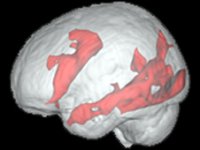
Areas activated by reading a book in the brain of an experienced web user
Story from BBC NEWS:
http://news.bbc.co.uk/go/pr/fr/-/2/hi/health/7667610.stm
A University of California Los Angeles team found searching the web stimulates centres in the brain that control decision-making and complex reasoning.
The researchers say this might even help to counter-act the age-related physiological changes that cause the brain to slow down.
The study features in the American Journal of Geriatric Psychiatry.
As the brain ages, a number of changes occur, including shrinkage and reductions in cell activity, which can impact on performance.
It has long been thought that activities which keep the brain active, such as crossword puzzles, may help minimise the impact - and the latest study suggests that surfing the web can be added to the list.
Lead researcher Professor Gary Small said: "The study results are encouraging, that emerging computerized technologies may have physiological effects and potential benefits for middle-aged and older adults.
"Internet searching engages complicated brain activity, which may help exercise and improve brain function."
The latest study was based on 24 volunteers aged between 55 and 76. Half were experienced internet users, the rest were not.
Compared with reading
Each volunteer underwent a brain scan while performing web searches and book-reading tasks.
Both types of task produced evidence of significant activity in regions of the brain controlling language, reading, memory and visual abilities.
However, the web search task produced significant additional activity in separate areas of the brain which control decision-making and complex reasoning - but only in those who were experienced web users.
The researchers said that compared with simple reading, the internet's wealth of choices requires that people make decisions about what to click on in order to get the relevant information.
However, they suggested that newcomers to the web had not quite grasped the strategies needed to successfully carry out a web search.
Professor Smith said: "A simple, everyday task like searching the web appears to enhance brain circuitry in older adults, demonstrating that our brains are sensitive and can continue to learn as we grow older."
Rebecca Wood, chief executive of the Alzheimer?s Research Trust, said: "These fascinating findings add to previous research suggesting that middle-aged and older people can reduce their risk of dementia by taking part in regular mentally stimulating activities.
"Older web users - 'silver surfers' - are doing precisely this.
"Frequent social interactions, regular exercise and maintaining a balanced diet can also reduce dementia risk."
Dr Susanne Sorensen, head of research at the Alzheimer's Society, said: "Use it or lose it may well be a positive message to keep people active but there is very little real evidence that keeping the brain exercised with puzzles, games or other activities can promote cognitive health and reduce the risk of dementia."
Areas activated by reading a book in the brain of an experienced web user
Story from BBC NEWS:
http://news.bbc.co.uk/go/pr/fr/-/2/hi/health/7667610.stm

