Follow along with the video below to see how to install our site as a web app on your home screen.
Note: This feature may not be available in some browsers.
FluTrackers.com Inc. does not provide medical advice. Information on this web site is collected from various internet resources, and the FluTrackers board of directors makes no warranty to the safety, efficacy, correctness or completeness of the information posted on this site by any author or poster.
The information collated here is for instructional and/or discussion purposes only and is NOT intended to diagnose or treat any disease, illness, or other medical condition. Every individual reader or poster should seek advice from their personal physician/healthcare practitioner before considering or using any interventions that are discussed on this website.
By continuing to access this website you agree to consult your personal physican before using any interventions posted on this website, and you agree to hold harmless FluTrackers.com Inc., the board of directors, the members, and all authors and posters for any effects from use of any medication, supplement, vitamin or other substance, device, intervention, etc. mentioned in posts on this website, or other internet venues referenced in posts on this website.
We are not asking for any donations. Do not donate to any entity who says they are raising funds for us.
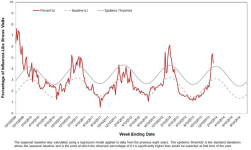
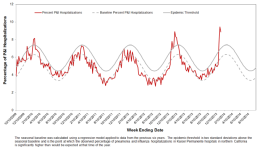
These charts from California's Week 2 report show %ILI (Chart 1) and hospitalizations (Chart 2) since 2009-10. It is interesting to note that hospitalizations are notably higher relative to %ILI this season than the previous four seasons. This suggests that pH1N1 is causing more severe illness than any flu strains did during the previous four seasons, including the Pandemic season when pH1N1 was considered Novel.
Re: Interesting Comparison of %ILI and Hospitalizations
Exactly our concern, Jim.
Clinical outcomes are representative of the effects expected from the type of genetic change that we documented before the federal public health leaders restricted public access to relevant genetic sequences.
High Intensity genetics = High Morbidity count / Low Case count
By carefully documenting and decomposing the public health stats next to the clinical reports as you and LaidBack Al have done with the Critical Care Fatality Rate, we all arrive at a better picture of reality.
High Intensity genetics typically are veryattractant to zoonotic changes. Expect focused cases of rapid progression that if properly deep sequenced from original lung material will demonstrate avian genetic acquisitions that have previously circulated in the pH1N1Upsilon subclade.