

Michael Coston
Editor, Senior Moderator
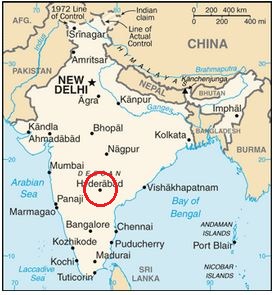
Hyderabad: Testing H1N1 Virus After Surge In Cases
#12,385
Although it has happened so often over the past 8 years as to have become a cliche, there are rumbles once again coming out of India of an unexpected number of deaths and illnesses from the H1N1 virus, and concerns that the virus has `mutated' into a more virulent form.
In 2012, we saw a fresh round of reports, sporting such headlines as Swine flu redux: is this a mutated summer strain? and Officials try to hush up flu toll (Deccan Herald).
While minor changes in the H1N1 virus have been identified in India (and elsewhere around the globe) - see Eurosurveillance: Emergence of A(H1N1)pdm09 Genogroup 6B In India, 2015 and MIT: Genetic Changes In A 2014 Indian H1N1pdm09 Virus- none have(as yet, anyway) produced a significant change in the behavior or threat posed by our current seasonal H1N1 virus.
Abrupt changes within flu viruses - while rare - can and do happen. In When Influenza Goes Rogue, we looked at the long history of extreme variability between flu seasons, and the emergence of mutated, or `drifted’ viruses.
Today the Times of India is reporting:
Since January this year, 2,626 cases were reported in Tamil Nadu, 1,813 cases in Karnataka and 1,224 cases were reported in Telangana. A worried health department said it was in touch with other states over the issue as well. (Continue . . . )
This is ground we've trod before, and there's a good chance we'll find there's more smoke than fire behind these media reports.
http://afludiary.blogspot.com/2017/0...rus-after.html
#12,385
Although it has happened so often over the past 8 years as to have become a cliche, there are rumbles once again coming out of India of an unexpected number of deaths and illnesses from the H1N1 virus, and concerns that the virus has `mutated' into a more virulent form.
I put the word `mutated' in quotes since all flu viruses continually mutate. Its what they do. But only rarely do these mutations introduce new virulence into an existing virus.
Since 2009 the Indian media - and sometimes the government - have repeatedly sounded the alarm over (now) seasonal H1N1 (which they still insist on calling `swine flu'). While H1N1 tends to distressingly strike a younger cohort than does H3N2 – it often produces a `milder’ overall flu season than H3.
In September of 2009 - five months after the pandemic H1N1 virus emerged - the Hindu printed a somewhat hyperbolic report called A(H1N1) gets more virulent. The following summer, in Dial M For Mutation we looked at fresh claims that the H1N1 virus had mutated in India.In 2012, we saw a fresh round of reports, sporting such headlines as Swine flu redux: is this a mutated summer strain? and Officials try to hush up flu toll (Deccan Herald).
To spare you from having to read them, they contain rumors of government cover ups, stories of crowded clinics, a mounting death toll interspersed with almost obligatory speculation over the possibility that some (as yet unidentified) `mutation’ in the H1N1 virus has revived its ferocity.
Two years later we saw a similar round of reports as well (see India’s H1N1 Outbreakfrom February of 2015), with the government issuing a statement :Health Ministry on H1N1: Closely monitoring the situation; no shortage of drugs.While minor changes in the H1N1 virus have been identified in India (and elsewhere around the globe) - see Eurosurveillance: Emergence of A(H1N1)pdm09 Genogroup 6B In India, 2015 and MIT: Genetic Changes In A 2014 Indian H1N1pdm09 Virus- none have(as yet, anyway) produced a significant change in the behavior or threat posed by our current seasonal H1N1 virus.
Abrupt changes within flu viruses - while rare - can and do happen. In When Influenza Goes Rogue, we looked at the long history of extreme variability between flu seasons, and the emergence of mutated, or `drifted’ viruses.
Something we experienced first hand during the 2014-15 flu season when an antigenically drifted H3N2 virus unexpectedly dominated (see CDC HAN Advisory On `Drifted’ H3N2 Seasonal Flu Virus).
The past few weeks we've seen a growing number of media reports of increased H1N1 flu activity across India, including a number of deaths. Given the population of India, the numbers being reported are fairly low, but surveillance, testing, and reporting of infectious diseases is not exactly India's strong suit.Today the Times of India is reporting:
Swine flu swabs in lab on mutation fear
Apr 13, 2017, 11.46 AM IST
HYDERABAD: Worried that the deadly swine flu virus has possibly mutated, an alarmed state health department has sent swab samples to the National Institute of Virology (NIV), Pune, for confirmation as the state recorded the third highest case load in the country since January this year.
The peculiar rise in cases of the H1N1 virus recorded in the southern part of the country hints at a possible mutation of the virus, authorities said.
Apr 13, 2017, 11.46 AM IST
HYDERABAD: Worried that the deadly swine flu virus has possibly mutated, an alarmed state health department has sent swab samples to the National Institute of Virology (NIV), Pune, for confirmation as the state recorded the third highest case load in the country since January this year.
The peculiar rise in cases of the H1N1 virus recorded in the southern part of the country hints at a possible mutation of the virus, authorities said.
Since January this year, 2,626 cases were reported in Tamil Nadu, 1,813 cases in Karnataka and 1,224 cases were reported in Telangana. A worried health department said it was in touch with other states over the issue as well.
This is ground we've trod before, and there's a good chance we'll find there's more smoke than fire behind these media reports.
But India, because of its high population and crowded conditions, is one of the regions of the world where we could reasonably expect a `mutated' virus to emerge (see EID Journal: Predicting Hotspots for Influenza Virus Reassortment).
So, despite a long track record of alarmist media reports, we'll be keeping one eye on Indiaover the coming weeks. Just in case. http://afludiary.blogspot.com/2017/0...rus-after.html

