
• FluTrackers.com Inc. does not provide medical advice. Information on this web site is collected from various internet resources, and the FluTrackers board of directors makes no warranty to the safety, efficacy, correctness or completeness of the information posted on this site by any author or poster. The information collated here is for instructional and/or discussion purposes only and is NOT intended to diagnose or treat any disease, illness, or other medical condition. Every individual reader or poster should seek advice from their personal physician/healthcare practitioner before considering or using any interventions that are discussed on this website. By continuing to access this website you agree to consult your personal physican before using any interventions posted on this website, and you agree to hold harmless FluTrackers.com Inc., the board of directors, the members, and all authors and posters for any effects from use of any medication, supplement, vitamin or other substance, device, intervention, etc. mentioned in posts on this website, or other internet venues referenced in posts on this website.
  • We are not asking for any donations. Do not donate to any entity who says they are raising funds for us.

First Outdoor GM Mosquito Trial - Mosquito numbers cut by 80% in six months.

Gert van der Hoek

In Memoriam - Editor, Senior Moderator
Genetically altered mosquitoes thwart dengue spreaders

11 November 2010.

A outdoor trial of mosquitoes genetically engineered to sabotage Aedes aegypti mosquitoes, which spread dengue fever, has been declared a success by scientists in the field.

The trial is first time genetically modified mosquitoes have been released in the wild. The strategy promises to provide a new weapon against dengue, a disease that infects 50 million people annually and kills 25,000. In the past year, dengue has reappeared in the US for the first time in 65 years, and in southern Europe.

By the end of the six-month trial on a 16-hectare plot, populations of the native insects, which spread the dengue virus had plummeted.

"It's a proof of principle, that it works," says Angela Harris of the Mosquito Control and Research Unit on the Caribbean island of Grand Cayman, where the trial took place. The MCRU conducted the trial with Oxitec, the company in Oxford, UK, that bred the GM mosquitoes.

Read more


Genetically modified mosquitoes lined up to tackle dengue fever

Scientists use sterile males to mate with infected females in fight to curtail spread of disease that kills 25,000 people a year


Thursday 11 November 2010

Dengue fever is transmitted by the bite of the female mosquito.
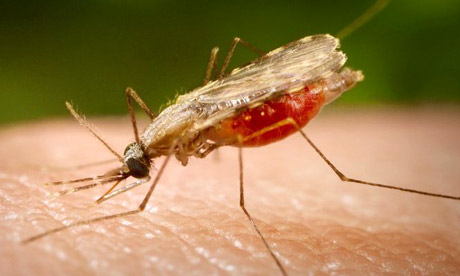
mosquito-460x276.jpg


Swarms of genetically modified mosquitoes could be released into the wild to combat dengue fever around the world.

British scientists today said a small-scale trial of the strategy, which was carried out in the Cayman Islands, had cut mosquito numbers by 80% in six months.

Read more
 
Re: First Outdoor GM Mosquito Trial - Mosquito numbers cut by 80% in six months.

Field performance of engineered male mosquitoes


Nature Biotechnology (2011) doi:10.1038/nbt.2019

Published online 30 October 2011

Dengue is the most medically important arthropod-borne viral disease, with 50?100 million cases reported annually worldwide1. As no licensed vaccine or dedicated therapy exists for dengue, the most promising strategies to control the disease involve targeting the predominant mosquito vector, Aedes aegypti. However, the current methods to do this are inadequate. Various approaches involving genetically engineered mosquitoes have been proposed2, 3, 4, including the release of transgenic sterile males5, 6, 7, 8, 9, 10.

However, the ability of laboratory-reared, engineered male mosquitoes to effectively compete with wild males in terms of finding and mating with wild females, which is critical to the success of these strategies, has remained untested.

We report data from the first open-field trial involving a strain of engineered mosquito. We demonstrated that genetically modified male mosquitoes, released across 10 hectares for a 4-week period, mated successfully with wild females and fertilized their eggs. These findings suggest the feasibility of this technology to control dengue by suppressing field populations of A. aegypti.

Nature
 
Re: First Outdoor GM Mosquito Trial - Mosquito numbers cut by 80% in six months.

Concerns Are Raised About Genetically Engineered Mosquitoes

By ANDREW POLLACK

Published: October 30, 2011

These mosquitoes are genetically engineered to kill ? their own children.

Researchers on Sunday reported initial signs of success from the first release into the environment of mosquitoes engineered to pass a lethal gene to their offspring, killing them before they reach adulthood.

The results, and other work elsewhere, could herald an age in which genetically modified insects will be used to help control agricultural pests and insect-borne diseases like dengue fever and malaria.

But the research is arousing concern about possible unintended effects on public health and the environment, because once genetically modified insects are released, they cannot be recalled.

Authorities in the Florida Keys, which in 2009 experienced its first cases of dengue fever in decades, hope to conduct an open-air test of the modified mosquitoes as early as December, pending approval from the Agriculture Department.

?It?s a more ecologically friendly way to control mosquitoes than spraying insecticides,? said Coleen Fitzsimmons, a spokeswoman for the Florida Keys Mosquito Control District.

The Agriculture Department, meanwhile, is looking at using genetic engineering to help control farm pests like the Mediterranean fruit fly, or medfly, and the cotton-munching pink bollworm, according to an environmental impact statement it published in 2008. Millions of genetically engineered bollworms have been released over cotton fields in Yuma County, Ariz.

Yet even supporters of the research worry it could provoke a public reaction similar to the one that has limited the acceptance of genetically modified crops. In particular, critics say that Oxitec, the British biotechnology company that developed the dengue-fighting mosquito, has rushed into field testing without sufficient review and public consultation, sometimes in countries with weak regulations.

Read more - NYT
 
Re: First Outdoor GM Mosquito Trial - Mosquito numbers cut by 80% in six months.

http://g1.globo.com/luta-contra-a-d...camente-modificados-para-combater-dengue.html
Portuguese to English translation

31/10/2011 20h39 - Updated 31/10/2011 20h40
Group uses genetically modified mosquitoes to fight dengue

Insect carries the gene that kills offspring before reaching adulthood.
technique was successfully applied for the first time.
G1 in Sao Paulo


Males 'Aedes aegypti' used in the study
(Photo: Derric Nimmo / Oxitec Ltd)
Altered mosquitoes in the laboratory to carry a lethal gene to their offspring are the new weapon of scientists against dengue. The positive results of the technique were first presented this week in the online edition of the British journal Nature Biotechnology.
The group at the University of Oxford, supported by private enterprise Oxitec, released in the Cayman Islands mosquito Aedes aegytpi genetically modified.
These insects crossed with females of the species and produced offspring with a genetic defect that made them die before reaching breeding age.
After insertion of the laboratory mosquitoes, the population of A. aegypti in the archipelago fell. It was the first time the technique, provided the theory worked in practice, in the wild.
One problem for scientists is the trap that the success of insects in the laboratory search for a partner was half that obtained by wild mosquitoes, which follow reproducing normally.
Malaria, which is also transmitted by mosquitoes, can also be attacked with the technique, the researchers say.
There is no vaccine against dengue. So far, the only way to prevent the disease is mosquito control.
 
Back
Top