Translation Google
In Africa's monkeypox outbreak, disease and death go unnoticed
31/10/2022 | 08:14
In a village clinic in central Congo, separated from the world by a tangle of rivers and forests, six-year-old Angelika Lifafu clutches her dress and screams as nurses in protective suits dig into one of the hundreds of boils clouding her delicate skin.
Her uncle, 12-year-old Lisungi Lifafu, sits at the foot of her bed, looking away from the sunlight streaming through the doorway and glaring into her swollen, watery eyes. When the nurses approach, he lifts his chin, but cannot look up.
The children have monkeypox, a disease first detected in Congo 50 years ago but whose cases have spiked in West and Central Africa since 2019. The disease has received little attention until what it is spreading around the world this year, infecting 77,000 people.
Global health bodies have counted far fewer cases in Africa during the current outbreak than in Europe and the United States, which scrambled for limited vaccines this year when the disease arrived on their shores.
But the outbreak, and the death toll, in Congo could be much larger than recorded in official statistics, according to a Reuters report, largely because testing in underserved rural areas is so limited and effective drugs are not available.
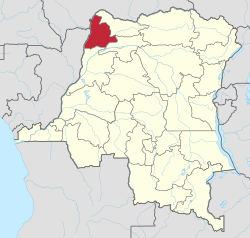
During a six-day trip to the remote Tshopo region this month, Reuters reporters found about 20 monkeypox patients, two of whom had died, whose cases had no recorded before the reporters' visit. None of them, including Angelika and Lisungi, had access to vaccines or antiviral drugs.
Lack of testing facilities and poor transport links make tracing the virus nearly impossible, more than a dozen health workers have said.
Asked about the undercount, the Africa Centers for Disease Control and Prevention (CDC) acknowledged that its data did not capture the full scale of the outbreak.
In the West, only a dozen people have died of monkeypox this year, according to US CDC figures. Europe and the United States have been able to vaccinate communities at risk. Suspected cases are systematically tested, isolated and treated quickly, which improves survival rates, experts say. The number of cases in Europe and the United States has stabilized and started to decline.
But in poorer African countries where many people do not have quick access to health facilities or are unaware of the dangers, more than 130 people have died, almost all of them in Congo, according to the Africa CDC.
No monkeypox vaccine is publicly available in Africa.
Without treatment, Angelika and Lisungi can only wait for the disease to run its course. Ahead of them are a myriad of possible outcomes, including recovery, blindness or, as was the case for one family member in August, death.
"These children have a disease that makes them suffer so much," said Litumbe Lifafu, Lisungi's father, at the clinic in Yalolia, a village of mud huts scattered 1,200 kilometers (750 miles) from the capital Kinshasa.
"We demand that the government provide medicine for us poor farmers and the vaccine to fight this disease."
THE STORY REPEATS ITSELF
Last year, the World Health Organization denounced the "moral failure" of the response to the COVID-19 pandemic, when African nations found themselves at the tail end of the queue for vaccines, tests and treatments.
But those failures are being repeated a year later with monkeypox, said health workers consulted by Reuters. This risks causing future outbreaks of the disease in Africa and around the world, experts said.
While sudden demand from Western countries has sucked up available vaccines, poor countries like Congo, where the disease has existed long enough to be endemic, have been slow to request supplies from WHO and its partners.
Congo's health minister, Jean-Jacques Mbungani, told Reuters that Congo was in talks with the WHO to buy vaccines, but no official request had been made. A spokesperson for Gavi, the vaccine alliance, said it had not received requests from African countries where the virus is endemic.
A WHO spokeswoman said that with no vaccines available, countries should instead focus on surveillance and contact tracing.
"History is repeating itself," said Professor Dimie Ogoina, President of the Independent Nigerian Society for Infectious Diseases. Time and time again, he said, disease containment in Africa does not get the funding it needs until wealthier nations are at risk.
"It happened with HIV, it happened with Ebola and with COVID-19, and it's happening again with monkeypox."
Without adequate resources, it is impossible to know the true spread of the virus, he said, along with other experts.
“In Africa, we are working blind,” Mr. Ogoina said. "The number of cases is grossly underestimated."
Monkeypox is transmitted through close contact with skin lesions. For the most part, it resolves within a few weeks. Young children and immunocompromised people are particularly vulnerable to serious complications.
The Africa CDC says Congo has recorded more than 4,000 suspected and confirmed cases and 154 deaths this year, based in part on data from health authorities. This figure is much lower than the approximately 27,000 cases recorded in the United States and 7,000 in Spain. African nations experiencing outbreaks include Ghana, where there are around 600 suspected and confirmed cases, and Nigeria, where there are nearly 2,000 cases.
"Yes, there is an undercount," said Ahmed Ogwell Ouma, Africa CDC's acting director. "Communities where monkeypox is spreading generally do not have access to regular health facilities." He said the CDC could not currently say the extent of the undercount.
Congo's health minister, Mr Mbungani, said testing capacity was lacking outside Kinshasa, but he did not respond to a request for comment on the missed cases.
...
https://www.zonebourse.com/actualit...adie-et-la-mort-passent-inapercues--42133419/