• FluTrackers.com Inc. does not provide medical advice. Information on this web site is collected from various internet resources, and the FluTrackers board of directors makes no warranty to the safety, efficacy, correctness or completeness of the information posted on this site by any author or poster. The information collated here is for instructional and/or discussion purposes only and is NOT intended to diagnose or treat any disease, illness, or other medical condition. Every individual reader or poster should seek advice from their personal physician/healthcare practitioner before considering or using any interventions that are discussed on this website. By continuing to access this website you agree to consult your personal physican before using any interventions posted on this website, and you agree to hold harmless FluTrackers.com Inc., the board of directors, the members, and all authors and posters for any effects from use of any medication, supplement, vitamin or other substance, device, intervention, etc. mentioned in posts on this website, or other internet venues referenced in posts on this website.
  • We are not asking for any donations. Do not donate to any entity who says they are raising funds for us.

Discussion - Monkeypox vaccine

sharon sanders

Editor-in-Chief & President
Please see:

US - FDA Authorizes Emergency Use of JYNNEOS Vaccine to Increase Vaccine Supply ( FDA approved dose split into 5 parts) - August 9, 2022

FDA Information page on JYNNEOS vaccine for smallpox and monkeypox - August 7, 2022

------------------------------------------------------------------------------------------------

hat tip Lance


ACAM2000 and JYNNEOS comparison

CDC presentation slides at ACIP meeting June 2022

https://www.cdc.gov/vaccines/acip/me...tersen-508.pdf

------------------------------------------------------------------------------------------------


How effective is the monkeypox vaccine? Scientists scramble for clues as trials ramp up

Logistical and ethical challenges are complicating the design of studies
snip

So far, there’s scant data on how well the vaccine is working in the current outbreak. Among 276 individuals who received a shot at a Paris hospital as post-exposure prophylaxis (PEP) after reporting a high-risk contact, 12 developed a monkeypox infection, French scientists reported in a recent preprint, 10 of them within 5 days of vaccination and two after more than 20 days. (That some people would develop monkeypox a few days after being infected is not surprising, says Jade Ghosn of Bichat Hospital, who led the study. “The vaccine is not a miracle, it needs time to be effective.” But the two cases occurring 22 and 25 days after vaccination are a surprise, especially because no additional high-risk contact could be established.) The study had no control group, however, making it impossible to tell how many people would have developed monkeypox if no one had been vaccinated. And people eager to be vaccinated may have lied about having had a high-risk contact. “That makes results from these studies on PEP really hard to evaluate,” says immunologist Leif Erik Sander of the Charité clinic in Berlin, who’s setting up a vaccine study in Germany.

A randomized trial—in which one group receives the vaccine and the other does not—would avoid such problems. Without a randomized study, “you can end up in this evidence limbo and find that if you had just done the trial, you would have been in a much better situation,” says biostatistician Natalie Dean of the University of Florida.

Giving a control group a placebo instead of a presumably effective vaccine is ethically dicey, many researchers say. But University of Oxford epidemiologist Richard Peto sees another way. Because demand for the vaccine is so much higher than supply, “Why not randomize the order in which people in the highest risk group are called in?” Peto asks. So far, however, no one seems to have taken up that idea.

more....

https://www.science.org/content/art...vaccine-scientists-scramble-clues-trials-ramp
 
ARS-idf-194x113.png


Translation Google

Monkeypox vaccination: vaccine safety

News

August 11, 2022

vignette%20variole_0.jpg


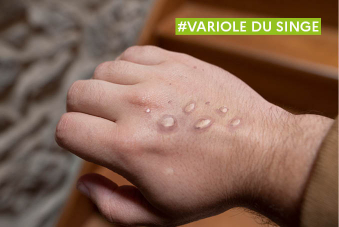
Two questions are regularly asked about the safety of vaccines used against monkeypox. The Agency reiterates the information available.


Is vaccine lot P00027 valid?

Some vaccinated persons may have observed on the label of their vaccination certificate a deadline prior to 2022, for vaccine batch P00027.

However, the injected vaccine is valid and effective.

Indeed, batch P00027, like all the batches used, was subject to regular checks by the National Agency for the Safety of Medicines and Health Products (ANSM), the last of which in 2022, before the monkeypox epidemic, demonstrating its quality and stability. Consequently, its expiry date has been extended by the ANSM to March 31, 2024.

Lot P00027 has thus been relabeled in order to modify the date initially appearing on the bottle.

However, some re-labelling may have been omitted, explaining that the old expiry date may appear on the label of certain certificates even though the injected vaccine is indeed considered by the health authorities as still valid. The relabeling procedure was immediately changed as soon as this defect was observed.


What is the impact of the cold chain break at the Edison health center in Paris?

The ARS was informed during an on-site visit on Thursday August 4 of a major break in the cold chain during the storage of the vaccines used in the Edison health center. The ARS immediately requested a temporary closure of the site pending corrective measures being put in place. The Agency also contacted the health authorities on the same day (in particular the DGS and the ANSM).

These opinions were issued urgently, and conclude on several points:
  1. The injection of vaccines rendered ineffective by breaking the cold chain does not present any risk of side effects. The persons concerned can therefore be reassured on this point.
  2. However, the breaks in the cold chain observed between Tuesday August 2 and Thursday August 4 do not guarantee the effectiveness of the vaccines.
  3. It is therefore necessary that people vaccinated with potentially ineffective doses benefit from a new 1st [SUP]dose[/SUP] to be protected. This new dose can be injected without delay.
  4. Doses exposed to breaks in the cold chain and not injected must be recorded and then destroyed.
With the support of the ARS, the city of Paris has put in place all the corrective measures requested to be able to reopen the center in the best conditions. The Edison center was thus able to reopen its doors on Tuesday, August 9. A procedure for rescheduling appointments has been put in place for people affected by these potentially ineffective injections, in accordance with the recommendations of the Agency and the ANSM.


https://www.iledefrance.ars.sante.fr...te-des-vaccins
 
Germany -

Translation Google

Application against monkeypox quarantine denied

Because he was vaccinated, the roommate of a person suffering from monkeypox had filed an urgent application against the quarantine order - but a Düsseldorf court confirmed the decision of the health department.

08/10/2022, 7:59 p.m

The Düsseldorf administrative court has declared the order of a three-week quarantine for the roommate of a man suffering from monkeypox to be permissible. The court thus supported a corresponding decision by the Düsseldorf health department (Az.: 29 L 1677/22).

The person concerned had filed an urgent application against the quarantine order on the grounds that he had been vaccinated against monkeypox in the meantime. The court objected that the monkeypox vaccine used was not yet approved in the EU and there was no public data on its effectiveness.

Since the applicant lived in the apartment with the infected person during the infectious phase, he should be classified as a category 3 contact person with a high risk of infection. For these, the Robert Koch Institute (RKI) recommends a domestic quarantine of 21 days.

https://www.spiegel.de/panorama/jus...ene-ab-a-2dfea8f6-e6dc-4fd6-aadf-e88ab0406887

----------------------------------------------

Monkeypox: Urgent application against ordering a 21-day quarantine for household contact unsuccessful despite vaccination

August 10, 2022

A person who stayed in the shared apartment during the infectious phase of their roommate who was infected with monkeypox must remain in quarantine at home for 21 days by order of the public health department of the city of Düsseldorf. The vaccination that has taken place in the meantime does not change anything. This was decided by the 29th chamber of the Düsseldorf Administrative Court in a decision made today and rejected the application directed against the quarantine order in summary proceedings.

In justifying its decision, the court based itself on the findings and guidelines of the Robert Koch Institute (RKI) on monkeypox and followed its scientific assessment. Then the RKI classifies Roommates of people with a monkeypox diagnosis who spent at least one night in the apartment during the patient's infectious phase and were therefore exposed to potentially infectious material such as household items, as exposure category 3 contact persons. For these people, the RKI assumes a high transmission risk and recommends a domestic quarantine of 21 days. It is true that the applicant had himself vaccinated immediately after the confirmed diagnosis of his roommate. However, it is not objectionable if the city of Düsseldorf does not shorten the quarantine period. The vaccine Imvanex / Jynneos is in the EU not yet approved for use against monkeypox. In addition, there is no public data on the effectiveness of this vaccine against monkeypox. The protective effect of Imvanex/Jynneos against smallpox and monkeypox infections and diseases has not been studied.

In any case, a consideration of the fundamental rights and legal interests affected leads to the conclusion that the public interest in protecting the life and health of the population and securing the health system justifies the three-week restriction on physical freedom of movement.

An appeal against the decision can be lodged with the Higher Administrative Court for the State of North Rhine-Westphalia in Münster.

File number: 29 L 1677/22

https://www.vg-duesseldorf.nrw.de/behoerde/presse/pressemitteilungen/2022/2219/index.php
 
Related to:

Lancet - Clinical presentation and virological assessment of confirmed human monkeypox virus cases in Spain: a prospective observational cohort study

https://flutrackers.com/forum/forum...pain-a-prospective-observational-cohort-study

Smallpox vaccines may not protect against monkeypox for life

Researchers say some patients had childhood jab, and HIV infection could erode protection

Nicola Davis Science correspondent

Mon 15 Aug 2022 07.25 EDT
...
Vaccination with a jab initially developed to protect against smallpox, a related but more serious disease, is among the measures being taken to control infections.

However, while experts stress that it is important for those at risk of monkeypox to take up the offer of a vaccination, as it reduces the chance of symptomatic infection and severe illness, protection offered by a smallpox jab may decline over time. A study into monkeypox cases in Spain revealed that 32 of the 181 patients had previously received a childhood vaccination against smallpox.

Dr Oriol Mitja, co-author of the research, said that since most participants who had been vaccinated against smallpox received the jab more than 45 years ago, it is reasonable to predict that their protection would have waned. “All I can say is that childhood vaccinations may not protect 100% for life,” he said.

Jimmy Whitworth, professor of international public health at the London School of Hygiene & Tropical Medicine, and who was not involved with the work, agreed.

He suggested that there could be a number of reasons at play, including that while the viruses are similar they are not identical, “so the cross-protection provided may not absolute”, he said.
...
Another possibility, said Whitworth, is that HIV may play a role. According to the study, 40% of the monkeypox cases were in people who were HIV positive. Mitja said the figure was 60% among those who had childhood smallpox vaccination but still got monkeypox. “[People with HIV] may have had some immunodeficiency, eroding away the protection from the vaccine,” said Whitworth.

Laura Waters, the chair of the British HIV Association, agreed. “Though it is likely smallpox vaccine effectiveness wanes in everyone, it’s feasible that this would occur to a greater degree in people with HIV, even those with well-controlled HIV on treatment,” she said.
...
https://www.theguardian.com/world/2022/aug/15/smallpox-vaccines-protect-monkeypox-hiv-erode
 
https://flutrackers.com/forum/forum...m-fda-approved-to-emergency-use-authorization
...
The CEO of Bavarian Nordic, Paul Chaplin, wrote of his concerns to the Department of Health and Human Services in a letter obtained by the Washington Post Tuesday, the paper reports.

“Bavarian Nordic...is dedicated to assisting Governments around the globe to control the current monkeypox outbreak and is fully supportive of dose-sparing approaches, such as delaying the second vaccination,” Chaplin wrote. “However, we do have some reservations on the [new injection] approach, due to the very limited safety data available..., the higher [rates of expected adverse reactions] compared to the JYNNEOS standard dose and route..., and the fact that there was a relatively high percentage of subjects...that failed to receive the second vaccination during a controlled clinical study.”

The letter continues, “We have been made aware of some additional analysis of the [intradermal] study data, but essentially this does not change the overall picture that the [intradermal] administration results in increased [adverse reactions] compared to [the current route of administration] and this may have a negative impact on vaccine uptake and coverage.”
 
https://www.msn.com/en-us/health/me...says-as-breakthrough-cases-emerge/ar-AA10MdzW
Monkeypox vaccine is not 'a silver bullet,' WHO says, as breakthrough cases emerge

Yesterday 9:32 AM

As demand for monkeypox vaccines increases, the World Health Organization (WHO) has begun to receive preliminary reports on the efficacy of the shots, which suggests there are breakthrough cases occurring, officials said Wednesday.
...

"The fact we're beginning to see some breakthrough cases is also really important information because it tells us that the vaccine is not 100% effective in any given circumstance. Whether preventive or post-exposure, we cannot expect 100% effectiveness at the moment based on this emerging information," officials said....
 
Translation Google

Switzerland has a gigantic stockpile of smallpox vaccines, but it is unusable


Yesterday at 7:30 p.m.


In 2001, following the rise of the terrorist threat, Switzerland acquired more than 8 million doses of smallpox vaccine. But as it is an old generation vaccine with significant side effects, it is unthinkable to use it today and a new order will have to be placed.

The Federal Council is expected to announce on Wednesday the purchase of a vaccine to stem monkeypox. It is in fact a vaccine against traditional smallpox, of the third generation, a vaccine that Switzerland does not have in stock.

In secret army pharmacy stocks, Switzerland, on the other hand, has millions of doses of the first generation vaccine, enough to vaccinate the entire Swiss population. However, it is 50 years old and is unusable today.

Too many side effects

"Under no circumstances will we recommend this vaccine to protect against monkey pox. Its side effects are too great. There is a multiplication of the virus which gives lesions for about three weeks", explained Tuesday in the 7:30 p.m. of the RTS Professor in charge of the Center for Emerging Viral Diseases at HUG Laurent Kaiser.

"These first-generation vaccines do not meet current manufacturing or safety standards", indicates for its part the FOPH.

This first generation of vaccines against smallpox was administered in Switzerland until 1972. Then, in 1980, the disease was officially eradicated from the surface of the planet.

But the attacks of September 11, 2001 redistribute the cards. Smallpox becomes a bioterrorist threat and countries re-equip themselves. As an archive of the Téléjournal announces that year, the Federal Council decides to buy millions of doses of vaccine against smallpox, for an amount of 10 million francs. A little over 20 years later, they are still sleeping in fridges.

Efficiency yet to be precisely defined

After the first came the second generation of smallpox vaccines, which Switzerland did not acquire. Today, it is the purchase of third-generation vaccines that is under negotiation.

"These are extremely attenuated vaccines. The virus will penetrate the human cell, but it will be unable to create new viruses. It's a bit like with messenger RNA", explains Laurent Kaiser.

If the indicators seem reassuring, the effectiveness of these third-generation vaccines against monkey pox, a different virus, although genetically close to human smallpox, remains to be precisely defined.

...

https://www.rts.ch/info/suisse/1332...ins-antivariole-mais-il-est-inutilisable.html
 
Translation Google

Published on 05/09/2022

Monkey pox: intradermal vaccination in question

Paris, Monday, September 5, 2022 – To speed up vaccination against monkeypox, several countries have turned to intradermal vaccination, but France has not yet taken the plunge.

In the fight against the monkeypox epidemic currently affecting the West, the vaccine is the sinews of war. Only one vaccine, called Imvanex (Jynneos in the United States), has been authorized against this disease and it is produced by only one firm, the Danish laboratory Bavarian Nordic , which is struggling to meet demand.

Faced with this lack of doses, an idea has germinated: that of using the intradermal route rather than subcutaneously in order to maximize the number of doses available.

This solution first appeared in the United States and was first formulated by the Food and Drug Administration (FDA, the American drug agency) on August 4th.

The American experts relied in particular on a 2015 study, carried out with a vaccine based on the MVA virus ( modified vaccine Ankara ) just like Imvanex/Jynneos, which demonstrated that the injection of a fifth of a dose intradermally brought the same immune response as a full dose subcutaneously, including in immunocompromised individuals.

The only small problem, this alternative route of administration more often causes local side effects, such as redness, itching or discoloration of the skin. On the strength of this observation, the FDA granted emergency authorization for intradermal vaccination against monkeypox on August 9, thus mechanically multiplying by five the number of usable doses.

Intradermal vaccination authorized in the United States and Europe

The European Medicines Agency (EMA) then followed suit with the FDA, also authorizing intradermal vaccination within the European Union on August 19th.

This authorization is an “extremely important decision because it makes it possible to vaccinate five times more people with the vaccine stocks we have,” recalled Stella Kyriakides, European Commissioner for Health. The EMA clarified however that this authorization is only valid “as long as the supply of vaccine remains limited” , subcutaneous vaccination remaining the method to be used as a priority.

Despite these two authorizations and the study carried out in 2015, the use of intradermal vaccination to combat monkeypox continues to be debated. Some experts first point out that this method is not mastered by all caregivers and that it will therefore be necessary to train them. Others point out that intradermal vaccination has not been proven to be effective in protecting against monkeypox.

This change in method is particularly criticized by Bavarian Nordic, which threatened to stop supplying vaccines to the countries that would use it (but the motivations of the laboratory here would surely be as much financial as scientific).

CDC responds to criticism

In a column published last Wednesday in the New England Journal of Medicine, members of the CDC respond to these criticisms. They recall that intradermal vaccination has already been used successfully against many diseases, including against smallpox, particularly in Germany in the 1970s with an MVA vaccine similar to the Imvanex/Jynneos vaccine.

Above all, they point out that while there is no formal proof that intradermal vaccination is effective against monkeypox, such is also the case for subcutaneous vaccination, the Imvanex/Jynneos vaccine having never been tested against monkeypox before this year.

"Intradermal vaccination is not a cheap solution, it is a rational decision based on evidence that will improve access to vaccines and increase our chances of controlling the epidemic" , however conclude the signatories of the gallery.

In France, two weeks after the decision of the EMA, the High Authority of Health (HAS) has still not ruled on the question.

“It all depends on the state of the stocks, if these finally prove to be sufficient, the subcutaneous solution remains much easier to put in place” estimates Professor Odile Launay, infectious disease specialist at Cochin hospital. While the number of doses available is still classified as a defense secret, we know that 73,000 people have been vaccinated in France, which places our country far ahead of its European neighbors.

Nicolas Barbert

https://www.jim.fr/medecin/actualit...ue_en_question_193890/document_actu_pro.phtml
 
Translation Google

Monkeypox vaccine highly effective, US data show

AFP
Wednesday, 28 September 2022 16:12
UPDATE Wednesday, 28 September 2022 16:12

The vaccine against monkeypox is very effective, and this as early as two weeks after the first dose, according to first data in real conditions communicated on Wednesday by the American health authorities.

Unvaccinated people are 14 times more likely to be infected with monkeypox than those vaccinated, according to the Centers for Disease Control and Prevention (CDC), the nation's top federal health agency.

This analysis was conducted by comparing the number of confirmed cases in vaccinated and unvaccinated people, within the eligible population (people at risk, including men who have sex with men). The analysis includes data from around 30 US states, between July and September 2022.

The vaccine from the Bavarian Nordic laboratory, marketed under the name Jynneos in the United States, is the only one approved specifically against monkeypox.

It is given in two doses, 28 days apart. But the CDC data took into account the cases of people who had so far only received a single dose (at least two weeks previously). They therefore suggest that the vaccine already offers some protection from the first dose.

Two doses recommended

Authorities plan to collect efficacy data after the second dose as well, and continue to recommend these two doses for maximum protection.

"So far we have only had limited data on the performance of the monkeypox vaccine in real conditions," said CDC director Rochelle Walensky at a press conference. "These new data allow us to be cautiously optimistic that the vaccine is working as expected."

The Jynneos vaccine had been approved based on animal and human studies evaluating the immune response caused by its injection, but not on measures of its effectiveness.

Nearly 700,000 doses of this vaccine have been administered in the United States, which has recorded more than 25,000 cases of monkeypox since May. After a peak in daily infections in mid-August, the rate of new infections has slowed.

More than 66,000 cases have been recorded worldwide in 2022, the vast majority outside African countries where the disease is endemic.

https://www.journaldequebec.com/202...s-efficace-montrent-des-donnees-americaines-1
 
Back
Top