• FluTrackers.com Inc. does not provide medical advice. Information on this web site is collected from various internet resources, and the FluTrackers board of directors makes no warranty to the safety, efficacy, correctness or completeness of the information posted on this site by any author or poster. The information collated here is for instructional and/or discussion purposes only and is NOT intended to diagnose or treat any disease, illness, or other medical condition. Every individual reader or poster should seek advice from their personal physician/healthcare practitioner before considering or using any interventions that are discussed on this website. By continuing to access this website you agree to consult your personal physican before using any interventions posted on this website, and you agree to hold harmless FluTrackers.com Inc., the board of directors, the members, and all authors and posters for any effects from use of any medication, supplement, vitamin or other substance, device, intervention, etc. mentioned in posts on this website, or other internet venues referenced in posts on this website.
  • We are not asking for any donations. Do not donate to any entity who says they are raising funds for us.

CDC issues interim travel guidance related to Zika virus

Pathfinder

Editor, Senior Moderator
[h=1]CDC issues interim travel guidance related to Zika virus for 14 Countries and Territories in Central and South America and the Caribbean[/h] Out of an abundance of caution, pregnant women advised to consider postponing travel to areas where Zika virus transmission is ongoing


Recommend on FacebookTweet


[h=4]Media Statement[/h] For Immediate Release: Friday, January 15, 2016
Contact: Media Relations,
(404) 639-3286


CDC has issued a travel alert (Level 2-Practice Enhanced Precautions) for people traveling to regions and certain countries where Zika virus transmission is ongoing: Brazil, Colombia, El Salvador, French Guiana, Guatemala, Haiti, Honduras, Martinique, Mexico, Panama, Paraguay, Suriname, Venezuela, and the Commonwealth of Puerto Rico.
This alert follows reports in Brazil of microcephaly and other poor pregnancy outcomes in babies of mothers who were infected with Zika virus while pregnant. However, additional studies are needed to further characterize this relationship. More studies are planned to learn more about the risks of Zika virus infection during pregnancy.
Until more is known, and out of an abundance of caution, CDC recommends special precautions for pregnant women and women trying to become pregnant:
  • Pregnant women in any trimester should consider postponing travel to the areas where Zika virus transmission is ongoing. Pregnant women who must travel to one of these areas should talk to their doctor or other healthcare provider first and strictly follow steps to avoid mosquito bites during the trip.
  • Women trying to become pregnant who are thinking about becoming pregnant should consult with their healthcare provider before traveling to these areas and strictly follow steps to prevent mosquito bites during the trip.
Because specific areas where Zika virus transmission is ongoing are difficult to determine and likely to change over time, CDC will update this travel notice as information becomes available. Check the CDC travel website frequently for the most up-to-date recommendations.
Currently, there is no vaccine to prevent or medicine to treat Zika. Four in five people who acquire Zika infection may have no symptoms. Illness from Zika is usually mild and does not require hospitalization. Travelers are strongly urged to protect themselves by preventing mosquito bites:
  • Wear long-sleeved shirts and long pants
  • Use EPA-registered insect repellents containing DEET, picaridin, oil of lemon eucalyptus (OLE), or IR3535. Always use as directed.
    • Insect repellents containing DEET, picaridin, and IR3535 are safe for pregnant and nursing women and children older than 2 months when used according to the product label. Oil of lemon eucalyptus products should not be used on children under 3 years of age.
  • Use permethrin-treated clothing and gear (such as boots, pants, socks, and tents).
  • Stay and sleep in screened-in or air-conditioned rooms.
In addition to the steps announced today, CDC is working with public health experts across the U.S. Department of Health and Human Services (HHS) to take additional steps related to Zika. CDC is developing interim guidance for pregnant women as well as sharing additional information about Zika with public health officials, clinicians and the public. In addition, efforts are underway across HHS to develop vaccines, improved diagnostics and other countermeasures for Zika.
Background:
CDC scientists tested samples provided by Brazilian health authorities from two pregnancies that ended in miscarriage and from two infants with diagnosed microcephaly who died shortly after birth. For the two full-term infants, tests showed that Zika virus was present in the brain. Genetic sequence analysis showed that the virus in the four cases was the same as the Zika virus strain currently circulating in Brazil. All four mothers reported having experienced a fever and rash illness consistent with Zika virus disease (Zika) during their pregnancies.

Locally acquired Zika was reported for the first time in Brazil in May 2015, and the virus has since been reported in 14 countries and territories in Latin America and the Caribbean: Brazil, Colombia, El Salvador, French Guiana, Guatemala, Haiti, Honduras, Martinique, Mexico, Panama, Paraguay, Suriname, Venezuela, and Commonwealth of Puerto Rico.
According to Brazilian health authorities, more than 3,500 microcephaly cases were reported in Brazil between October 2015 and January 2016. Some of the affected infants have had a severe type of microcephaly and some have died. The full spectrum of outcomes that might be associated with infection during pregnancy and the factors that might increase risk to the fetus are not yet fully understood. Health authorities in Brazil, with assistance from the Pan American Health Organization, CDC, and other agencies, have been investigating the possible association between Zika virus infection and microcephaly in infants. However, additional studies are needed to further characterize this relationship. More studies are planned to learn more about the risks of Zika virus infection during pregnancy.
In the past, outbreaks of Zika virus infection have occurred in Africa, Southeast Asia, and the Pacific Islands. Zika virus is transmitted to people primarily through the bite of an infected Aedes species mosquito. About one in five people infected with Zika virus will develop symptoms, which include fever, rash, joint pain, and conjunctivitis (pink eye). Other commonly reported symptoms include myalgia, headache, and pain behind the eyes. The illness is usually mild with symptoms lasting from several days to a week. Severe disease requiring hospitalization is uncommon and case fatality is low. Guillain-Barr? syndrome has been reported in patients with probable Zika virus infection in French Polynesia and Brazil. . Research efforts will also examine the link between Zika and GBS.
For more information about Zika:
Information about microcephaly
Information for travelers:
Information for health care providers:
  • Page last reviewed: January 15, 2016
  • Page last updated: January 15, 2016
http://www.cdc.gov/media/releases/2016/s0315-zika-virus-travel.html


From: "Media@cdc.gov (CDC)" <sohco@CDC.GOV>
To: MMWR-MEDIA@LISTSERV.CDC.GOV
Subject: CDC Media Statement: CDC adds countries to interim travel guidance related to Zika virus
Date: Jan 22, 2016 10:11 AM

[TABLE="border: 0, cellpadding: 0, cellspacing: 0"]
[TR]
[TD] Media Statement

For Immediate Release
Friday, January 22, 2016

Contact: CDC Media Relations
404-639-3286


CDC adds countries to interim travel guidance related to Zika virus

CDC is working with other public health officials to monitor for ongoing Zika virus‎ transmission. Today, CDC added the following destinations to the Zika virus travel alerts: Barbados, Bolivia, Ecuador, Guadeloupe, Saint Martin, Guyana, Cape Verde, and Samoa. On January 15, CDC issued a travel alert (Level 2-Practice Enhanced Precautions) for people traveling to regions and certain countries where Zika virus transmission is ongoing: the Commonwealth of Puerto Rico, a U.S. territory; Brazil; Colombia; El Salvador; French Guiana; Guatemala; Haiti; Honduras; Martinique; Mexico; Panama; Paraguay; Suriname; and Venezuela. Specific areas where Zika virus transmission is ongoing are often difficult to determine and are likely to continue to change over time.

As more information becomes available, CDC travel alerts will be updated. Travelers to areas where cases of Zika virus infection have been recently confirmed are at risk of being infected with the Zika virus. Travelers to these areas may also be at risk of being infected with dengue or chikungunya viruses. Mosquitoes that spread Zika, chikungunya, and dengue are aggressive daytime biters, prefer to bite people, and live indoors and outdoors near people. There is no vaccine or medicine available for Zika virus. The best way to avoid Zika virus infection is to prevent mosquito bites.

Some travelers to areas with ongoing Zika virus transmission will become infected while traveling but will not become sick until they return home. Symptoms include fever, rash, joint pain, and red eyes. Other commonly reported symptoms include muscle pain, headache, and pain behind the eyes. The illness is usually mild with symptoms lasting from several days to a week. Severe disease requiring hospitalization is uncommon and case fatality is low. Travelers to these areas should monitor for symptoms or illness upon return. If they become ill, they should tell their healthcare professional where they have traveled and when.

Until more is known, and out of an abundance of caution, CDC continues to recommend that pregnant women and women trying to become pregnant take the following precautions:
  • Pregnant women in any trimester should consider postponing travel to the areas where Zika virus transmission is ongoing. Pregnant women who must travel to one of these areas should talk to their doctor or other healthcare professional first and strictly follow steps to avoid mosquito bites during the trip.
  • Women trying to become pregnant should consult with their healthcare professional before traveling to these areas and strictly follow steps to prevent mosquito bites during the trip.
Guillain-Barr? syndrome (GBS) has been reported in patients with probable Zika virus infection in French Polynesia and Brazil. Research efforts will also examine the link between Zika and GBS.
[/TD]
[/TR]
[/TABLE]
 
Alert Level 2, Practice Enhanced Precautions
  • Updated
  • Zika Virus in Central AmericaJanuary 26, 2016In November 2015, the first local transmission of Zika virus infection (Zika) was reported in Central America. Local transmission means that mosquitoes in the area have been infected with Zika virus, spreading it to people.Read More >>
  • Updated
  • Zika Virus in South AmericaJanuary 26, 2016In May 2015, the first local transmission of Zika virus infection (Zika) was reported in South America. Local transmission means that mosquitoes in the area have been infected with Zika virus, spreading it to people.Read More >>
  • Updated
  • Zika Virus in the CaribbeanJanuary 26, 2016In December 2015, the first local transmission of Zika virus infection (Zika) was reported in the Caribbean. Local transmission means that mosquitoes in the area have been infected with Zika virus, spreading it to people.Read More >>
  • New
  • Zika Virus in SamoaJanuary 22, 2016In November 2015, Samoa reported the first local transmission of Zika virus infection (Zika). Local transmission means that mosquitoes in Samoa have been infected with Zika virus, spreading it to people.Read More >>
  • New
  • Zika Virus in Cape VerdeJanuary 22, 2016In October 2015, Cape Verde reported the first local transmission of Zika virus infection (Zika). Local transmission means that mosquitoes in Cape Verde have been infected with Zika virus, spreading it to people.Read More >>
  • Updated
  • Zika Virus in MexicoJanuary 15, 2016In November 2015, Mexico reported the first local transmission of Zika virus infection (Zika). Local transmission means that mosquitoes in Mexico have been infected with Zika virus, spreading it to people.Read More >>
http://wwwnc.cdc.gov/travel/notices
 
From: "Media@cdc.gov (CDC)" <sohco@CDC.GOV>
To: MMWR-MEDIA@LISTSERV.CDC.GOV
Subject: CDC Media Statement: CDC adds 2 destinations to interim travel guidance related to Zika virus
Date: Jan 26, 2016 5:11 PM

[TABLE="border: 0, cellpadding: 0, cellspacing: 0"]
[TR]
[TD] Media Statement

For Immediate Release
Tuesday, January 26, 2016

Contact: CDC Media Relations
404-639-3286

CDC adds 2 destinations to interim travel guidance related to Zika virus

CDC is working with other public health officials to monitor for ongoing Zika virus‎ transmission. Today, CDC added the following destinations to the Zika virus travel alerts: United States Virgin Islands and Dominican Republic. Previously, CDC issued a travel alert (Level 2-Practice Enhanced Precautions) for people traveling to regions and certain countries where Zika virus transmission is ongoing: the Commonwealth of Puerto Rico, a U.S. territory; Barbados; Bolivia; Brazil; Cape Verde; Colombia; Ecuador; El Salvador; French Guiana; Guadeloupe; Guatemala; Guyana; Haiti; Honduras; Martinique; Mexico; Panama; Paraguay; Saint Martin; Samoa; Suriname; and Venezuela. Specific areas where Zika virus transmission is ongoing are often difficult to determine and are likely to continue to change over time.

As more information becomes available, CDC travel alerts will be updated. Travelers to areas where cases of Zika virus infection have been recently confirmed are at risk of being infected with the Zika virus. Mosquitoes that spread Zika are aggressive daytime biters, prefer to bite people, and live indoors and outdoors near people. There is no vaccine or medicine available for Zika virus. The best way to avoid Zika virus infection is to prevent mosquito bites.

Some travelers to areas with ongoing Zika virus transmission will become infected while traveling but will not become sick until they return home. Some people who are infected do not have any symptoms. Symptoms include fever, rash, joint pain, and red eyes. Other commonly reported symptoms include muscle pain and headache. The illness is usually mild with symptoms lasting from several days to a week. Severe disease requiring hospitalization is uncommon and case fatality is low. Travelers to these areas should monitor for symptoms or illness upon return. If they become ill, they should tell their healthcare professional where they have traveled and when.

Until more is known, CDC continues to recommend that pregnant women and women trying to become pregnant take the following precautions:

? Pregnant women should consider postponing travel to the areas where Zika virus transmission is ongoing. Pregnant women who must travel to one of these areas should talk to their doctor or other healthcare professional first and strictly follow steps to avoid mosquito bites during the trip.
? Women trying to become pregnant should consult with their healthcare professional before traveling to these areas and strictly follow steps to prevent mosquito bites during the trip.

Guillain-Barr? syndrome (GBS) has been reported in patients with probable Zika virus infection in French Polynesia and Brazil. Research efforts will also examine the link between Zika and GBS.
[/TD]
[/TR]
[/TABLE]
 
Alert Level 2, Practice Enhanced Precautions
  • Updated Zika Virus in Central AmericaFebruary 01, 2016In November 2015, the first local transmission of Zika virus infection (Zika) was reported in Central America. Local transmission means that mosquitoes in the area have been infected with Zika virus, spreading it to people.Read More >>
  • Updated Zika Virus in the CaribbeanFebruary 01, 2016In December 2015, the first local transmission of Zika virus infection (Zika) was reported in the Caribbean. Local transmission means that mosquitoes in the area have been infected with Zika virus, spreading it to people.Read More >>
  • New Zika Virus in the Pacific IslandsFebruary 01, 2016In November 2015, Samoa reported local transmission of Zika virus infection (Zika). Local transmission means that mosquitoes in the area have been infected with Zika virus, spreading it to people.Read More >>
...
http://wwwnc.cdc.gov/travel/notices
 
CDC adds 4 destinations to interim travel guidance related to Zika virus


Media Statement

For Immediate Release: Monday, February 1, 2016
Contact: Media Relations,
(404) 639-3286

CDC is working with other public health officials to monitor for ongoing Zika virus‎ transmission. Today, CDC added the following destinations to the Zika virus travel alerts: American Samoa, Costa Rica, Curacao, and Nicaragua. CDC has issued a travel alert (Level 2-Practice Enhanced Precautions) for people traveling to regions and certain countries where Zika virus transmission is ongoing. For a full list of affected countries/regions:http://www.cdc.gov/zika/geo/index.html. Specific areas where Zika virus transmission is ongoing are often difficult to determine and are likely to continue to change over time.

As more information becomes available, CDC travel alerts will be updated. Travelers to areas where cases of Zika virus infection have been recently confirmed are at risk of being infected with the Zika virus. Mosquitoes that spread Zika are aggressive daytime biters, prefer to bite people, and live indoors and outdoors near people. There is no vaccine or medicine available for Zika virus. The best way to avoid Zika virus infection is to prevent mosquito bites.

Some travelers to areas with ongoing Zika virus transmission will become infected while traveling but will not become sick until they return home. Some people who are infected do not have any symptoms. Symptoms include fever, rash, joint pain, and red eyes. Other commonly reported symptoms include muscle pain and headache. The illness is usually mild with symptoms lasting from several days to a week. Severe disease requiring hospitalization is uncommon and case fatality is low. Travelers to these areas should monitor for symptoms or illness upon return. If they become ill, they should tell their healthcare professional where they have traveled and when.

Until more is known, CDC continues to recommend that pregnant women and women trying to become pregnant take the following precautions:

  • Pregnant women should consider postponing travel to the areas where Zika virus transmission is ongoing. Pregnant women who must travel to one of these areas should talk to their doctor or other healthcare professional first and strictly follow steps to avoid mosquito bites during the trip.
  • Women trying to become pregnant should consult with their healthcare professional before traveling to these areas and strictly follow steps to prevent mosquito bites during the trip.
Guillain-Barr? syndrome (GBS) has been reported in patients with probable Zika virus infection in French Polynesia and Brazil. Because we do not know if Zika virus infection causes GBS, research efforts are underway to examine if there is a potential link between Zika and GBS.
 
[h=3]http://www.cdc.gov/zika/geo/index.html
...
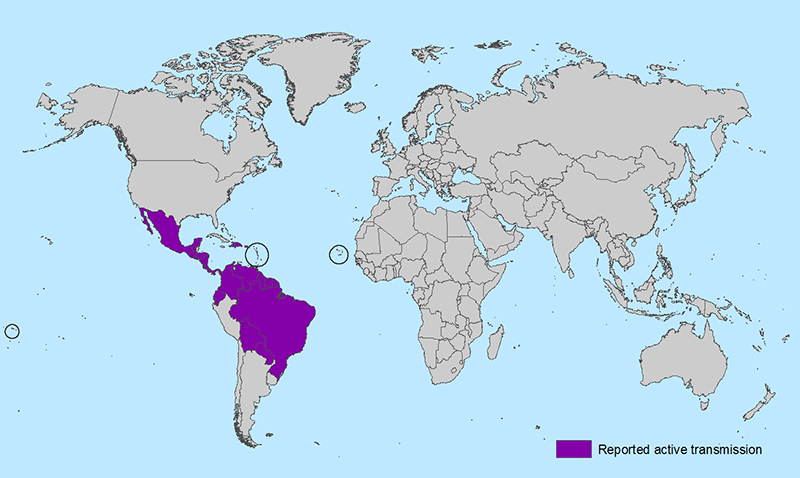
Countries and territories with active Zika virus transmission[/h]

zik-world-map_active_02-01-2016_web.jpg


[h=4]AMERICAS[/h]
  • Barbados
  • Bolivia
  • Brazil
  • Colombia
  • Commonwealth of Puerto Rico, US territory
  • Costa Rica
  • Curacao
  • Dominican Republic
  • Ecuador
  • El Salvador
  • French Guiana
  • Guadeloupe
  • Guatemala
  • Guyana
  • Haiti
  • Honduras
  • Martinique
  • Mexico
  • Nicaragua
  • Panama
  • Paraguay
  • Saint Martin
  • Suriname
  • U.S. Virgin Islands
  • Venezuela
[h=4]OCEANIA/PACIFIC ISLANDS[/h]
  • American Samoa
  • Samoa
[h=4]AFRICA[/h]
  • Cape Verde


Back
Top Bottom