• FluTrackers.com Inc. does not provide medical advice. Information on this web site is collected from various internet resources, and the FluTrackers board of directors makes no warranty to the safety, efficacy, correctness or completeness of the information posted on this site by any author or poster. The information collated here is for instructional and/or discussion purposes only and is NOT intended to diagnose or treat any disease, illness, or other medical condition. Every individual reader or poster should seek advice from their personal physician/healthcare practitioner before considering or using any interventions that are discussed on this website. By continuing to access this website you agree to consult your personal physican before using any interventions posted on this website, and you agree to hold harmless FluTrackers.com Inc., the board of directors, the members, and all authors and posters for any effects from use of any medication, supplement, vitamin or other substance, device, intervention, etc. mentioned in posts on this website, or other internet venues referenced in posts on this website.
  • We are not asking for any donations. Do not donate to any entity who says they are raising funds for us.

Chikungunya - Sri Lanka

Gert van der Hoek

In Memoriam - Editor, Senior Moderator
CHIKUNGUNYA - SRI LANKA: SUSPECTED, REQUEST FOR INFORMATION
***********************************************
A ProMED-mail post
<http://www.promedmail.org>
ProMED-mail is a program of the
International Society for Infectious Diseases
<http://www.isid.org>

In this report:
[1] Sri Lanka - Mannar District
[2] Sri Lanka - Country-wide

******
[1] Sri Lanka - Mannar District
Date: 2 Nov 2006
From:
Source: TamilNet [edited]
<http://www.tamilnet.com/art.html?catid=13&artid=20122>


A virus fever is spreading fast in Mannar district, and daily
hundreds of persons affected by the fever are seeking treatment in
the Mannar general hospital and private medical institutions, health
officials in Mannar said. Mannar general hospital is overflowing with
the large influx of affected civilians, hospital sources said.

Mannar hospital authorities are working around the clock to provide
treatment to these patients, with limited resources. About 20
patients are admitted daily to the wards in the hospital.

The mysterious virus fever, which originated from the village of
Pallimunai, has now spread to all parts of the district, including
the LTTE-held villages, civil sources said. [LTTE = Liberation Tigers
of Tamil Eelam].

Dispensaries in LTTE-held villages are experiencing acute shortages
of drugs and related medical supplies due to restrictions on
transporting medicines from government-controlled areas, sources said.

Medical officers in Mannar general hospital have taken steps to send
blood samples of 10 patients in a special vehicle to the Medical
Research Institute (MRI) in Colombo to identify the details of the
virus, sources said.

Medical sources speculated that refugees who returned to Mannar from
South India recently may have brought the new virus to the Mannar
area, sources said.

--

******
[2] Sri Lanka - Country-wide
Date: 6 Nov 2006
From: Mary Marshall <tropical.forestry@btinternet.com>
Source: Colombo Page [edited]
<http://www.colombopage.com/archive/November6132559SL.html>


Sri Lanka's health authorities are fighting to control a viral fever
spreading in the country. Already, a student of the Sri Lanka Law
College has died from the fever, and the Law College hostel has been
affected by the virus that has made over 30 students sick.


The Sri Lankan Ministry of Health doubts [suspects?] that there is
spread of chikungunya fever on the island. High incidence of this
rare form of viral fever spread by mosquitoes has been reported in
the state of Kerala in southern India.

Health authorities have taken steps to send the blood samples of
these patients to Thailand for special tests. Officials of the
Ministry of Health Epidemiology Unit say they can ascertain whether
the infection is chikungunya fever after receiving the reports. The
Ministry of Health gave assurances that this is not an outbreak of bird flu.

Over 1000 viral fever patients have been reported from the Colombo,
Mannar, Kalmunai and Jaffna areas. The Epidemiology Unit said that
necessary measures have been taken to control the spread of the viral
fever. [If chikungunya fever is suspected, these measures presumably
include mosquito control. - Mod.JW].

--
ProMED-mail
<promed@promedmail.org>

[ProMED thanks Brent Barrett <salbrent@sbcglobal.net>, who also
provided a copy of the latter report. This is the 1st suspected
chikungunya virus epidemic in Sri Lanka reported by ProMED. The virus
continues to spread rapidly over South Asia, and one can reasonably
expect that outbreaks will occur in neighboring countries to the east
of India and Sri Lanka. ProMED will appreciate confirmation, or
otherwise, of the chikungunya virus diagnoses in the cases reported here.


http://www.promedmail.org/pls/askus..._BACK_PAGE,F2400_P1001_PUB_MAIL_ID:1000,35137
 
Re: CHIKUNGUNYA - SRI LANKA: SUSPECTED

Re: CHIKUNGUNYA - SRI LANKA: SUSPECTED

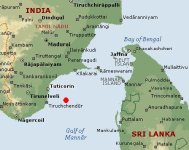
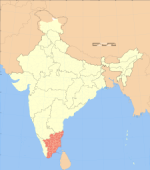
Tuticorin is just across the Gulf of Manmar in India

2,560 chikungunya cases in Tuticorin

Tuticorin, Sept 29: As many as 2,560 people have been affected by chikungunya viral fever in the district in the recent months, official sources said here yesterday.

However, the figures could be higher as several people get treated at private hospitals, unnoticed by the health department officials.

Necessary steps have been taken to prevent spread of the disease, they said, adding the first case of chikungunya fever was reported in Sattankulam area on April 29.

http://www.chennaionline.com/colnew...3F-4E3F-85E5-D37716840B83}&CATEGORYNAME=TAMNA
 

Attachments

  • 225px-India_Tamil_Nadu_locator_map.svg.png
    225px-India_Tamil_Nadu_locator_map.svg.png
    39.2 KB · Views: 1
  • Tuticorin.jpg
    Tuticorin.jpg
    35 KB · Views: 1
Re: CHIKUNGUNYA - SRI LANKA: SUSPECTED

Re: CHIKUNGUNYA - SRI LANKA: SUSPECTED

Archive Number 20061122.3320
Published Date 22-NOV-2006
Subject PRO/EDR> Chikungunya - Sri Lanka (02)


CHIKUNGUNYA - SRI LANKA (02)
****************************
A ProMED-mail post
<http://www.promedmail.org>
ProMED-mail is a program of the
International Society for Infectious Diseases
<http://www.isid.org>

Date: 20 Nov 2006
From: ProMED-mail <promed@promedmail.org>
Source: The Nation (Sri Lanka) [edited]
<http://www.nation.lk/2006/11/19/news8.htm>


Blood samples from patients in Colombo, Hambanthota, and Kalmunai
have shown positive for Chikungunya viral fever in tests which were
conducted by a team of doctors in the Molecular Medicine Unit in the
Faculty of Medicine of the Kelaniya University last week raising
concern and alarm that the viral infection is widespread in the
country.

The team that conducted the test comprised Dr Wimaladharma
Abeywickrama, Dr Arjuna de Silva, Dr Harsha Perera, and Dr Chandika
Hapuarachchi. Dr Abeywickrama said that, according to their test
results, it is confirmed that Chikungunya is prevalent in Sri Lanka.
First they had tested some blood samples from Colombo and Hambanthota
and subsequently they were requested to test another 10 samples from
Kalmunai. Out of those test samples from Kalmunai, 5 have proved that
they were infected by the Chikungunya virus. These results were
established last week in the collaborative research with the Nagasaki
University of Japan which had been their major collaborative partner
in research work on Dengue and other infectious diseases.

"Consequently, as it is a national requirement, government should
look into this matter and be helpful to identify the disease since we
have the facility to conduct tests in Sri Lanka," Dr Abeywickrama
told The Nation. According to Epidemiology Unit sources the Ministry
of Healthcare and Nutrition are awaiting the result of the test
samples which were sent to Thailand and India.

They are still in doubt to confirm that it is Chikungunya although
they were being informed of the test results by the Molecular
Medicine Unit of University of Kelaniya.

No specific drug is prescribed for this disease and there is no
vaccine currently available. Infected persons should limit their
further exposure to mosquito bites. Supportive care with rest is
recommended to relieve the pain. Saline and other relevant treatments
are given according to the prevalent symptoms.

Around 500-600 outdoor patients with suspected Chikungunya infection
visit the Colombo National Hospital daily, hospital sources said.

[byline: Thimali Ranaweera]

--
ProMED-mail
<promed@promedmail.org>

[This is a very extensive and intensive epidemic of chikungunya. It
would be interesting to know if the Sri Lankan government is mounting
an intensive mosquito vector control campaign. A map of Sri Lanka can
be accessed at:
<http://www.lib.utexas.edu/maps/middle_east_and_asia/sri_lanka_pol01.jpg>.
http://www.promedmail.org/pls/askus..._BACK_PAGE,F2400_P1001_PUB_MAIL_ID:1000,35267
 
Re: CHIKUNGUNYA - SRI LANKA: SUSPECTED

Re: CHIKUNGUNYA - SRI LANKA: SUSPECTED

Sri Lanka confirms Chikungunya viral fever epidemic
Sat Nov 25, 2006 12:14 PM IST


COLOMBO (Reuters) - Sri Lanka has confirmed an epidemic of the mosquito-borne Chikungunya viral fever, a top health official said on Saturday.
Doctors suspect it has infected 5,000 people in the island's far north.

Dr. Nihal Abeysinghe, director of the state Epidemiology Department, said pockets of the fever had been detected in Sri Lanka's northwest, south and east, but could not say how many cases had been reported.

"We have got some samples down to Colombo and we handed them over to five different laboratories. All five have reported it as Chikungunya," Abeysinghe said. "You could say it is (an epidemic)."

"We have confirmed there is an outbreak going on in Kalmunai, Mannar, Batticaloa, Puttalam and some parts of Colombo city," he added. "It is in densely populated pockets."

Abeysinghe said he believed up to 60 percent of reported fever cases were due to Chikungunya.

"There are several different fevers. Not all fevers reported are Chikungunya," he said, but added that bird flu was "very, very unlikely because there are no respiratory symptoms, no cough or cold or anything like that".

However laboratories had yet to confirm whether an outbreak of viral fever in the northern Jaffna peninsula, cut off from the rest of the country for months amid renewed civil war between the state and Tamil Tiger rebels, was Chikungunya as suspected.

DENGUE TOO

The outbreak comes as Sri Lanka also grapples with a sharp increase in dengue fever cases as monsoon rains create breeding conditions for mosquitoes which carry the diseases.

Symptoms of Chikungunya include high fever, joint and muscular pain, severe headaches, body aches and a rash similar to that seen in dengue patients. While the disease is painful, the U.S. Centers for Disease Control and Prevention (CDC) says no deaths from Chikungunya have been documented in scientific literature.

Dr. A. Ketheeswaran, director of provincial health services for the Jaffna peninsula, suspects the viral fever spreading in the far north is Chikungunya.

"In Jaffna, this viral fever which has the symptoms of Chikungunya is spreading very fast. I find that more than 5,000 people have been infected," Ketheeswaran said.

Cut off behind rebel lines, Jaffna residents are living on rations shipped in by sea from the south, and medicines and food are in short supply. Residents said doctors had recommended paracetamol as a fever preventive, but most shops had run out.

Abeysinghe said it was very unlikely that Chikungunya caused the death on the peninsula of a Tamil woman suffering from viral fever on Friday.

"It is very unlikely to be (due to Chikungunya). There may be a lot of other disease conditions associated with these people who are reported to have died due to Chikungunya," he said.

Chikungunya, Swahili for "that which bends up", was first isolated in the blood of a febrile patient in Tanzania in 1953, the CDC said.

.
 
Sri Lanka affected with Chik

Sri Lanka affected with Chik

Lanka fears 5,000 affected with Chikungunya <!--
Sunday, November 26, 2006-->
Web posted at: 11/26/2006 3:26:57
Source ::: REUTERS
COLOMBO ? Sri Lanka has confirmed an epidemic of the mosquito-borne Chikungunya viral fever, a top health official said yesterday. Doctors suspect it has infected 5,000 people in the island?s far north.
Dr Nihal Abeysinghe, director of the state Epidemiology Department, said pockets of the fever had been detected in Sri Lanka?s north-west, south and east, but could not say how many cases had been reported.
?We have got some samples down to Colombo and we handed them over to five different laboratories. All five have reported it as Chikungunya,? Abeysinghe said. ?You could say it is (an epidemic).?
?We have confirmed there is an outbreak going on in Kalmunai, Mannar, Batticaloa, Puttalam and some parts of Colombo city,? he added. ?It is in densely populated pockets.?

http://www.thepeninsulaqatar.com/Di...November2006&file=World_News2006112632657.xml

 
Re: CHIKUNGUNYA - SRI LANKA: SUSPECTED

Re: CHIKUNGUNYA - SRI LANKA: SUSPECTED

:oops: I went ahead and merged the threads.
 
Re: CHIKUNGUNYA - SRI LANKA: SUSPECTED

Re: CHIKUNGUNYA - SRI LANKA: SUSPECTED

Viral fever sweeps Jaffna, northeast

[TamilNet, Monday, 27 November 2006, 01:16 GMT]

Viral fever, suspected to be Chikungunya, is spreading rapidly amongst people in Jaffna, medical experts said Sunday. ?In Jaffna, this viral fever which has the symptoms of Chikungunya is spreading very fast.

I find that more than 5,000 people have been infected," Dr. A. Ketheeswaran, director of provincial health services there, told Reuters. The disease has been confirmed spreading rapidly in Kalmunai, Mannar, Batticaloa, Puttalam and parts of Colombo.

Food and medical supplies are in short supply in the northern peninsula, which remains cut off with the government refusing to open the A9 highway which it closed during heavy fighting in August.

Jaffna residents told Reuters doctors had recommended paracetamol as a fever preventive, but most shops had run out.

An epidemic of the mosquito-borne Chikungunya viral fever has been confirmed elsewhere in the island, a top health official told Reuters Saturday.

Dr. Nihal Abeysinghe, director of the state Epidemiology Department, said pockets of the fever had been detected in Sri Lanka's northwest, south and east, but could not say how many cases had been reported.

"We have got some samples down to Colombo and we handed them over to five different laboratories. All five have reported it as Chikungunya," Abeysinghe said. "You could say it is (an epidemic)."

"We have confirmed there is an outbreak going on in Kalmunai, Mannar, Batticaloa, Puttalam and some parts of Colombo city," he added. "It is in densely populated pockets."

Abeysinghe said he believed up to 60 percent of reported fever cases were due to Chikungunya.

"There are several different fevers. Not all fevers reported are Chikungunya," he said, but added that bird flu was "very, very unlikely because there are no respiratory symptoms, no cough or cold or anything like that".

However laboratories had yet to confirm whether an outbreak of viral fever in the northern Jaffna peninsula, cut off from the rest of the country for months was Chikungunya as suspected.

The outbreak comes as Sri Lanka also grapples with a sharp increase in dengue fever cases as monsoon rains create breeding conditions for mosquitoes which carry the diseases, Reuters reported.

Symptoms of Chikungunya include high fever, joint and muscular pain, severe headaches, body aches and a rash similar to that seen in dengue patients. While the disease is painful, the U.S. Centers for Disease Control and Prevention (CDC) says no deaths from Chikungunya have been documented in scientific literature.

Abeysinghe said it was very unlikely that Chikungunya caused the death on the peninsula of a Tamil woman suffering from viral fever on Friday.

"It is very unlikely to be (due to Chikungunya). There may be a lot of other disease conditions associated with these people who are reported to have died due to Chikungunya," he said.

Chikungunya, Swahili for "that which bends up", was first isolated in the blood of a febrile patient in Tanzania in 1953, the CDC said.

http://www.tamilnet.com/art.html?catid=13&artid=20405
 
Re: CHIKUNGUNYA - SRI LANKA

Re: CHIKUNGUNYA - SRI LANKA

Archive Number 20061129.3380
Published Date 29-NOV-2006
Subject PRO/EDR> Chikungunya - Sri Lanka (03)


CHIKUNGUNYA - SRI LANKA (03)
*****************************
A ProMED-mail post
<http://www.promedmail.org>
ProMED-mail is a program of the
International Society for Infectious Diseases
<http://www.isid.org>

Date: 28 Nov 2006
From: A-Lan Banks <A-Lan.Banks@thomson.com>
Source: News-Medical.net, Sydney, Australia [edited]
<http://www.news-medical.net/?id=21116>


The Sri Lankan government has confirmed that the viral fever
spreading rapidly amongst people in Jaffna is the mosquito-borne
chikungunya fever. It is suspected that more than 5000 people have
been infected with the virus, now at epidemic levels.


Sri Lankan Health authorities have called on the public to clean up
areas where mosquitoes breed in an effort to prevent the spread of
the disease.

The symptoms of the disease -- high fever, joint and muscular pain,
severe headaches, body aches and rash -- are similar to those caused
by dengue fever, another mosquito-borne illness.

The disease has now spread rapidly in Kalmunai, Mannar, Batticaloa,
Puttalam and parts of Colombo.

The closure of the main highway to the northern peninsula because of
heavy fighting in August 2006 has resulted in a shortage of food and
medical supplies in the north, and Dr. Nihal Abeysinghe, director of
the state Epidemiology Department, said pockets of the fever had now
also been detected in Sri Lanka's northwest, south and east.

The outbreak has coincided with an outbreak of dengue fever cases, as
monsoon rains create breeding conditions for the mosquitoes that
carry the diseases, and health workers are struggling to cope.

The U.S. Centers for Disease Control and Prevention (CDC) says that
while the disease is painful, no deaths from chikungunya have been
documented in the scientific literature
. [True, but there is a recent
evaluation by French epidemiologists that points strongly to
fatalities due to chikungunya virus infections
[see archive number
20061014.2953]. Several deaths in the current Indian Ocean outbreak
have been attributed to chikungunya virus infections. - Mod.TY]

http://www.promedmail.org/pls/prome..._BACK_PAGE,F2400_P1001_PUB_MAIL_ID:1000,35337
 
Last edited:
Re: CHIKUNGUNYA - SRI LANKA: SUSPECTED

Re: CHIKUNGUNYA - SRI LANKA: SUSPECTED

The CDC needs to update their Chikungunya material so that they stay current with the virus, otherwise some could argue that they are disseminating false information to the american public.

The Frech government has already proven that Chikungunya was responsible for of the deaths in La Reunion. The studies have been done.

This is now irrefutable so the CDC seriously needs to update their material.
 
Re: CHIKUNGUNYA - SRI LANKA

Re: CHIKUNGUNYA - SRI LANKA

Chikungunya: Now ravaging Sri Lanka

Mehdi Hassan November 28, 2006

After India, Sri Lanka is hit by Chikungunya, the deadly disease spread by mosquito. The monsoon season is just over in Sri Lanka and there are many places where water remain clogged.

These places have now become breeding grounds for mosquitoes. The disease has reached epidemic level. Till now, five thousand people have been infected by this disease.

In order to stop the spread of the disease, Sri Lankan Health authority has ordered to clean all the areas that contain clogged water. The disease has spread rapidly in Kalmunai, Mannar, Batticaloa, Puttalam and parts of Colombo.

The condition of the northern portion of Sri Lanka is worst. Because of the ongoing fight between the Sri Lankan army and the Tamil Tigers, the highway to the northern area has been shut down since August. As a result, people living in those areas are not getting necessary medical supplies.

The symptoms of Chikungunya fever are similar to those of the dengue fever. The infected person gets high fever, pain in joints and muscles, severe headaches, body aches and rash.

Few days, ago I have written a post about Pakistani epidemiologists trained by USA. This is one such example, diseases like dengue, chikungunya and many other diseases take away people's lives in South Asian countries. I hope and pray that Sri Lankan government take proper steps to stop the spread of chikhungunya.

http://www.southasiabiz.com/2006/11/chikungunya_now_ravaging_sri_l.html
 
Re: CHIKUNGUNYA - SRI LANKA

Re: CHIKUNGUNYA - SRI LANKA

IMC fights Chikungunya Outbreak in Sri Lanka

30 Nov 2006 00:06:00 GMT

Source: International Medical Corps (IMC) - USA
Website: http://www.imcworldwide.org

More International Medical Corps is helping fight a fast-spreading Chikungunya outbreak in eastern Sri Lanka's Ampara District. So far, health authorities speak of 10-15,000 suspected cases in an area where thousands are still living in crowded camps after their homes were destroyed during the tsunami.

Chikungunya is transmitted through the bites of infected mosquitoes and characterized by severe, sometimes long-lasting, joint pain, fever, and rash. New cases are being reported in the nearby district of Trincomalee, home to large numbers of people displaced by the ongoing civil strife in the country.

Gareth Price-Jones, IMC's country director in Sri Lanka, said IMC would play what he called "an effective and appropriate role" in bringing the outbreak under rapid control.

"Our job, particularly in Trincomalee District, where the ongoing conflict hampers response efforts, is to support the Sri Lankan health authorities as they work to both treat and prevent the spread of the disease."

Chikungunya is not life-threatening but very painful. Full recovery can take months, resulting in serious loss of income for its victims. With the rainy season approaches, more people are in danger.

Information and Education - Key in the Fight against Chikungunya

As tsunami survivors continue to struggle to piece together their lives, the added burden of the Chikungunya outbreak is disrupting already overstretched healthcare systems. People are flooding clinics and hospitals, preventing health workers from providing routine, basic care.

Since the 2004 tsunami, IMC has worked closely with health authorities, moving from emergency assistance to providing the training and tools for local communities to cope on their own. This long-term commitment has enabled IMC to respond quickly to the outbreak.

With the support of the International Medical Corps, six local health professionals have trained 150 community volunteers who, in turn, will inform the local population about how to protect themselves against mosquito bites that lead to Chikungunya infections. IMC will also support the Ampara health authorities to kick start a wide-spread information campaign.

Preventing New Cases

IMC has provided 7,500 syringes to local hospitals to help them administer immediate treatment of symptoms like severe pain and fever. Because there is no vaccine available, IMC and local authorities are focusing on preventative measures to contain the disease, advising people to remove open containers with standing water, the main breeding ground for the so called Tiger mosquito that carries the Chikungunya virus.

IMC has also called for donations to help clear rubbish, drain canals, and educate people in order to prevent a further spread of the disease.

What is Chikungunya?

The term Chikungunya is derived from Mokonde for 'that which bends up', referring to the severe joint pain associated with the disease. It can only be transmitted through the bite of infected mosquitoes. Because these mosquitoes are active during daylight hours, almost everybody is a potential victim.

Dormant for over 20 years, Chikungunya is now widespread in India, Sri Lanka, and various Indian Ocean islands, including the Comoros, Mauritius, Reunion, and Seychelles. According to the World Health Organization, over 1.25 million cases have been reported in India alone.

Though not deadly, Chikungunya can be extremely painful and is a huge burden on local health services. It threatens the livelihood, particularly of the poor, due to the long recovery time. The U.S. Center for Disease Control recommends prevention and mosquito control as the most successful measures against Chikungunya epidemics.

[ Any views expressed in this article are those of the writer and not of Reuters. ]

http://www.alertnet.org/thenews/fromthefield/218615/116484548182.htm
 
Re: CHIKUNGUNYA - SRI LANKA

Re: CHIKUNGUNYA - SRI LANKA

Chikungunya viral infection is now spreading towards the Central hills in Sri Lanka.

Chikungunya viral fever epidemic is now prevalent in Kandy, in the central province of Sri Lanka as well. At least one patient with fever and arthritis is now confirmed to be affected by Chikungunya fever in Kandy. Well over thirty other suspected patients awaiting confirmation with the Chikungunya antibody test is a now awaiting laboratory test result, this blood test which takes about one week to obtain the results for the patients residing in Kandy having sent the blood samples to Colombo are now being closely followed up under medical supervision. So far at least one patient admitted to the Rheumatology Unit at the Teaching Hospital Kandy had this fever, confirmed with a positive Chikungunya Ig M antibody test who is a definite and a positively identified patient. This illness was associated with typical clinical features of Chikungunya viral infection, and all the other possible infections need to be differentiated from that of the Chikungunya fever were excluded in this particular patient who is now recovering at the hospital.
There were large number of other patients affected with fever and joint pains presented to us from the suburbs of city of Kandy, who were awaiting confirmation of Chikungunya viral infection, most of them would also become positively identified patients fairly soon according to our clinical assessment. This particular instance where one patient was identified has now been notified to the relevant public health authorities for future preventive action. Arthritis associated with fever is one of the most common forms of presentation of Chikungunya viral fever in our region.

It is extremely important to take prompt and much needed preventive measures with cleaning of the mosquito breading grounds, as there are patients with dengue fever which is also prevalent and spreading rapidly in and around the city of Kandy, already alerted us with few deaths mainly affecting young and otherwise healthy and productive individuals.

Dr. V. W. Jagath Vasanthathilaka
Consultant Rheumatologist
General Hospital Kandy. Sri Lanka.
 
Re: CHIKUNGUNYA - SRI LANKA

Re: CHIKUNGUNYA - SRI LANKA

An older article, did not see it posted, important enough to underline how serious the situation is.

Bug-borne fever infects more than 100,000 in Sri Lanka

The Associated PressPublished: December 5, 2006

COLOMBO, Sri Lanka: A fever spread by mosquitoes has infected more than 100,000 people in Sri Lanka, an official said Tuesday.

Chikungunya ? like dengue fever ? is spread by female aedes mosquitoes and causes high fever, severe joint pain, headaches and vomiting. There is no known cure for either disease.

Chikungunya is not usually fatal, but causes severe pain, said a Sri Lankan health ministry official, adding that the disease has been reported in almost every part of the tropical island nation.

The official did not want to be named because he was not authorized to speak to the media.

On Nov. 24, the health ministry confirmed an outbreak of chikungunya after blood samples sent to Thailand and India tested it positive.

Mosquito-borne diseases often spread with annual monsoons, as the rains leave puddles of stagnant water for the insects to breed in.

"Already the number of dengue cases has gone up and we fear that with the ongoing rains, such diseases could reach an epidemic proportion by the end of this month," said Pradeep Kariyawasam, who heads the health department in Colombo, the capital.

Kariyawasam warned that people who do not clean up areas around their houses where mosquitoes breed will be fined.

http://www.iht.com/articles/ap/2006/12/05/asia/AS_MED_Sri_Lanka_Fever.php
 
Chikungunya affects over 100,000 in Jaffna peninsula

Chikungunya affects over 100,000 in Jaffna peninsula

Viral fever epidemic affects over 100,000 in Jaffna peninsula

[TamilNet, Thursday, 14 December 2006, 19:08 GMT]
The mosquito borne viral disease Chikungunya currently sweeping across Jaffna peninsula is believed to have affected more than 100,000 civilians, according to a preliminary survey A.Ketheeswaran, Director of Public Health Services, Northern Region has reported.

Mr.Ketheeswaran said that so far over 60,000 have received treatment at the 39 hospitals under his supervision while an estimated 40,000 patients are believed to have been treated at other medical establishments including Jaffna Teaching Hospital and a number of private medical clinics .

Meanwhile, more than 5000 troops of Sri Lanka Army (SLA) stationed in the peninsula, mainly those on duty in Forward Defense line (FDL) areas have also been affected by the disease and are receiving treatment in the army camps, military sources said.

Continuous rain in the area has been a key factor for the spread of the disease among the troops, army sources added

Many students from at least four schools sitting for G. C. E (Ordinary Level) Examination are also affected by the disease, Directors of Education in the region said. A number of students from St.Patrick's College, St.Charle's Maha Vidyalayam ,St.John's College as well from a number of schools in the suburbs affected by fatigue and vomiting fainted at the examination centers and were unable to continue their examination. Jaffna Government Agent after being notified of these incidents instructed the District Medical officers to take immediate action to bring the situation under control. A team of doctors rushed to the affected schools and distributed fever pills to provide temporary relief.

Meanwhile in an effort to control the spread of the disease the International Red Cross Society has air lifted 500,000 Paracetamol tablets from Colombo for distribution in the peninsula.
 
Re: CHIKUNGUNYA - SRI LANKA

Re: CHIKUNGUNYA - SRI LANKA

DrJagath welcome and thank you very much for taking the time to post, first hand - as apposed to media - reports a very much appreciated and if you can find the time we would be delighted to have any updates. As I recall Kandy is at some altitude and cooler than most of the island, is Aedes aegypti as much of problem in the area as it is on the coast?
 
Re: CHIKUNGUNYA - SRI LANKA

Re: CHIKUNGUNYA - SRI LANKA

City of Kandy is comparatively cool and less humid than the other costal cities in Sri Lanka. Doctors have come across thousands of patients infected with Chikungunya virus in the costal cities such as Colombo, Jaffna, Galle and Batticalo where the density of mosquito population is much higher. Dengue and Chikungunya fever were largely prevalent in the other cities along the way to the hill capital that is in Kurunegala, Mawanella and Kagalle, from where we have received some patients who were transferred and seeking treatment at larger Hospitals in Kandy. Chikungunya as well as dengue fever is now prevalent in Kandy, however it is not spreading in epidemic proportions like in Jaffna.
The mosquito density was relatively less two to three decades ago in the central hills, and Kandy was a city where there was less overcrowding and the buildings were constructed in the city according to strict regulations, and the authorities could easily maintain an environment with relatively less mosquito density in the past.
Present situation is slightly different where the average temperature in the city of Kandy is gradually increasing, that is partly due to the effects of global warming. Rapid development of the economy and uncontrolled urbanization with increasing population within the city limits may also be contributing to some of these unwelcome effects.

Unless we, all the citizens living in the cities are conscious, concerned and educated on the value of maintenance of proper standards of living without leaving any room for mosquito breading places to prevail in the city limits, the price the people will have to pay with diseases and occasional death of otherwise healthy and young individuals would be extremely high. Mosquito breading places in Kandy are often linked to the overcrowded housing conditions found in few identified areas within the city limits, improper and unauthorized construction of the shops and market places found in few locations closer to the city center, and due to congested transport conditions which is a major issue need to be addressed fairly soon, in order to prevent further outbreaks of diseases in the city of Kandy.
If we fail to address these issues now and for what ever the reason, and if we are faced with a much more serious infection in the near future in few years time with a very high mortality rate associated with a virulent form of a virus, the consequences for the citizens living in the city could be disastrous. These viruses can easily mutate in to more virulent forms, the consequences can be much worse than a natural disaster of the magnitude of a major earthquake under present conditions of uncontrolled urbanization prevailing in our cities. These infections could easily spread in epidemic proportions
Aedes aegypti and the mosquito bone infections in the central hills is increasingly becoming a serious threat to the people living in the Hill capital as well, and the situation could become worse and uncontrollable in the future as it has been observed in the recent past, number of dengue patients identified in this year is higher than that of the year 2005 and the death rate is higher. 48 deaths have been reported so far all over the Island this year, compared to 26 in the last year. Some of the deaths occurred in Kandy were tragic and the patients were related to the affluent society and some them were also related to the medical profession, and the patients were not been able to rescue despite best medical treatment with intensive care treatment facilities. All categories of the population both the poor and the rich were equally affected without any discrimination. It is extremely important for the public to be aware of these facts as it is only through awareness these disorders can be prevented effectively. Especially, when there is no effective and specific treatment available for complicated patients with viral infections, the only thing which would be effective will be appropriate and timely preventive measures adopted collectively by the society. We presume it is our primary responsibly to educate the public on these crucial aspects of disease control, through what ever the possible means available for us on the media. There is no other option left we all will have to face the situation wisely. The medical profession presumes that, still it is not too late for us to plan and implement appropriate and effective measures to prevent occurrence of such disease in epidemic proportions in the cities within the Island in the near future.

Dr.V.W. W. J. K. Vasanthathilaka

Consultant Rheumatologist
Kandy Sri Lanka.
 
Re: CHIKUNGUNYA - SRI LANKA

Re: CHIKUNGUNYA - SRI LANKA

Thanks again.

if we are faced with a much more serious infection in the near future in few years time with a very high mortality rate associated with a virulent form of a virus

While we watch all kinds of emergent threats, obviously this site's focus is on H5N1 as the most likely candidate to fit that description.
 
Re: CHIKUNGUNYA - SRI LANKA

Re: CHIKUNGUNYA - SRI LANKA

Sri Lanka: Chikungunya: crisis in Jaffna

Sunday, 17 December 2006
http://www.sibernews.com/news/sri-lanka/-200612177190/


The infectious viral flu chikungunya which has reportedly spread rapidly in the Jaffna peninsula is now one of the many problems the people have to face in addition to the shortage of food, medical supplies and the ever present danger to life and limb courtesy the war situation.


The flu which first spread in Inuvil in the Chunnakam area, has now affected the whole town with many of the elderly being affected by its crippling symptoms.


?The virus has not spared anyone. The hospitals are crowded and medical supplies are low. The doctors are prescribing Paracetamol and Ibuprofen but unfortunately the required medicine is unavailable,? a CARE official in Jaffna said.


He said a Paracetamol tablet costs Rs.25/- each and Ibuprofen is unavailable most of the time. It is also expensive.


?The elderly people in villages are suffering immensely due to the effects of the virus. Some of them who have diabetes or high blood sugar levels and pressure are the worst affected since the hospitals are not stocked with the required medicine,? he said.


Social Services and Welfare Minister, Douglas Devananda has decided to provide with immediate effect a mobile clinic providing treatment for the students in Jaffna who are sitting for the O/L exams this year.


A large number of students sitting the O/L exams this year in 173 examination centres in the peninsula have been affected with ?Chikungunya? viral fever. The Minister who held discussions with health authorities in Jaffna made arrangements for setting up the mobile clinic.
 
Back
Top